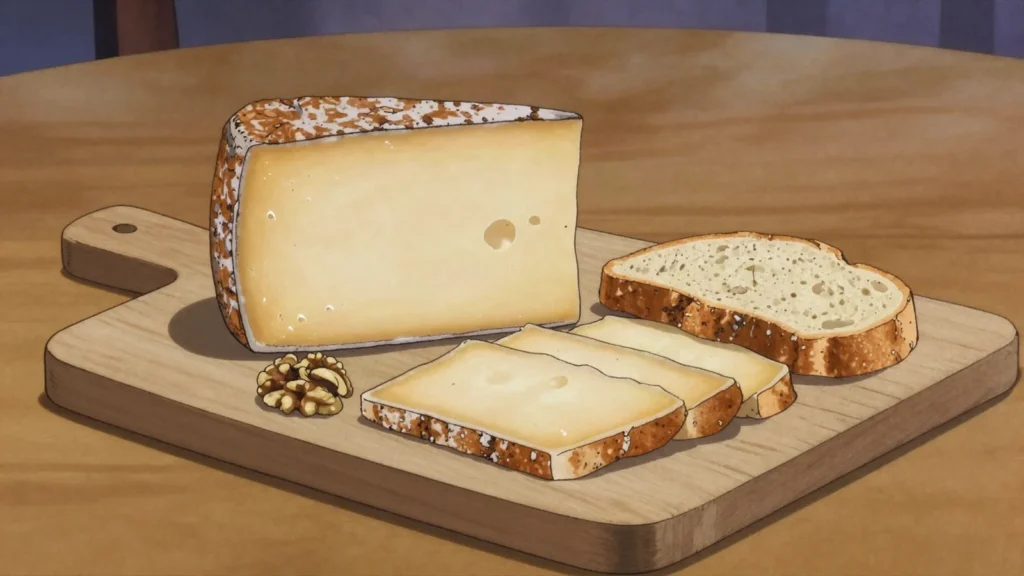

A hard alpine cow’s-milk cheese from the Jura, nutty and long-aged, made in village fruitières — cooperatives that pooled milk from the thirteenth century onward because no single farm could fill a wheel.
A 40 kg wheel scalded in a copper vat and turned in a cellar for years is a cooperative dairy’s work; the appellation also fixes the breed, the pasture and the milk’s collection radius.
What goes into it
- raw milk from Montbéliarde and French Simmental cows
- rennet
- a natural whey starter
- salt
How it is made
Raw morning and evening milk is set in copper vats, the curd cut to grains the size of rice and heated to over 50°C (122°F), then lifted and pressed into wheels weighing around 40 kg. The wheels are salted and moved to a cellar where they are turned and rubbed for months to years. The flavour is tracked back to individual pastures and seasons.
How long it takes: four months minimum, commonly twelve to thirty-six
How it is eaten
In slices with bread and walnuts, grated into fondue and gratins, or with vin jaune.
History
Made in Jura village fruitières, cooperatives that pooled milk from the thirteenth century because one farm could not fill a wheel.
Frequently asked questions
What is Comté?
Comté is a cheese & dairy from France: hard alpine cow’s milk cheese, nutty and aged, grated or eaten in slices. Made in Jura village fruitières, cooperatives that pooled milk from the thirteenth century because one farm could not fill a wheel.
How is Comté made?
Raw morning and evening milk is set in copper vats, the curd cut to grains the size of rice and heated to over 50°C (122°F), then lifted and pressed into wheels weighing around 40 kg. The wheels are salted and moved to a cellar where they are turned and rubbed for months to years. The flavour is tracked back to individual pastures and seasons. It takes four months minimum, commonly twelve to thirty-six.
Can I make Comté at home?
No, and the atlas gives no method for it. A 40 kg wheel scalded in a copper vat and turned in a cellar for years is a cooperative dairy’s work; the appellation also fixes the breed, the pasture and the milk’s collection radius.
What goes into Comté?
Raw milk from Montbéliarde and French Simmental cows, rennet, a natural whey starter, salt.
How is Comté eaten?
In slices with bread and walnuts, grated into fondue and gratins, or with vin jaune.