
A pungent blue cheese ripened in the natural limestone caves of the Picos de Europa, where damp air breeds the blue mould without anyone adding it. It is traditionally wrapped in sycamore leaves.
The blue comes from the resident mould of specific limestone caves in the Picos de Europa, not from an added culture — the cave is the method, and the DOP requires it.
What goes into it
- raw cow’s milk, sometimes blended with goat and sheep
- rennet
- salt
- the caves’ own Penicillium
How it is made
The milk is set with rennet, the curd drained and moulded without pressing, and the young cheeses salted and left to drain. They are then carried into natural mountain caves, where the constant cold, near-total humidity and resident Penicillium spores colonise them from the air. They ripen there for two to four months, turned and pierced.
How long it takes: two to four months in the cave
How it is eaten
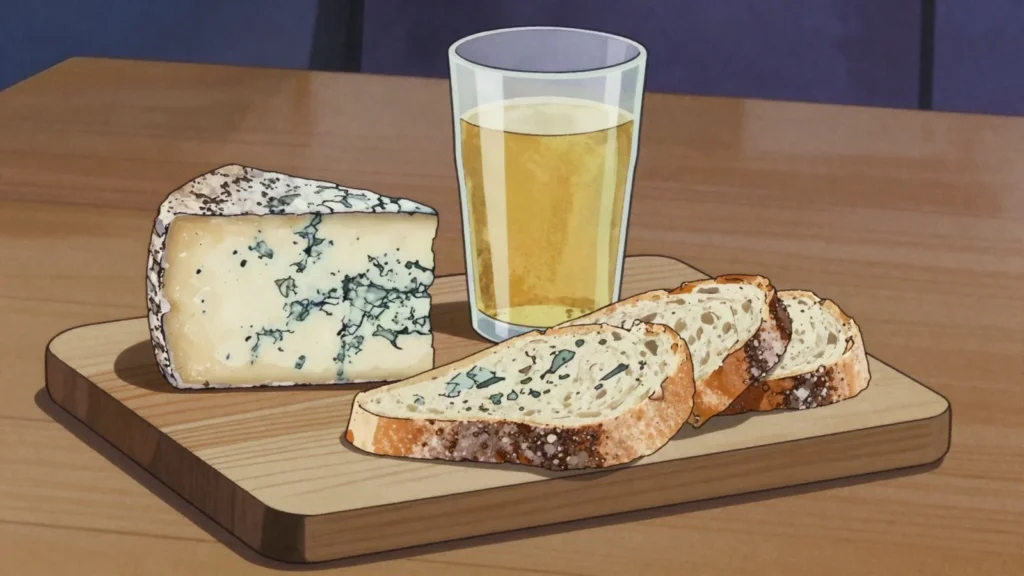
At room temperature with cider, on bread, or melted into a sauce for steak.
History
Ripened in natural caves of the Picos de Europa in Asturias, where damp air breeds the blue mould; traditionally wrapped in sycamore leaves.
Frequently asked questions
What is Cabrales?
Cabrales is a cheese & dairy from Spain: pungent blue cheese ripened in Asturian limestone caves. Ripened in natural caves of the Picos de Europa in Asturias, where damp air breeds the blue mould; traditionally wrapped in sycamore leaves.
How is Cabrales made?
The milk is set with rennet, the curd drained and moulded without pressing, and the young cheeses salted and left to drain. They are then carried into natural mountain caves, where the constant cold, near-total humidity and resident Penicillium spores colonise them from the air. They ripen there for two to four months, turned and pierced. It takes two to four months in the cave.
Can I make Cabrales at home?
No, and the atlas gives no method for it. The blue comes from the resident mould of specific limestone caves in the Picos de Europa, not from an added culture — the cave is the method, and the DOP requires it.
What goes into Cabrales?
Raw cow’s milk, sometimes blended with goat and sheep, rennet, salt, the caves’ own Penicillium.
How is Cabrales eaten?
At room temperature with cider, on bread, or melted into a sauce for steak.