
Ingredients
Dough
- 500 gqueso costeño, very finely grated
- 150 galmidón de yuca agrio, sour cassava starch
- 50 gcornflour
- 2eggs
- 1 tbspsugar
- ½ tspbaking powder
- 2 tbspmilk, if needed
To fry
- 1.5 litresneutral oil
To serve
- natilla
Directions
- Grate the cheese as finely as you possibly can, almost to a powder. Coarse shreds leave pockets inside the dough that burst open in the oil.
- Mix the grated cheese with the cassava starch, cornflour, sugar and baking powder until evenly combined.
- Add the eggs and work the mixture with your hands for a full 5 minutes, until it turns into a smooth, slightly greasy dough that holds together in a ball. Add milk a spoonful at a time only if it refuses to come together.
- That kneading is not optional. Underworked dough gives buñuelos that crack open along a fault line and leak.
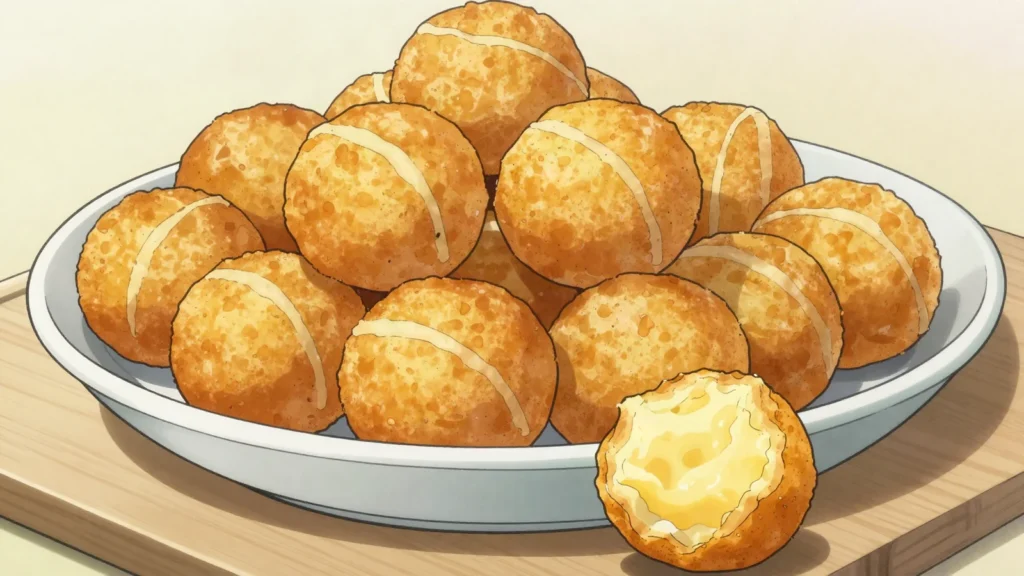
- Roll the dough into balls about 4 cm across, rolling each one between your palms until the surface is completely smooth and there is no visible seam anywhere on it.
- Heat the oil to 150°C (300°F). This is unusually low for deep frying and it is deliberate.
- Lower the balls in gently. They will sink and then rise. Leave them completely alone for the first minute.
- Fry for 8 to 10 minutes, turning them gently as they bob, until they are deep gold all over. The low temperature is what lets the middle cook through and puff before the outside sets hard, and hot oil gives you a brown ball that is raw and doughy in the centre.
- A properly made buñuelo turns itself over in the oil as it cooks. If yours will not, they were rolled too tightly or the oil is too hot.
- Drain on a rack and eat warm, ideally in December, with a bowl of natilla alongside.
Technique
- Low oil, smooth balls, salty cheese. Those are the three things that decide it.
- Queso costeño is firm and salty rather than melting, and it is the structure of the dough rather than a flavouring in it.
- They are a Christmas food in Colombia and are eaten with natilla through December, but nothing stops you making them in July.
Substitutions
- Half feta, rinsed and dried thoroughly, and half firm mozzarella, which is the usual improvisation outside Colombia.
- Tapioca starch in place of sour cassava starch, accepting a slightly less tangy result.
Variations
- With a little ground aniseed in the dough.
- The larger Antioquian version, closer to the size of an orange.
- Buñuelos de viento, the Spanish choux-based cousin, which is an entirely different pastry.
History
Fried, cheese-based dough balls, developed in Colombia from an older Spanish and broader European fried dough tradition carried to the Americas through colonization beginning in the 1500s, with Colombian cooks distinguishing their version significantly by incorporating fresh cheese directly into the dough itself, producing a savory-sweet, slightly chewy result quite different from plainer European fried dough ancestors. They are most closely associated in Colombia with December and Christmas season celebrations specifically, commonly eaten alongside natilla, a Colombian custard, as one of the country’s most iconic and anticipated holiday food pairings. Buñuelos under various related names and recipes exist across several other Spanish-speaking countries as well, though Colombia’s specific cheese-based version is treated within the country as a distinctly Colombian variation.
Frequently asked questions
What is Buñuelos?
Buñuelos is a snack from Colombia: golden fried cheese-dough balls, a Christmas favorite. Fried, cheese-based dough balls, developed in Colombia from an older Spanish and broader European fried dough tradition carried to the Americas through colonization beginning in the 1500s, with Colombian cooks distinguishing their version significantly by incorporating fresh cheese directly into the dough itself, producing a savory-sweet, slightly chewy result quite different from plainer European fried dough ancestors. They are most closely associated in Colombia with December and Christmas season celebrations specifically, commonly eaten alongside natilla, a Colombian custard, as one of the country’s most iconic and anticipated holiday food pairings. Buñuelos under various related names and recipes exist across several other Spanish-speaking countries as well, though Colombia’s specific cheese-based version is treated within the country as a distinctly Colombian variation.
How long does Buñuelos take to make?
Buñuelos takes 25 min of preparation and 30 min of cooking. The recipe makes 20 buñuelos. It is rated medium to make.
What can I substitute in Buñuelos?
Yes, within limits. Half feta, rinsed and dried thoroughly, and half firm mozzarella, which is the usual improvisation outside Colombia. Tapioca starch in place of sour cassava starch, accepting a slightly less tangy result.
What is the most important thing to get right in Buñuelos?
That kneading is not optional. Underworked dough gives buñuelos that crack open along a fault line and leak.