
Ingredients
Cassava
- 1 kgcassava, peeled
- water for soaking
Seasoning
- 1onion, finely chopped
- 2 clovesgarlic
- 1chilli, chopped
- 1 tspsalt
- black pepper
Binder
- 2 tbspplain flour or cassava flour, if needed
To fry
- oil, for deep frying
To serve
- hot, in paper cones, from a street vendor
- with a chilli sauce
Directions
- Peel it thickly, removing the entire pinkish layer beneath the brown skin, since that layer holds most of the compounds. Cut out the woody central core. The soaking water must always be discarded and never used for cooking. Cut the peeled cassava into chunks and submerge it in plenty of cold water.
- Leave it for two to three days at room temperature, changing the water once daily. It should smell pleasantly sour, like sourdough, rather than putrid or rotten. Discard the batch if it smells foul or shows coloured mould. Warm weather speeds it considerably, and in a cool kitchen it takes longer.
- Drain the fermented cassava thoroughly and discard the water. Grate it finely or blend it with as little water as possible. It will be soft after fermenting, so it grates easily. Squeeze the grated cassava in a cloth to remove excess liquid.
- Squeeze out most of the water but not all, since the natural stickiness is what binds the balls. A soaking wet mixture will fall apart in the oil. Work in the chopped onion, garlic, chilli, salt and pepper.
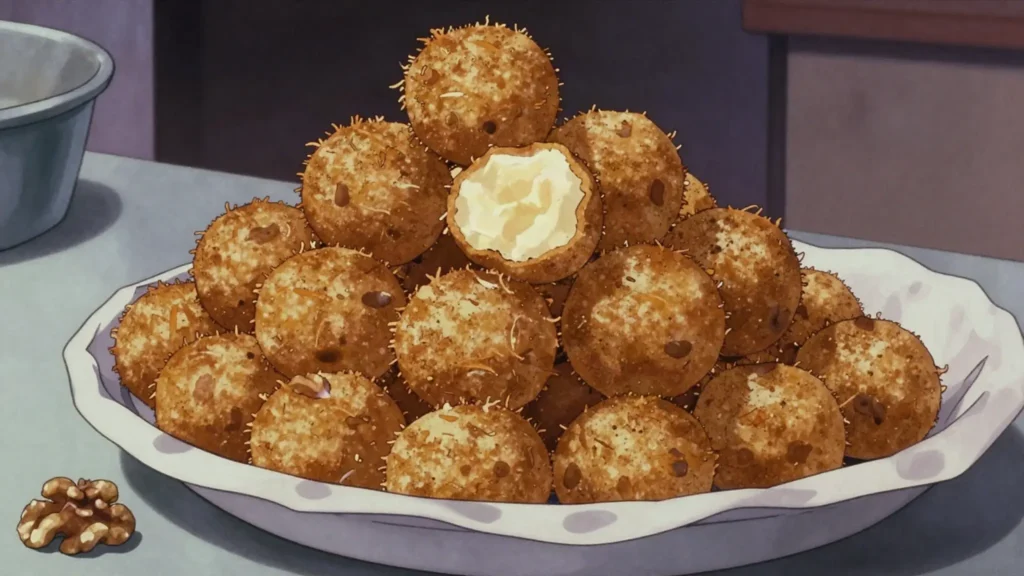
- Season it firmly, since plain cassava is bland and the fritters need to taste of something. Do not taste the raw mixture, for the reasons given above. Roll the mixture into small balls with wet hands. Keep them small, about the size of a walnut, since a large ball stays raw and pasty in the middle. Wet your hands between each one, since the mixture sticks.
- Heat the oil to about 170°C, which is moderate rather than fierce. Keep the heat moderate, since cassava needs genuine cooking time and a hot pan browns the outside first. Fry them in batches for four to five minutes, turning them, until deep golden and crisp. Do not crowd the pan, which drops the temperature sharply.
- Break one open: the inside should be soft and cooked through with no raw gluey centre. If the middle is raw, lower the heat and fry the next batch longer. Drain them on a rack rather than paper. Salt them lightly while still hot. Now serving them out while hot.
Technique
- Soaking and fermenting cassava is a genuine detoxification method, not just flavouring.
- The soaking water must always be discarded.
- Fry them at a moderate heat so the inside cooks through.
Substitutions
- Unfermented cassava, which gives a milder fritter.
- Frozen grated cassava, though it will not ferment the same way.
Variations
- Made without fermenting, which is quicker and milder.
- With smoked fish worked into the mixture.
- Served with honey, as bolinhos de mandioca com mel.
History
Street vendors in Bissau fry them from cassava that has been soaked and left to ferment, giving a sour tang.
Frequently asked questions
What is Bolinhos de mandioca?
Bolinhos de mandioca is a street food from Guinea-Bissau: balls of grated fermented cassava fried crisp and sold hot in cones. Street vendors in Bissau fry them from cassava that has been soaked and left to ferment, giving a sour tang.
How long does Bolinhos de mandioca take to make?
Bolinhos de mandioca takes 30 min plus 2 days fermenting of preparation and 25 min of cooking. The recipe makes about 25. It is rated medium to make.
What can I substitute in Bolinhos de mandioca?
Yes, within limits. Unfermented cassava, which gives a milder fritter. Frozen grated cassava, though it will not ferment the same way.
What is the most important thing to get right in Bolinhos de mandioca?
Peel it thickly, removing the entire pinkish layer beneath the brown skin, since that layer holds most of the compounds. Cut out the woody central core. The soaking water must always be discarded and never used for cooking. Cut the peeled cassava into chunks and submerge it in plenty of cold water.