
Ingredients
Nuts
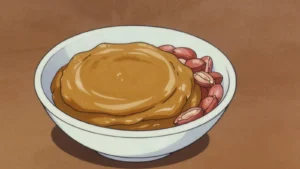
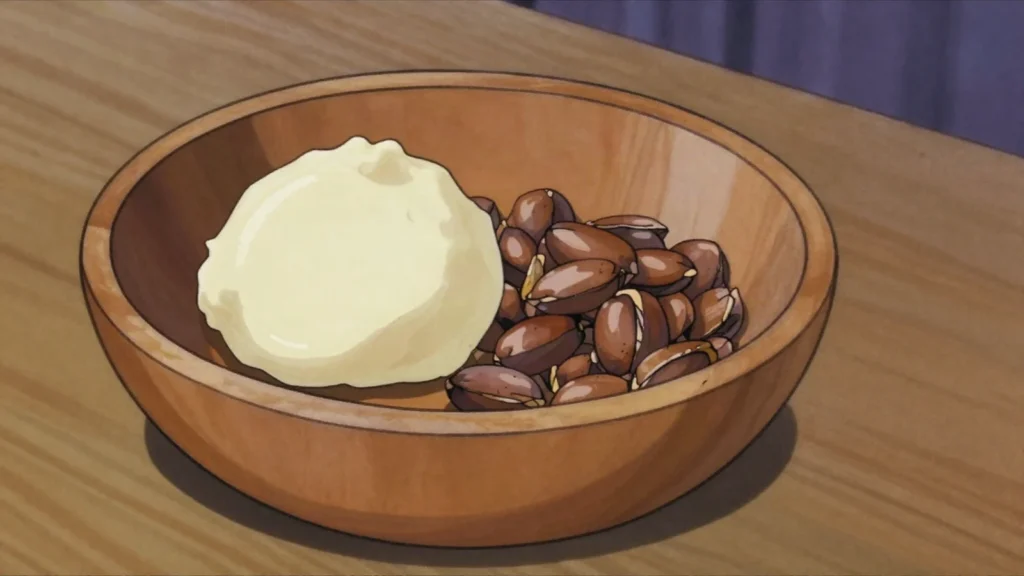
- 5 kgshea nuts, from Vitellaria paradoxa
Also
- water, in quantity
- firewood or a strong heat source
Equipment
- a large pot
- a mortar and pestle, or a grinding stone
- a wide basin for kneading
- cloth for straining
To use
- for frying
- for enriching sauces
- for porridge
Directions
- Drain them and dry them thoroughly, spread out in the sun for several days. Dry them completely. Crack the shells and discard them, keeping the kernels. Roast them until they darken and smell nutty and oil begins to show on the surface, which takes 30 to 45 minutes.
- Stir without stopping and keep the heat moderate. This is done with a mortar and pestle or on a grinding stone, and it takes considerable time and strength.
- Grind it until it is genuinely smooth and pours slowly, because coarse paste holds onto its fat and will not release it in the next step. Put the paste in a wide basin and add water a little at a time, then knead and beat it with your hands.
- Keep working it, adding cool water gradually, for 30 minutes or more. This is hard work and it is done rhythmically, often by two or more women together, and the foam appears gradually rather than suddenly.
- Skim the fatty foam off into a separate pot as it collects. Add more water and keep kneading until no more foam rises. The water evaporates, the remaining solids sink and darken, and clear golden oil separates on top. Boil it gently and keep an eye on it. Hot oil at this volume is dangerous and it will boil over if the heat is too high.
- Keep a lid to hand and never leave it unattended. It is ready when the bubbling has stopped and the oil above is clear rather than cloudy, which means the water has gone. Strain it through cloth into a clean container.
- Let it cool slowly and undisturbed, and stir it occasionally as it begins to set. Stirring as it cools gives a smooth even texture, and butter left completely still can set grainy.
Technique
- Shea butter is a significant source of income for rural women’s cooperatives across Mali, Burkina Faso and Ghana.
- The tree grows only in the wild Sahel belt and takes fifteen years or more to fruit.
- Unrefined butter tastes and smells quite unlike the refined cosmetic product.
Substitutions
- Buying unrefined food-grade shea butter, which is sold in West African shops.
- There is no substitute for its flavour in the dishes that use it.
Variations
- Used as a frying fat.
- Stirred into sauces and porridges.
- The refined export version, which is neutral in flavour.
History
Shea trees grow wild across the Sahel belt; women boil, roast and pound the kernels, and the butter has crossed the Sahara in trade for centuries.
Frequently asked questions
What is Shea butter?
Shea butter is a sauce & condiment from Mali: ivory nut butter used for frying and for enriching sauces in villages. Shea trees grow wild across the Sahel belt; women boil, roast and pound the kernels, and the butter has crossed the Sahara in trade for centuries.
How long does Shea butter take to make?
Shea butter takes several days of preparation and 3 hr of cooking. The recipe makes about 1 kg. It is rated hard to make.
What can I substitute in Shea butter?
Yes, within limits. Buying unrefined food-grade shea butter, which is sold in West African shops. There is no substitute for its flavour in the dishes that use it.
What is the most important thing to get right in Shea butter?
Keep working it, adding cool water gradually, for 30 minutes or more. This is hard work and it is done rhythmically, often by two or more women together, and the foam appears gradually rather than suddenly.