Ingredients
To roast and mill
- 500 gwhite maize
- 200 graw groundnuts
- 150 gsoya beans
- 100 grice or millet, optional
For one bowl of porridge
- 4 tablespoonstom brown flour
- 400 mlwater
- a pinch of salt
To finish
- sugar or honey, to taste
- milk or evaporated milk
- a pinch of ground nutmeg, optional
Directions
- Discard any that are shrivelled, discoloured or mouldy. Discard any groundnut that tastes bitter. Store both the raw grain and the finished flour completely dry.
- Wash it in cold water and drain it well. Spread it on a cloth and let it dry completely. It must be bone dry before roasting. Heat a heavy dry pan over a medium heat. Add the maize in a layer no more than two deep. Stir it constantly with a wooden spoon.
- Keep going until it is golden brown and smells nutty. Do not let any of it turn black. Tip it onto a tray to cool completely. Roasting the groundnuts is faster and needs watching. Roast them in the same dry pan. They take about eight minutes over a medium heat. Shake the pan constantly as they colour.
- Tip them into a cloth and rub the skins off. Winnow the loose skins away outside if you can. Roast any rice or millet the same way. Let everything cool completely before milling. Milling them is done together.
- Combine all the roasted ingredients in one bowl. Take them to a mill or grind them at home. Grind in small batches for an even result. The flour should be fine and slightly oily. Sieve it and regrind anything left behind. In Ghana most households take theirs to a local mill. Let it cool fully before it goes into a container. Keep it somewhere cool, dark and completely dry.
- Use it within about a month for the best flavour. Throw it out if it smells sharp or musty. Put the flour into a bowl or a small pan. Add a little cold water and whisk it to a smooth paste. Starting cold is what stops lumps forming.
- Bring the rest of the water to the boil separately. Pour the boiling water into the paste, whisking constantly. Return it to the pan over a low heat. Cook it for five to eight minutes, stirring throughout. It will thicken into a smooth porridge.
- Add the pinch of salt as it cooks. Cook it long enough that no raw taste remains. Adjusting it is done at the end. Cook it longer for a stiffer porridge. For an infant it should be thin enough to spoon easily. Pour it into a bowl and let it cool a little. Stir in milk or evaporated milk if you like. Grate a little nutmeg over the top for adults.
Technique
- Tom brown is one of several home-milled weaning flours promoted across West Africa, and formulations vary by household and by programme.
- The maize and legume combination is the core of it, with the exact ratio adjusted to what is available.
Substitutions
- Millet or sorghum can replace part of the maize and are common in northern Ghana.
- Roasted sesame or cowpeas can replace the groundnuts for anyone avoiding peanuts, giving a different but workable mix.
Variations
- Some households add roasted rice for a smoother texture.
- Adding dried milk powder to the mix makes it richer for young children.
- A savoury version is cooked with salt alone and no sugar.
History
A roasted-cereal weaning porridge promoted by Ghanaian nutrition programmes from the mid-twentieth century as a home-made protein-rich infant food.
Frequently asked questions
What is Tom brown?
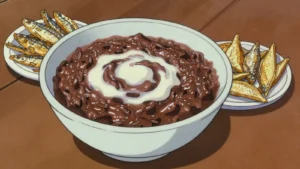
Tom brown is a breakfast from Ghana: roasted maize and groundnut porridge fed to children and convalescents. A roasted-cereal weaning porridge promoted by Ghanaian nutrition programmes from the mid-twentieth century as a home-made protein-rich infant food.
How long does Tom brown take to make?
Tom brown takes 30 minutes of preparation and 15 minutes per bowl of cooking. The recipe makes about 1 kg of mix. It is rated easy to make.
What can I substitute in Tom brown?
Yes, within limits. Millet or sorghum can replace part of the maize and are common in northern Ghana. Roasted sesame or cowpeas can replace the groundnuts for anyone avoiding peanuts, giving a different but workable mix.
What is the most important thing to get right in Tom brown?
Wash it in cold water and drain it well. Spread it on a cloth and let it dry completely. It must be bone dry before roasting. Heat a heavy dry pan over a medium heat. Add the maize in a layer no more than two deep. Stir it constantly with a wooden spoon.