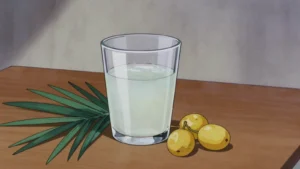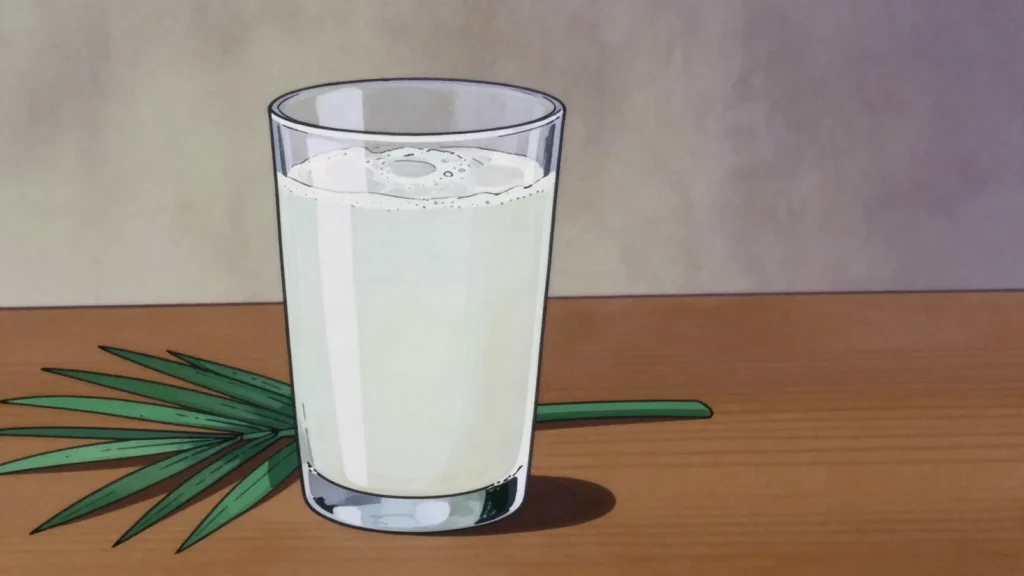

Naturally fizzy fresh palm wine from Côte d’Ivoire, tapped from oil and raffia palms. It ferments within hours: tappers work at dawn, the wine turns sharp by evening, and it never travels far from the tree.
It ferments in the container on the tree, before anyone touches it; there is no preparation to write, only a palm and a climb.
What goes into it
- palm sap
- nothing else
How it is made
The tapper climbs the palm and cuts into the flower stem or the crown, binding a gourd or bottle beneath to catch the sap. Yeasts and bacteria already living on the tree begin fermenting it as it drips, so it arrives at market already fizzing and only lightly alcoholic. By the end of the day it has soured.
How long it takes: hours; sweet at dawn, sharp by dusk
How it is eaten
From a glass or a plastic bottle at a roadside stall, the same day it is tapped.
History
Sap tapped from oil and raffia palms ferments within hours; tappers work at dawn and the wine turns sharp by evening, so it never travels far.
Frequently asked questions
What is Bangui?
Bangui is a wine & spirit from Côte d’Ivoire: naturally fizzy fresh palm wine. Sap tapped from oil and raffia palms ferments within hours; tappers work at dawn and the wine turns sharp by evening, so it never travels far.
How is Bangui made?
The tapper climbs the palm and cuts into the flower stem or the crown, binding a gourd or bottle beneath to catch the sap. Yeasts and bacteria already living on the tree begin fermenting it as it drips, so it arrives at market already fizzing and only lightly alcoholic. By the end of the day it has soured. It takes hours; sweet at dawn, sharp by dusk.
Can I make Bangui at home?
No, and the atlas gives no method for it. It ferments in the container on the tree, before anyone touches it; there is no preparation to write, only a palm and a climb.
What goes into Bangui?
Palm sap, nothing else.
How is Bangui eaten?
From a glass or a plastic bottle at a roadside stall, the same day it is tapped.