
Ingredients
Dough
- 500 gplain flour
- 1 tspsalt
- 1 tbspsugar
- 60 gghee, melted
- 250 mlwarm milk
Layering
- 150 gghee, softened
- 60 gplain flour
To finish
- 2 tbspmilk, for brushing
- 1 tbspsugar (for the sweet version)
- 1 tspnigella or sesame seeds
Directions
- Rub the melted ghee into the flour, salt and sugar, then bring together with the warm milk into a firm dough — noticeably stiffer than a bread dough. Knead 8 minutes, cover and rest 1 hour.
- Beat the softened ghee with the 60 g of flour to a spreadable paste.
- Divide the dough into 4. Roll each as thin as you can manage, brush all over with the ghee paste, then fold in three like a letter, turn 90 degrees, and roll out again. Repeat this fold and roll three times per piece.
- The repeated laminating is the entire point of bakarkhani. Each fold multiplies the layers, and a bread folded once has none of the flaking that makes it what it is.
- Chill the folded pieces 20 minutes so the ghee firms.
- Divide into 8, roll each into an oval about 1 cm thick — deliberately thick, because bakarkhani is a substantial dry bread, not a flatbread.
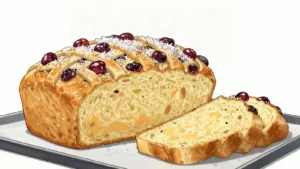
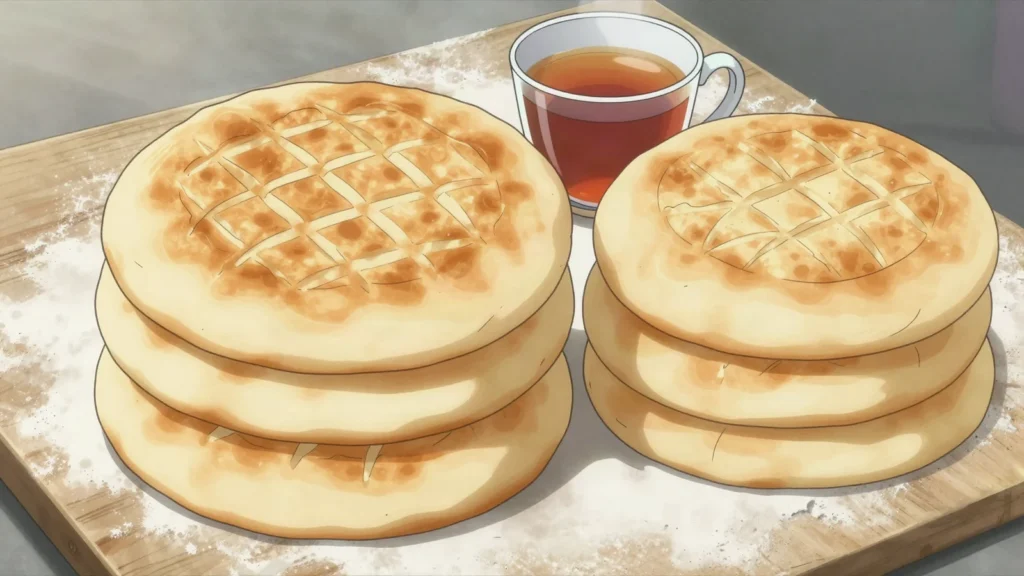
- Score the surface in a criss-cross or fan pattern with a sharp knife, cutting a few millimetres deep, and prick all over with a fork so it does not balloon.
- Brush with milk, scatter with seeds and sugar if making the sweet version, and bake at 200°C (400°F) for 22–25 minutes until firm, dry and pale gold.
- Cool completely on a rack. It should be hard and crisp, and it keeps for a week or more — this is a bread designed to last, eaten broken into hot tea.
Technique
- Do not aim for softness. A soft bakarkhani has been under-baked; the finished bread should knock like a biscuit.
- Prick thoroughly. Unpricked, the layers separate into a hollow dome instead of staying compact.
- Ghee, not butter or oil. The flavour of Old Dhaka bakarkhani is largely ghee.
Substitutions
- Butter can replace ghee, though the bread is less fragrant and browns faster.
- Milk can be replaced with water for a plainer, harder bread.
Variations
- Sweet bakarkhani, heavier on sugar and finished with a sugar glaze.
- Nimak bakarkhani, the salty version eaten with meat curries.
History
Old Dhaka bread named after Aga Bakar Khan, a Mughal-era officer; bakeries in Chawkbazar still bake it in tandoors before dawn.
Frequently asked questions
What is Bakarkhani?
Bakarkhani is a bread & pastry from Bangladesh: thick layered dry bread stamped and baked hard, eaten with tea. Old Dhaka bread named after Aga Bakar Khan, a Mughal-era officer; bakeries in Chawkbazar still bake it in tandoors before dawn.
How long does Bakarkhani take to make?
Bakarkhani takes 40 min plus 1 hr resting of preparation and 25 min of cooking. The recipe makes 8 breads. It is rated hard to make.
What can I substitute in Bakarkhani?
Yes, within limits. Butter can replace ghee, though the bread is less fragrant and browns faster. Milk can be replaced with water for a plainer, harder bread.
What is the most important thing to get right in Bakarkhani?
The repeated laminating is the entire point of bakarkhani. Each fold multiplies the layers, and a bread folded once has none of the flaking that makes it what it is.