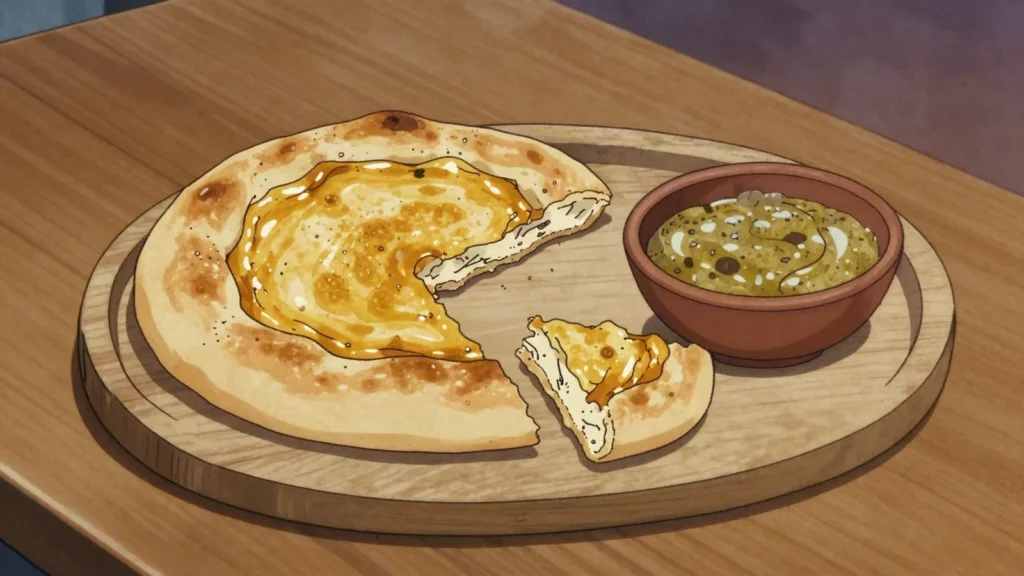

Ingredients
Dough
- 700 gplain flour
- or half wholemeal
- 10 gdried yeast
- 2 teaspoonssalt
- 1 teaspoonsugar
- about 480 ml warm water
- 2 tablespoonsoil
To bake
- a very hot oven
- with a baking stone or steel
- or a heavy cast iron pan
- flour, for dusting
- water, for the hands
Sometimes added
- 1 teaspoonnigella seeds
- a little melted ghee, to brush
To serve
- torn by hand
- with saltah
- from the stone pot
Directions
- Warm the water to blood temperature. Stir the yeast and the sugar into it. Let it stand until it foams up. Give it about ten minutes to foam. Put the flour and salt in a large bowl. Make a well in the middle of it. Pour in the foaming yeast liquid. Add the oil into the well as well. Bring it together into a soft dough. This dough is quite wet and slack.
- Turn it out onto a lightly floured surface. Knead it for a good ten minutes. It should become smooth and elastic. Put the dough in an oiled bowl. Cover it and leave it somewhere warm.
- Let it roughly double in size. Give it an hour or a little more. Divide it into even sized pieces. Roll each one into a smooth ball. Cover them over with a clean cloth. Let them rest for twenty minutes. Put the stone or pan in a cold oven. Heat it to the very highest setting. Give it at least forty-five minutes.
- Press each ball out with wet fingertips. Work from the centre outwards. Aim for a round about a centimetre thick. Press rather than roll every time. Press your fingertips into the surface. Make dimples across the whole round. They stop the bread ballooning up.
- Scatter nigella seeds over the top. Press them down lightly to stick. Baking them takes speed and care. Work quickly so the oven stays hot. Give it about six full minutes. Heat a heavy cast iron pan until smoking.
- Lay a bread into the dry hot pan. Give it about three full minutes. Turn it and give it three more. Keeping them soft is essential. Stack the baked breads as they come out. Wrap the stack in a clean cloth. That steam keeps them soft and pliable. Wrap them the moment they leave the oven.
- Brush the hot breads with melted ghee. It is done for guests particularly. Tear it by hand rather than cutting it. Serve hot saltah alongside it. It keeps a day in a sealed bag. Warm it briefly to soften it again.
Technique
- A mofa is a clay oven set into the ground with the fire at the bottom, running at four hundred degrees and above; the baker reaches down and presses the dough onto the hot inner wall, where it sticks and bakes in minutes before being peeled off with a hook. A domestic oven cannot reproduce that, and the atlas says so plainly.
- Malooj is around a centimetre thick and stays soft and bready rather than puffing into a pocket, and that thickness is functional: it has to hold up to scooping hot saltah from the pot without tearing, where a thin bread would fall apart.
- Press the dough out with wet fingertips rather than rolling it, since a rolling pin presses out the gas that keeps it soft; and dimple the surface all over, which stops it ballooning and holds any melted ghee brushed over it.
Substitutions
- A baking stone or steel gets closest to a mofa at home.
- A smoking hot dry cast iron pan bakes them well, though it browns rather than chars.
Variations
- Nigella seeds are scattered on top in some versions.
- The hot breads are brushed with melted ghee for guests particularly.
- Khubz tannour in Bahrain is a thinner bread from a similar oven.
History
The everyday bread of the highlands, torn and used to scoop saltah straight from the stone pot.
Frequently asked questions
What is Malooj?
Malooj is a bread & pastry from Yemen: thick soft round bread baked against the wall of a clay mofa oven. The everyday bread of the highlands, torn and used to scoop saltah straight from the stone pot.
How long does Malooj take to make?
Malooj takes 20 minutes plus rising of preparation and 25 minutes of cooking. The recipe makes about 8 breads. It is rated medium to make.
What can I substitute in Malooj?
Yes, within limits. A baking stone or steel gets closest to a mofa at home. A smoking hot dry cast iron pan bakes them well, though it browns rather than chars.
What is the most important thing to get right in Malooj?
Press each ball out with wet fingertips. Work from the centre outwards. Aim for a round about a centimetre thick. Press rather than roll every time. Press your fingertips into the surface. Make dimples across the whole round. They stop the bread ballooning up.