
Ingredients
Base
- 400 gsago flour
- 200 ggrated fresh coconut
- a pinch of salt
To sweeten
- 100 gpalm sugar, finely chopped
- or 100 g grated coconut sugar
Sometimes added
- a little water, to bring it together
- grated coconut, extra for rolling
Equipment
- a flat clay plate or a heavy dry pan
- a wooden spatula
Directions
- Crack a mature brown coconut open. Peel off the brown skin with a peeler. Grate the white flesh very finely. Soak it briefly in warm water if that is all you have. Put the sago flour into a large bowl. Add the grated coconut and the salt. Rub them together with your fingers.
- Work until the mixture is evenly combined. It should hold together when squeezed in your hand. Add a spoonful of water if it is too dry. Do not make it into a firm dough.
- Chop the palm sugar as finely as you can. A heavy dry frying pan works well. Heat the plate over a medium heat. Do not add any oil to it at all.
- Spoon a small mound of the mixture onto the plate. Press it into a flat round with a spatula. Make it about a centimetre thick. If you are filling it, press a hollow first.
- Put a little palm sugar in the hollow. Cover it with more of the mixture. Press the whole thing flat again.
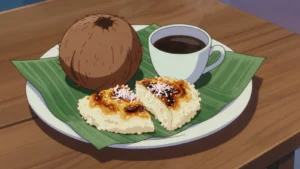
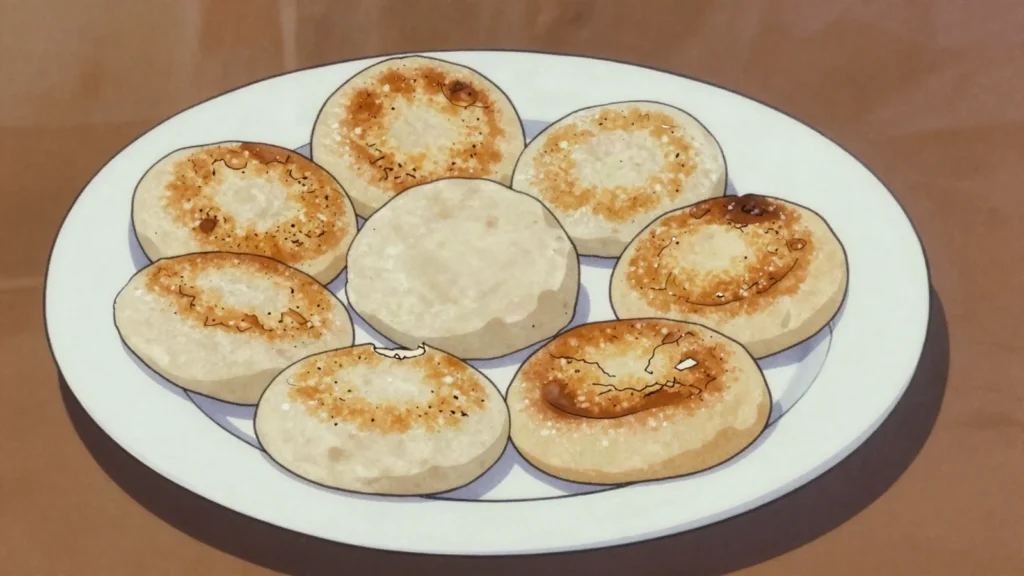
- Let it cook without moving it. Give it about four minutes there. Turn it carefully with a spatula. Cook the other side for three minutes. It should be pale gold with brown flecks.
- Break one open and taste a piece. Cook them longer if that is the case. Adjust the heat between batches. Lift them onto a rack or a plate. They are fragile while still hot. Roll them in extra grated coconut if you like. They keep three days in an airtight tin.
Technique
- Sago palms grow wild across Timor and much of island Southeast Asia, and the starch has served as both an everyday and an emergency food.
- The processing is laborious, which is why sago foods are often associated with communal work.
Substitutions
- Tapioca flour is the closest substitute for sago flour and behaves almost identically.
- Desiccated coconut soaked in warm water can replace fresh grated coconut.
Variations
- A filled version with palm sugar in the centre is made for celebrations.
- Some households add sesame seeds to the mixture.
- A plain unsweetened version is eaten alongside savoury food.
History
A Timorese sweet sometimes rolled with palm sugar; sago from the wild palm is an old famine and festival food.
Frequently asked questions
What is Akar Cadaka?
Akar Cadaka is a dessert from Timor-Leste: sago flour mixed with grated coconut and roasted on a hot clay plate. A Timorese sweet sometimes rolled with palm sugar; sago from the wild palm is an old famine and festival food.
How long does Akar Cadaka take to make?
Akar Cadaka takes 20 minutes of preparation and 20 minutes of cooking. The recipe makes about 20 pieces. It is rated medium to make.
What can I substitute in Akar Cadaka?
Yes, within limits. Tapioca flour is the closest substitute for sago flour and behaves almost identically. Desiccated coconut soaked in warm water can replace fresh grated coconut.
What is the most important thing to get right in Akar Cadaka?
Work until the mixture is evenly combined. It should hold together when squeezed in your hand. Add a spoonful of water if it is too dry. Do not make it into a firm dough.