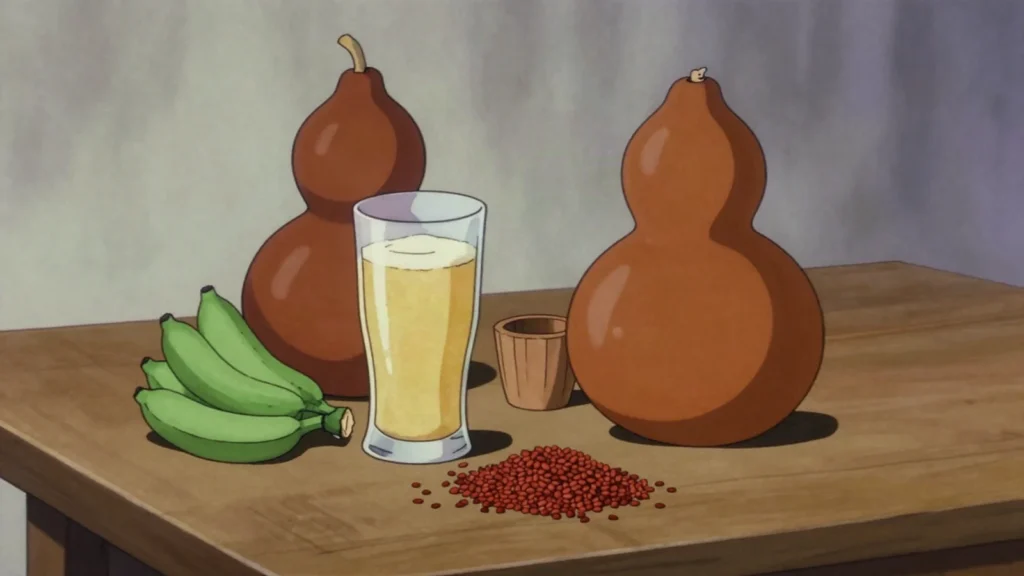

Ingredients
Bananas
- 8 kgEast African highland cooking bananas (igitoke or imineke), very green when picked
- Fresh banana leaves, to line the ripening pit
Juice extraction
- 2large handfuls dried spear grass (urutete) or clean fresh straw, washed
- 3 litresclean water, at blood heat
Ferment
- 400 gsorghum grain, or 400 g sorghum flour
- 1clean gourd (icyansi) or a food-grade 10 litre bucket with a loose lid
Directions
- Peel the ripened bananas, discarding any that have gone black and slimy. The flesh should be amber and give like jam under a thumb.
- Work the flesh in a wooden trough (umuvure) with a big handful of the dry grass, squeezing and twisting for 20–25 minutes.
- Strain the juice through the grass or a coarse cloth into the gourd, pressing hard, then thin it with the warm water to taste; 3 litres of water to 5 litres of juice is normal.
- Stir in the roasted sorghum flour, cover loosely with a banana leaf so gas escapes, and leave in a warm dark place at 25–30°C (75–85°F). Fermentation starts within 12 hours: expect a thick foam, a strong yeasty smell and audible fizzing.
- Stir once a day with a clean stick. It is ready after 2 to 4 days, when the foam falls, the taste turns dry and slightly sour and the strength sits around 5–8 percent.
- Strain again and drink within 2 days, cloudy, at cellar temperature, poured from the gourd into shared cups or drunk through long reed straws at a ceremony.
Technique
- Urwagwa is not shelf stable. It has no hops, no boiling step and no filtration, so it keeps souring; by day four it turns sharply vinegary. Refrigeration slows this but changes the character.
- The ferment relies on wild yeast from the sorghum, the gourd and the fruit. Scrupulously clean equipment paradoxically makes it slower; a gourd used before for urwagwa works fastest.
- The drink is ceremonially important at gusaba (dowry) and reconciliation gatherings, where it is offered from a shared vessel. Serving it flat or sweet is considered a poor showing.
- Home food safety: use sound fruit only, never a sealed rigid container (fermentation pressure can burst it), and discard any batch that smells of solvent, mould or nail polish.
Substitutions
- No highland cooking banana? Use very ripe plantains, skins fully black, plus 500 g of ripe sweet bananas for aroma; expect a rounder, less tangy drink.
- No sorghum? Roasted millet flour is the accepted stand-in and is used in parts of Uganda; 1 tsp of dried brewers yeast will guarantee the ferment starts but flattens the rustic flavour.
Variations
- Ikigage, the Rwandan sorghum beer proper, made from sprouted sorghum with no banana at all.
- Distilled urwagwa is boiled off into kanyanga, a strong clear spirit that is illegal to produce in Rwanda.
History
A traditional banana beer, made by fermenting mashed banana with sorghum flour, documented among the Rwandan and wider Great Lakes region peoples for many generations as a significant social and ceremonial beverage, reflecting the region’s strong banana cultivation tradition, since Rwanda’s fertile volcanic highlands are particularly well suited to banana growing. Its production, mashing ripe bananas and allowing the juice to ferment naturally with sorghum flour added to aid fermentation, is traditionally a communal or family activity, and urwagwa carries deep social significance in Rwandan culture, historically offered as a mark of hospitality and used in traditional ceremonies including weddings and reconciliation rituals. It remains an important traditional beverage within Rwandan cultural practice today.
Frequently asked questions
What is Urwagwa?
Urwagwa is a wine & spirit from Rwanda: traditional banana beer fermented with roasted sorghum. A traditional banana beer, made by fermenting mashed banana with sorghum flour, documented among the Rwandan and wider Great Lakes region peoples for many generations as a significant social and ceremonial beverage, reflecting the region’s strong banana cultivation tradition, since Rwanda’s fertile volcanic highlands are particularly well suited to banana growing. Its production, mashing ripe bananas and allowing the juice to ferment naturally with sorghum flour added to aid fermentation, is traditionally a communal or family activity, and urwagwa carries deep social significance in Rwandan culture, historically offered as a mark of hospitality and used in traditional ceremonies including weddings and reconciliation rituals. It remains an important traditional beverage within Rwandan cultural practice today.
How long does Urwagwa take to make?
Urwagwa takes 45 min of preparation and 5 to 8 days of cooking. The recipe makes about 4 litres. It is rated hard to make.
What can I substitute in Urwagwa?
Yes, within limits. No highland cooking banana? Use very ripe plantains, skins fully black, plus 500 g of ripe sweet bananas for aroma; expect a rounder, less tangy drink. No sorghum? Roasted millet flour is the accepted stand-in and is used in parts of Uganda; 1 tsp of dried brewers yeast will guarantee the ferment starts but flattens the rustic flavour.
What is the most important thing to get right in Urwagwa?
Home food safety: use sound fruit only, never a sealed rigid container (fermentation pressure can burst it), and discard any batch that smells of solvent, mould or nail polish.