
Ingredients
Apple base
- 500 gtart apples, such as Antonovka or Bramley
- 100 gcaster sugar
- 1egg white
- a pinch of vanilla
Agar syrup
- 8 gagar agar powder
- 160 mlwater
- 500 gcaster sugar
To finish
- icing sugar, for dusting
Equipment
- a stand mixer
- a sugar thermometer
- a piping bag with a large star nozzle
Directions
- Halve the apples and remove the cores. Leave the skin on, which holds much of the pectin. Bake them cut side down at 180C for thirty minutes. They should collapse completely and be very soft.
- Scoop the flesh out of the skins. Sieving gives the smooth texture the sweet needs. Reduce it in a pan if it looks at all watery. A wet puree is the commonest cause of failure.
- Chill the puree completely before using it. Put the cold apple puree in a stand mixer bowl. Add the 100 g of sugar and the vanilla. Whip it on high speed for five minutes. Add the egg white and keep whipping. Whip for another five to eight minutes. It should become thick, white and very stiff.
- Put the agar and water in a heavy pan. Let it stand for ten minutes to hydrate. Bring it to the boil, stirring constantly. Agar must boil to activate properly. Add the 500 g of sugar all at once. Stir until it has completely dissolved.
- Take it to 110C on the thermometer. Below it the sweets will never set firm. Take it off the heat as soon as it reaches 110C. Let the bubbles subside for a moment. Start the mixer running on medium speed. Pour the hot syrup into the whipped apple in a thin stream. Pour it down the side of the bowl, not onto the whisk.
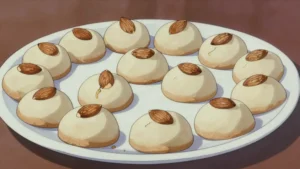
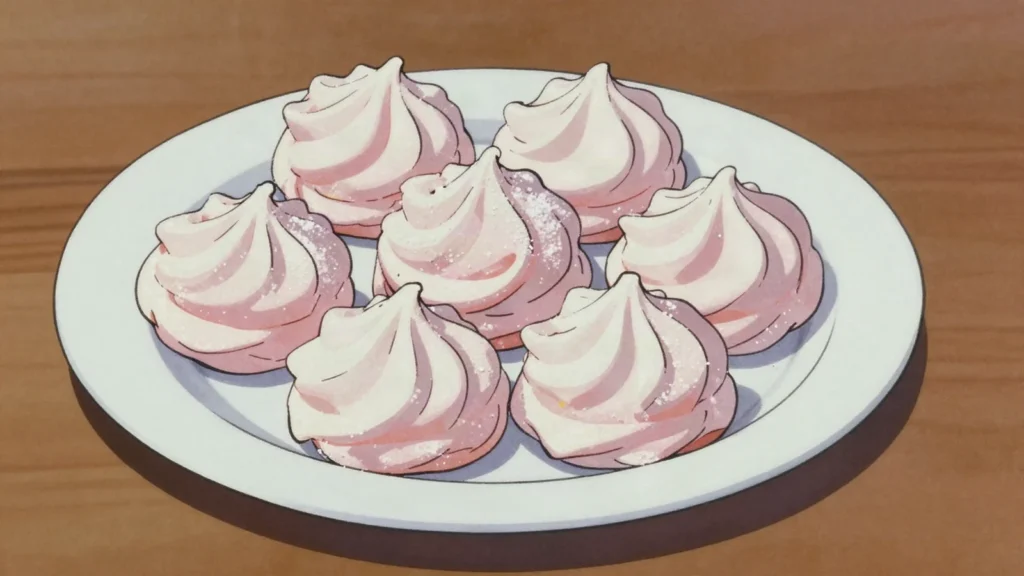
- Whip for another five to seven minutes. It should become very stiff and glossy. Fill the bag while the mixture is still warm. Make them about four centimetres across. Work fast because it stiffens within minutes. Setting them takes a full day.
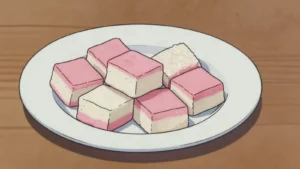
- Leave them uncovered at room temperature. Do not refrigerate them at this stage. Dust the tops generously with icing sugar. Press two shells together, flat sides facing. They stick to each other without any help.
Technique
- Pastila, the older Russian sweet zefir grew out of, is made by drying whipped apple puree rather than setting it with agar.
- Agar is used rather than gelatine, which is why zefir has a firmer, cleaner bite than marshmallow.
Substitutions
- Other high-pectin fruit purees such as blackcurrant or quince can replace part of the apple.
- There is no substitute for agar here, since gelatine gives a different and softer set.
Variations
- Berry versions replace some of the apple with blackcurrant or raspberry puree.
- Chocolate-coated zefir is widely sold in Russian shops.
- A coloured version is made for children with a little food colouring.
History
Developed from old Russian fruit pastila in the early twentieth century and named after the west wind.
Frequently asked questions
What is Zefir?
Zefir is a dessert from Russia: light apple and egg-white confection piped into shells and set firm. Developed from old Russian fruit pastila in the early twentieth century and named after the west wind.
How long does Zefir take to make?
Zefir takes 1 hour plus 24 hours setting of preparation and 20 minutes of cooking. The recipe makes about 40 halves. It is rated hard to make.
What can I substitute in Zefir?
Yes, within limits. Other high-pectin fruit purees such as blackcurrant or quince can replace part of the apple. There is no substitute for agar here, since gelatine gives a different and softer set.
What is the most important thing to get right in Zefir?
Put the agar and water in a heavy pan. Let it stand for ten minutes to hydrate. Bring it to the boil, stirring constantly. Agar must boil to activate properly. Add the 500 g of sugar all at once. Stir until it has completely dissolved.