
Ingredients
Potato filling
- 600 gpotatoes, boiled and roughly mashed
- 1 tbspoil
- 1 tspmustard seeds
- 1 tspcumin seeds
- a pinch of asafoetida
- 10curry leaves
- 3green chillies, chopped
- 2cm ginger, grated
- 4 clovesgarlic
- ½ tspturmeric
- 2 tbspchopped coriander
- juice of half a lemon
- salt
Batter
- 150 gbesan, gram flour
- 2 tbsprice flour
- ½ tspturmeric
- ¼ tspbicarbonate of soda
- ½ tspchilli powder
- salt
- about 150 ml water
Dry garlic chutney
- 10 clovesgarlic
- 50 gdried coconut, desiccated
- 3 tbsproasted peanuts
- 2 tbspred chilli powder
- 1 tspsesame seeds
- salt
To assemble
- 6pav, soft square bread rolls
- green coriander chutney
- tamarind chutney
- fried green chillies
To fry
- oil, for deep frying
Directions
- Boil the potatoes, drain them well and let the steam evaporate. Let them dry out properly, since wet mashed potato makes a filling that falls apart in the oil. Mash them roughly, leaving lumps. Leave real texture rather than mashing smooth, since a purée gives a dense pasty vada.
- Heat the oil and add the mustard seeds. Wait for them to pop before anything else goes in. Add the cumin, asafoetida and curry leaves, standing back since the leaves spit.
- Add the ginger, garlic and green chillies and fry for a minute. Add the turmeric and take it off the heat quickly. Stir this tempering through the mashed potato with the coriander, lemon and salt. Season it firmly, since it is wrapped in plain batter and plain bread. Roll them smooth and firm, and chill them for 15 minutes if the mixture is soft.
- Whisk the besan, rice flour, turmeric, chilli and salt with water into a smooth batter. It should be thick enough to coat a ball completely and cling, roughly like double cream. Add it just before frying, since it starts working immediately. Dip each potato ball in the batter, turning it to coat completely.
- Coat it completely with no bare patches, since any exposed potato falls apart in the oil. Lower them in gently and fry for 3 to 4 minutes until deep golden and crisp. Drain them on a wire rack, not paper. Now the dry garlic chutney, which is what makes it vada pav rather than a fritter in a bun.
- Roast the garlic gently in a dry pan until it softens and colours, which takes the raw edge off. Grind everything with the chilli powder, sesame and salt to a coarse dry powder. Keep it coarse and dry rather than grinding it to a paste, since it is meant to be sprinkled. It should be fiery, garlicky and slightly sweet from the coconut.
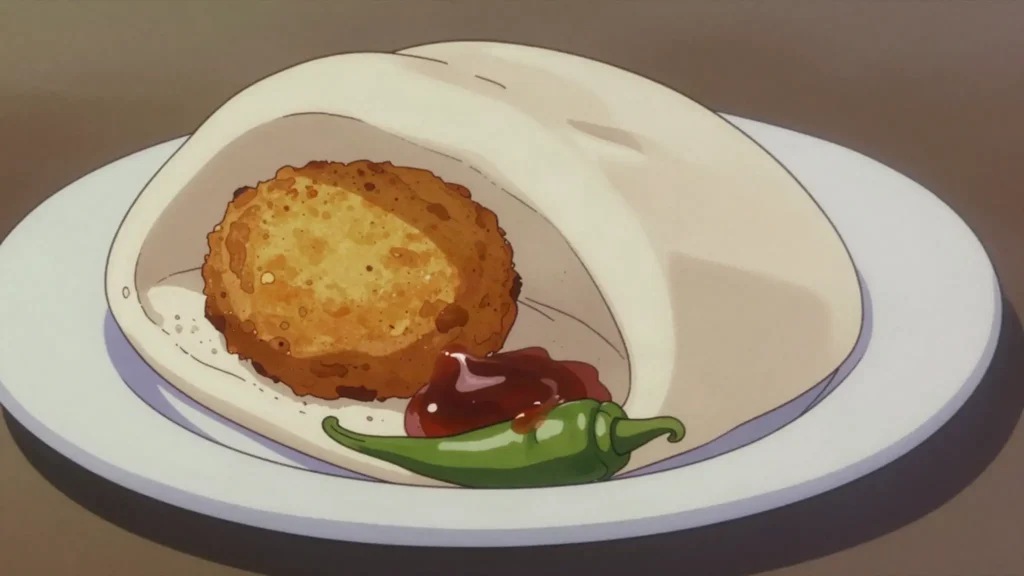
- Spread green chutney on one side and tamarind chutney on the other. Now sprinkle the dry garlic chutney generously inside. Put the hot vada inside and press the pav down. Fry whole green chillies in the same oil for 30 seconds and salt them. Serve it immediately, wrapped in paper, eaten with the hands. It must be eaten hot, since the vada softens and the pav goes soggy within minutes.
Technique
- Ashok Vaidya’s Dadar stall in 1966 is the usual origin given.
- The dry garlic chutney is what distinguishes it from any other fritter sandwich.
- Pav is the soft square roll and its name comes from Portuguese pão.
Substitutions
- Soft white bread rolls in place of pav.
- Ready-made dry garlic chutney, sold in Indian shops.
Variations
- Pressed on a tawa with butter.
- With cheese, which some stalls now offer.
- Made with a smaller vada, as a snack.
History
A spiced, deep-fried potato fritter, or vada, served inside a soft bread roll, invented in Mumbai, then Bombay, in 1966 by street vendor Ashok Vaidya, who is credited with combining an existing South Indian-style potato fritter with pav bread, itself introduced to the city through earlier Portuguese colonial baking influence, to create a fast, cheap, filling meal for the city’s large working population. It spread rapidly through Mumbai’s streets in the following decades, closely tied to the city’s textile mill workers and later its broader working class, and remains sold overwhelmingly from small street stalls and carts rather than formal restaurants. Vada pav is often described as India’s answer to the hamburger, given its similar handheld, fast, everyday-meal role in Mumbai’s street food culture.
Frequently asked questions
What is Vada Pav?
Vada Pav is a street food from India: mumbai bun with fried potato fritter and garlic chutney. A spiced, deep-fried potato fritter, or vada, served inside a soft bread roll, invented in Mumbai, then Bombay, in 1966 by street vendor Ashok Vaidya, who is credited with combining an existing South Indian-style potato fritter with pav bread, itself introduced to the city through earlier Portuguese colonial baking influence, to create a fast, cheap, filling meal for the city’s large working population. It spread rapidly through Mumbai’s streets in the following decades, closely tied to the city’s textile mill workers and later its broader working class, and remains sold overwhelmingly from small street stalls and carts rather than formal restaurants. Vada pav is often described as India’s answer to the hamburger, given its similar handheld, fast, everyday-meal role in Mumbai’s street food culture.
How long does Vada Pav take to make?
Vada Pav takes 30 min of preparation and 25 min of cooking. The recipe makes 6 vada pav. It is rated medium to make.
What can I substitute in Vada Pav?
Yes, within limits. Soft white bread rolls in place of pav. Ready-made dry garlic chutney, sold in Indian shops.
What is the most important thing to get right in Vada Pav?
Boil the potatoes, drain them well and let the steam evaporate. Let them dry out properly, since wet mashed potato makes a filling that falls apart in the oil. Mash them roughly, leaving lumps. Leave real texture rather than mashing smooth, since a purée gives a dense pasty vada.