
Ingredients
The intestine
- 1 kgbeef small intestine
- from a trusted butcher
- cleaned commercially if possible
- see the cleaning notes carefully
For cleaning
- coarse salt, a great deal
- white vinegar or lime juice
- plenty of cold running water
- a long thin skewer or spoon handle
For the first boil
- 2onions, halved
- 1 headgarlic, halved
- 2bay leaves
- 1 tablespooncumin seeds
- a bunch of coriander stalks
- 2 teaspoonssalt
- water, to cover
The seasoning
- 4 clovesgarlic, crushed
- 1 tablespoonground cumin
- 1 teaspoonachiote paste
- or 1 teaspoon paprika
- juice of 2 limes
- 2 tablespoonsoil
- salt and black pepper
To serve
- mote, cooked hominy
- boiled potatoes
- ají criollo, chilli sauce
- sliced raw onion with lime
- lime wedges
Directions
- Work in a sink you can disinfect afterwards. Keep the intestine away from all other food. Use a separate board and separate knives.
- Wash your hands constantly throughout. A long skewer or spoon handle helps. Use the back of a knife or a spoon. Rinse repeatedly under running water. Continue until the water runs completely clear. Salt draws out remaining mucus and residue. Rub every part of the surface. Rinse it thoroughly and repeat the salting.
- Soak it for at least a full hour. Change the water and repeat if it smells. Wash the board and knives in hot soapy water. Wash your hands thoroughly with soap. Do not skip any part of this stage. Put the cleaned intestine in a large pot.
- Cover it generously with cold water. Bring it to a boil and skim the foam. Drain it and discard that first water. Rinse the intestine and the pot. Now cover it with fresh cold water again. Add the onions, garlic and bay leaves.
- Add the cumin seeds and coriander stalks. Add the salt and bring it to a boil. Simmer it for at least ninety minutes. Two hours is better for tenderness. Drain it and let it cool enough to handle. Cut it into lengths of about fifteen centimetres. Mix the garlic, cumin and achiote with oil. Add the lime juice, salt and pepper. Rub the mixture over the boiled intestine.
- Let it sit for at least thirty minutes. An hour gives noticeably better flavour. Soak wooden skewers in water first. That stops them burning through on the grill. Grill outdoors in open air only. A hot griddle pan works indoors instead. Grill the skewers for about ten minutes. Turn them every couple of minutes.
- Baste with the remaining seasoning as you go. Move the skewers if flames flare up. Squeeze lime over as it comes off the grill. Cut the skewers into bite-sized pieces. Serve them in a bowl or on a plate. Mote is cooked hominy, large soft maize kernels. Grill it from thawed rather than frozen.
Technique
- Intestine holds digestive contents and carries bacteria including E. coli, some strains of which cause severe illness. Cleaning and thorough cooking are both required and neither is sufficient alone. Buying commercially cleaned intestine from a butcher is by far the safer route and the atlas recommends it.
- If you clean it yourself, do it completely: turn it inside out, scrape the inner surface, rinse until the water runs clear, rub hard with coarse salt at least three times, then soak in water with vinegar or lime. The cleaned intestine should smell of nothing unpleasant — that smell test is the real check. Half-cleaned intestine is not acceptable.
- Cross-contamination is the genuine hazard. Use a separate board and knives, keep it away from all other food, and disinfect the sink and every surface afterwards.
- The long boil is not optional. It cooks the intestine through and tenderises it, and grilling alone does neither. Quito vendors boil before grilling for exactly this reason. Simmer at least ninety minutes, until there is no rubbery resistance at all.
- Charcoal produces carbon monoxide, which has no colour, smell or taste and kills people in enclosed spaces every year. Grill outdoors only, never in a garage or tent, and never bring a used grill inside. A hot griddle pan or oven grill works indoors instead.
- Coiling the lengths onto the skewer, as Quito vendors do, gives more surface for charring and holds the pieces together.
- The name mixes two languages: mishqui is Kichwa for sweet or tasty, tripa is Spanish. Kichwa words run right through Ecuadorian Spanish, which is itself a record of centuries of contact and conquest.
Substitutions
- Commercially cleaned chitterlings or beef casings replace home-cleaned intestine and are much safer.
- Pork intestine replaces beef and is used in some versions.
- Paprika with a pinch of turmeric replaces achiote paste for colour, though the flavour differs.
- A very hot griddle pan or oven grill replaces charcoal indoors and avoids the carbon monoxide question entirely.
- Tinned hominy replaces home-cooked mote and needs only warming.
- Any fresh chilli and herb sauce stands in for ají criollo.
Variations
- Quito vendors also grill chunchullo, a related intestine preparation, alongside tripa mishqui.
- Colombian chunchullo and Argentine chinchulines are the same cut grilled in their own traditions.
- Some Ecuadorian vendors serve it with a fried egg on top, which is a common street addition.
- A version served with llapingachos, the stuffed potato cakes, turns it into a fuller plate.
- Some cooks marinate the boiled intestine in beer before grilling.
- Guatita, Ecuadorian tripe in peanut sauce, uses a different part of the animal in a quite different way.
History
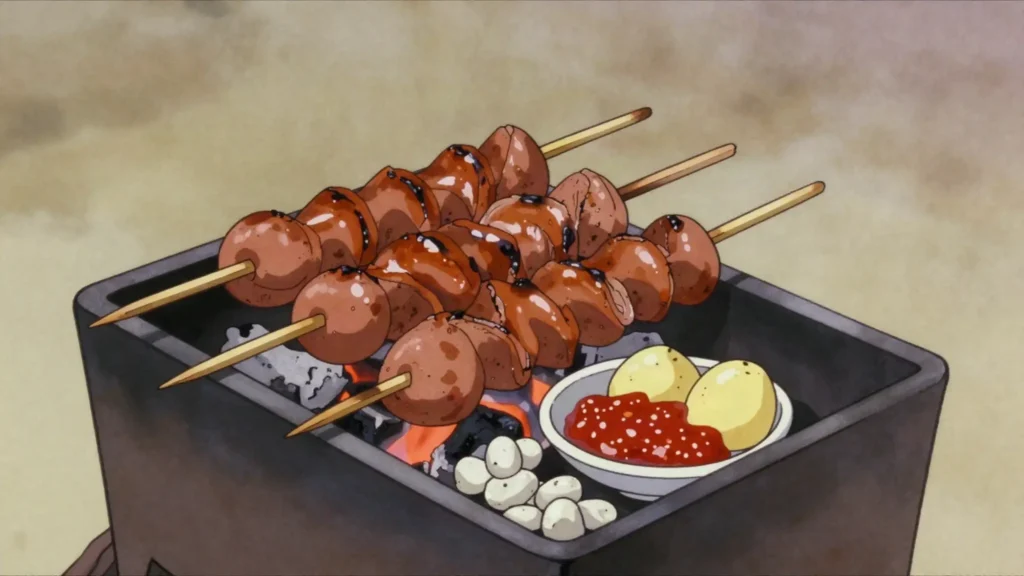
Quito street grills sell it from smoking braziers at night; the Kichwa name means sweet intestine.
Frequently asked questions
What is Tripa mishqui?
Tripa mishqui is a street food from Ecuador: grilled cow intestine on skewers, served with hominy and potato. Quito street grills sell it from smoking braziers at night; the Kichwa name means sweet intestine.
How long does Tripa mishqui take to make?
Tripa mishqui takes 45 minutes plus soaking of preparation and 2 hours of cooking. The recipe makes serves 4. It is rated hard to make.
What can I substitute in Tripa mishqui?
Yes, within limits. Commercially cleaned chitterlings or beef casings replace home-cleaned intestine and are much safer. Pork intestine replaces beef and is used in some versions. Paprika with a pinch of turmeric replaces achiote paste for colour, though the flavour differs. A very hot griddle pan or oven grill replaces charcoal indoors and avoids the carbon monoxide question entirely. Tinned hominy replaces home-cooked mote and needs only warming. Any fresh chilli and herb sauce stands in for ají criollo.
What is the most important thing to get right in Tripa mishqui?
Soak it for at least a full hour. Change the water and repeat if it smells. Wash the board and knives in hot soapy water. Wash your hands thoroughly with soap. Do not skip any part of this stage. Put the cleaned intestine in a large pot.