
Ingredients
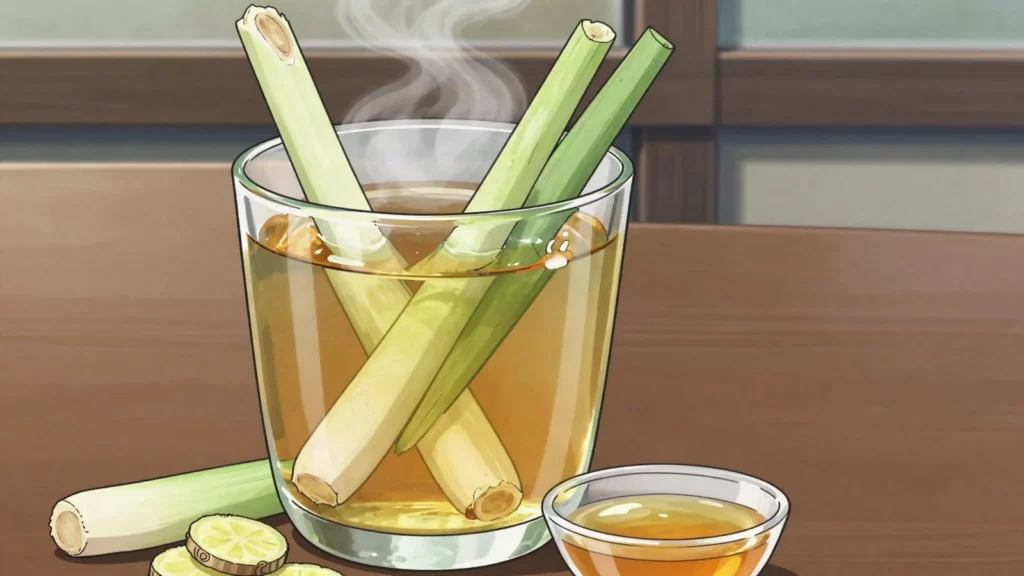
The lemongrass
- 6fresh lemongrass stalks
- or 8 fresh lemongrass leaves
- bruised and cut into lengths
- or 3 tablespoons dried lemongrass
The water
- 1 litrefresh water
- brought to a boil
The sweetening
- 3 tablespoonssugar
- or to taste
- or honey
- added at the cup
Sometimes added
- a thumb of fresh ginger, sliced
- a strip of lime peel
- 2cloves
- a small piece of cinnamon bark
- a few mint leaves
- a split vanilla pod
- for a Comorian touch
To serve
- small glasses or cups
- cake or fried dough
- fresh fruit
Directions
- Peel those away and discard them. Rinse the stalks under cold running water. Trim off the very bottom of the root end.
- Cut the stalks into pieces about five centimetres long. Lay them flat on a chopping board. Press down hard with the flat of a heavy knife. You should hear them crack and split open.
- Use fresh water rather than reboiled water. Add the bruised lemongrass to the boiling water. Add the ginger and any other spices now. Simmer it for about ten to fifteen minutes. Twenty minutes gives a genuinely strong brew.
- Pour boiling water over and cover for ten minutes. Use a fine sieve to catch all the fibres. Stir until the sugar has fully dissolved.
- Serve it hot in small glasses or cups. Hot liquid in thin glass can crack it. Warm the glasses first with a little hot water.
- Use heatproof glasses or sturdy cups only. Warn anyone holding a hot glass by its side. Chill the strained infusion and serve it over ice. The hot version is the standard one.
- Wrap it loosely in a paper bag or cloth. Freeze it bruised and cut, ready to use. Use it straight from frozen in the pot.
Technique
- Bruising the lemongrass is the step that decides the drink. The fragrance sits inside the fibrous stalk and cannot escape unless the fibres are cracked open. Press hard with the flat of a heavy knife until you hear them split.
- Lemongrass has no tannin, so unlike tea it does not turn bitter with long steeping. Twenty minutes of simmering gives a strong brew with no astringency, which is why the timing here is forgiving.
- Lemongrass leaves have sharp serrated edges and cut fingers easily. Comorian cooks knot the leaves together, which keeps them manageable in the pot as well as easy to fish out.
- Strain thoroughly. Loose lemongrass fibres are woody and sharp and spoil the drink.
- Warm thin glasses before pouring, or use heatproof ones. Hot liquid into cold thin glass cracks it, and Comorian glasses are usually held by the rim for good reason.
- The tea is widely considered settling after a heavy meal. The atlas records that as the belief it is and makes no medical claim.
- The Comoros archipelago comprises three islands forming the independent country, with Mayotte administered by France — a division the Comoros disputes. The atlas notes it as political fact and takes no side.
Substitutions
- Dried lemongrass replaces fresh; use about three tablespoons and simmer it a little longer. The flavour is noticeably flatter.
- Lemongrass leaves replace the stalks and give a lighter, greener infusion. Knot them so they are easy to lift out.
- Honey replaces sugar, though sugar is the standard sweetener in the Comoros.
- Fresh ginger is the most common addition and is close to standard in many households.
- A split vanilla pod steeped alongside gives a Comorian touch, since vanilla is grown on the islands.
- The infusion can be served cold over ice in hot weather, which is a modern rather than traditional serving.
Variations
- A version with ginger, sometimes with cloves and cinnamon, is common and is more warming.
- Some households add a split vanilla pod, drawing on the islands’ own vanilla crop.
- A version with mint leaves added at the end is lighter and fresher.
- Lemongrass infusions are drunk across the Indian Ocean and East Africa, in Madagascar, Mozambique and Tanzania, under different names.
- Comorian black tea with cardamom and cloves is the other everyday hot drink of the islands.
- An iced version, sweetened and served over ice with lime, appears in cafés and is a recent addition.
History
Lemongrass grows around Comorian houses and the infusion is served after meals and to guests.
Frequently asked questions
What is Thé à la citronnelle?
Thé à la citronnelle is a drink from Comoros: lemongrass leaves steeped with sugar and drunk hot. Lemongrass grows around Comorian houses and the infusion is served after meals and to guests.
How long does Thé à la citronnelle take to make?
Thé à la citronnelle takes 5 minutes of preparation and 15 minutes of cooking. The recipe makes serves 4. It is rated easy to make.
What can I substitute in Thé à la citronnelle?
Yes, within limits. Dried lemongrass replaces fresh; use about three tablespoons and simmer it a little longer. The flavour is noticeably flatter. Lemongrass leaves replace the stalks and give a lighter, greener infusion. Knot them so they are easy to lift out. Honey replaces sugar, though sugar is the standard sweetener in the Comoros. Fresh ginger is the most common addition and is close to standard in many households. A split vanilla pod steeped alongside gives a Comorian touch, since vanilla is grown on the islands. The infusion can be served cold over ice in hot weather, which is a modern rather than traditional serving.
What is the most important thing to get right in Thé à la citronnelle?
Use fresh water rather than reboiled water. Add the bruised lemongrass to the boiling water. Add the ginger and any other spices now. Simmer it for about ten to fifteen minutes. Twenty minutes gives a genuinely strong brew.