
Ingredients
Chicken
- 2poussins or very small chickens, about 500 g each
Stuffing
- 120 gglutinous rice, soaked 1 hour
- 4whole garlic cloves per bird
- 2jujubes, dried red dates, per bird
- 1fresh or dried ginseng root per bird
Broth
- 2 litreswater
- 6 clovesgarlic
- 1 piecedried ginseng, extra
- 2jujubes
- 10chestnuts, optional
- 1 pieceastragalus root, hwanggi, optional
To finish
- salt and black pepper, in a small dish
- spring onions, sliced
- toasted sesame seeds
To serve
- kimchi
- kkakdugi, radish kimchi
- insamju or soju
Directions
- Use the smallest chickens you can find, because the bird is served whole in an individual bowl and each person gets their own. Poussins or spring chickens of about 500 g are right, and a full-sized chicken will not cook through in the same way.
- Soak the glutinous rice for an hour, then drain it. Soaking is essential, because unsoaked glutinous rice will not cook through inside the cavity in the time available.
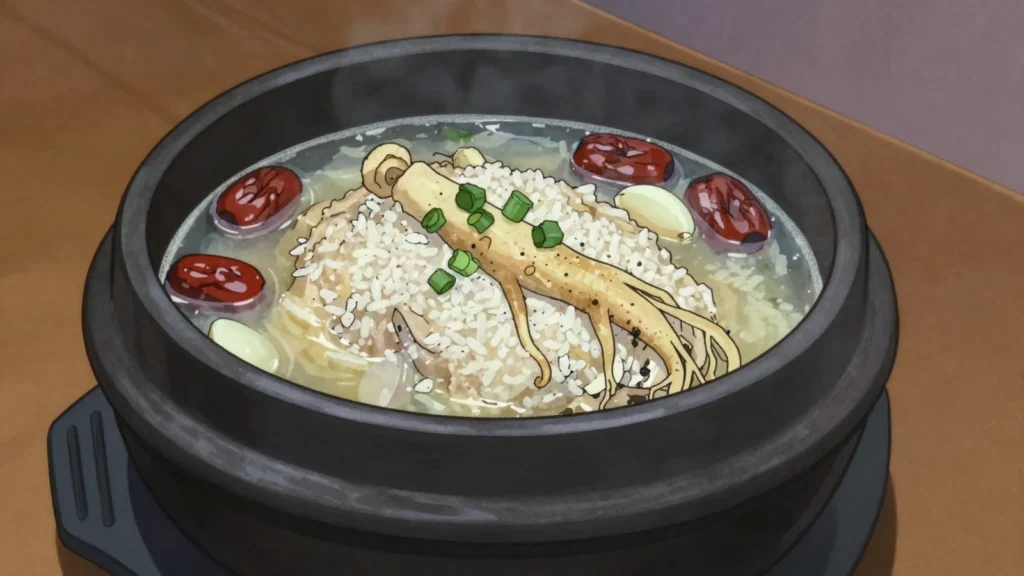
- Rinse the chickens and trim off any excess fat around the cavity. Fill the cavity only about two-thirds. Now close the cavity, which is the step that keeps the rice in. Stand the birds upright in a deep pot, breast up, packed close so they hold each other. Add the water and the extra ginseng, garlic, jujubes and chestnuts.
- Bring it to a boil, then turn it down to a gentle simmer. Skim the surface in the first twenty minutes. Skim it properly, because samgyetang broth should be milky white and clean rather than scummy. Simmer, covered, for an hour to an hour and a half.
- Keep it at a steady gentle simmer. It is done when the meat pulls easily from the bone and the rice inside is completely soft.
- Salt is put on the table in a small dish, and each person seasons their own bowl or dips pieces of chicken into it as they eat. That is deliberate and it is how it is always served in Korea, so do not salt the pot.
- Serve each bird in its own deep bowl with plenty of broth. Scatter spring onions and sesame seeds over. Serve kimchi and kkakdugi alongside, which cut the richness.
Technique
- Fresh ginseng is sold in Korean shops in summer and dried ginseng all year.
- Ready-prepared samgyetang packs with all the dried ingredients are widely sold.
- It is eaten specifically on chobok, jungbok and malbok, the three hottest days marked in the Korean calendar.
Substitutions
- Dried ginseng in place of fresh, which is easier to find.
- Astragalus and jujube alone, if ginseng is unavailable or unsuitable.
Variations
- Ogolgyetang, made with black silkie chicken.
- With more medicinal roots added, as a stronger tonic.
- Made with a larger chicken and shared.
History
A whole young chicken stuffed with glutinous rice, ginseng, garlic and jujube, then slow-boiled into a light, restorative soup, closely tied to Korean traditional medicine concepts of using food to balance the body’s energy, particularly during the hottest days of summer, when samgyetang is traditionally eaten specifically to counteract heat exhaustion through a principle of using a warming, nutrient-dense dish to fight heat with heat rather than cooling foods. Ginseng, a root long valued in Korean and wider East Asian traditional medicine for its purported restorative properties, is considered an essential, non-negotiable ingredient distinguishing samgyetang from a plain chicken soup. It remains most specifically associated with sambok, the three hottest days of the Korean lunar calendar summer, when demand for the dish rises sharply across the country.
Frequently asked questions
What is Samgyetang?
Samgyetang is a soup & stew from South Korea: whole young chicken stuffed with ginseng, garlic and rice, summer restorative. A whole young chicken stuffed with glutinous rice, ginseng, garlic and jujube, then slow-boiled into a light, restorative soup, closely tied to Korean traditional medicine concepts of using food to balance the body’s energy, particularly during the hottest days of summer, when samgyetang is traditionally eaten specifically to counteract heat exhaustion through a principle of using a warming, nutrient-dense dish to fight heat with heat rather than cooling foods. Ginseng, a root long valued in Korean and wider East Asian traditional medicine for its purported restorative properties, is considered an essential, non-negotiable ingredient distinguishing samgyetang from a plain chicken soup. It remains most specifically associated with sambok, the three hottest days of the Korean lunar calendar summer, when demand for the dish rises sharply across the country.
How long does Samgyetang take to make?
Samgyetang takes 20 min plus 1 hr soaking of preparation and 1 hr 30 min of cooking. The recipe makes 2 servings. It is rated medium to make.
What can I substitute in Samgyetang?
Yes, within limits. Dried ginseng in place of fresh, which is easier to find. Astragalus and jujube alone, if ginseng is unavailable or unsuitable.
What is the most important thing to get right in Samgyetang?
Bring it to a boil, then turn it down to a gentle simmer. Skim the surface in the first twenty minutes. Skim it properly, because samgyetang broth should be milky white and clean rather than scummy. Simmer, covered, for an hour to an hour and a half.