
Ingredients
Caramel
- 200 gsugar
- 60 mlwater
Custard
- 1 litrewhole milk
- 8eggs
- 200 gsugar
- 3 tbsprozalin, Dubrovnik rose liqueur
- grated zest of 1 lemon
- 1 tspvanilla
Equipment
- a rozata mould or a deep round tin
- a roasting tin for the bain-marie
To serve
- chilled, turned out
Directions
- Start with the caramel, which lines the mould. Heat the sugar and water in a heavy pan over a medium heat until the sugar dissolves. Now stop stirring entirely and let it boil.
- Swirl the pan gently instead if it is colouring unevenly. Let it darken to a deep amber, just short of mahogany. Take it a shade darker than looks comfortable. Watch it constantly at the end, because it goes from amber to burnt in seconds.
- Pour it straight into the mould and tilt it so the caramel coats the base and a little of the sides. Work fast, because it sets hard within a minute. Molten caramel causes severe burns, so pour carefully and keep others back.
- Heat the milk with the lemon zest until steaming, then take it off and let it infuse 15 minutes. Beat the eggs with the sugar until just combined, without beating air in. Whisk gently rather than vigorously.
- Pour the warm milk into the eggs in a thin stream, whisking constantly. Hot milk poured in at once scrambles the eggs and the custard is finished before it starts. Stir in the rozalin and the vanilla. Skim off any foam from the surface before baking.
- Set the mould in a roasting tin and pour hot water around it to come halfway up the sides. It keeps the custard below boiling, and direct oven heat curdles it into scrambled egg. Bake at 150°C (300°F) for 50 minutes to an hour. Keep the oven low and never let the water in the tin boil, which is the same principle.
- Cover the tin loosely with foil if the top is colouring. It is done when the edges are set and the centre still wobbles as a single mass when nudged. Take it out while the middle wobbles. It goes on setting as it cools, and a custard baked firm in the oven ends up rubbery and weeping.
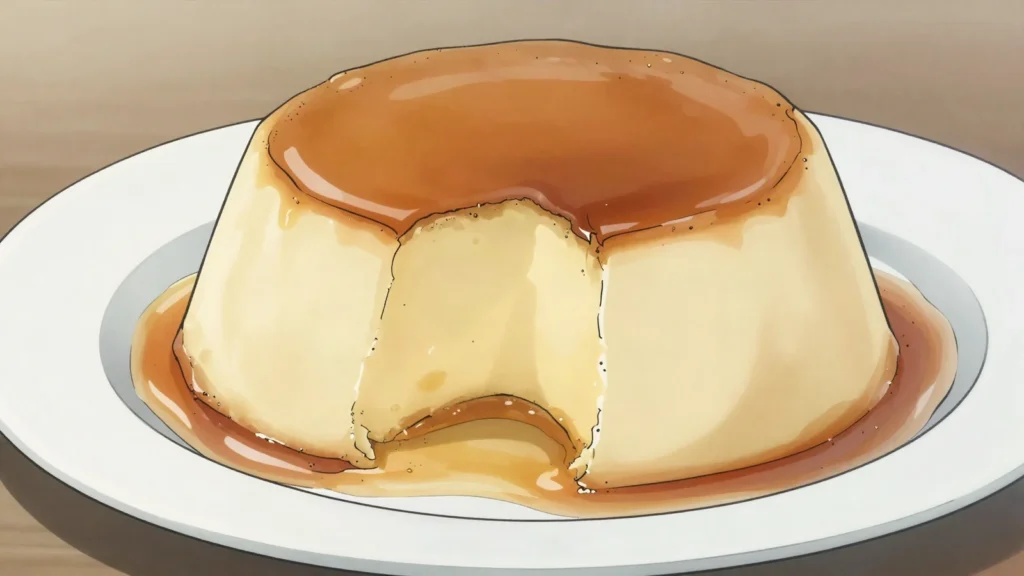
- Cool it completely, then refrigerate for at least 6 hours and preferably overnight. To turn it out, run a thin knife round the edge, set a deep plate on top and invert it in one confident movement. Use a plate with a rim, because a great deal of caramel sauce comes out with it. Serve cold, with the caramel spooned over.
Technique
- Rozalin is made in Dubrovnik from rose petals and is sold locally.
- The traditional mould is a deep fluted tin, which gives the characteristic shape.
- It keeps three days refrigerated and the caramel goes on dissolving.
Substitutions
- Rose water with a splash of brandy, in place of rozalin.
- A deep cake tin or individual ramekins in place of a rožata mould.
Variations
- Made in individual ramekins.
- With orange zest as well as lemon.
- Flan and crème caramel, the same idea across Europe.
History
Dubrovnik custard flavoured with rose liqueur, recorded in the cooking of the city since the days of the Republic.
Frequently asked questions
What is Rožata?
Rožata is a dessert from Croatia: dubrovnik crème caramel perfumed with rose liqueur. Dubrovnik custard flavoured with rose liqueur, recorded in the cooking of the city since the days of the Republic.
How long does Rožata take to make?
Rožata takes 20 min plus 6 hr chilling of preparation and 1 hr of cooking. The recipe makes 8 servings. It is rated medium to make.
What can I substitute in Rožata?
Yes, within limits. Rose water with a splash of brandy, in place of rozalin. A deep cake tin or individual ramekins in place of a rožata mould.
What is the most important thing to get right in Rožata?
Heat the milk with the lemon zest until steaming, then take it off and let it infuse 15 minutes. Beat the eggs with the sugar until just combined, without beating air in. Whisk gently rather than vigorously.