
Ingredients
Rice
- 320 gCarnaroli or Vialone Nano rice
Saffron
- a good pinch of saffron threads, about 0.4 g
Base
- 1small onion, very finely chopped
- 60 gbutter
- 30 gbeef bone marrow, optional but traditional
Liquid
- 150 mldry white wine
- 1.2 litresgood beef or chicken broth, kept hot
To finish
- 80 gcold butter, cubed
- 100 gParmigiano Reggiano, finely grated
- salt
To serve
- with ossobuco, or on its own
Directions
- Use Carnaroli or Vialone Nano rather than Arborio if you can. Crush the saffron threads in a mortar with a pinch of coarse salt, then steep them in a ladleful of hot broth.
- Let it steep for at least 20 minutes, and longer is better. Keep the broth at a bare simmer in a separate pan throughout. The broth must be hot. Melt half the butter with the marrow in a wide heavy pan and cook the finely chopped onion very gently for 8 minutes. Do not let the onion colour at all.
- Chop the onion extremely finely so it disappears entirely into the finished risotto. Now add the rice and toast it in the fat for 2 to 3 minutes, stirring. Pour in the wine and let it evaporate completely, stirring. Wait until the alcohol has fully cooked off before any broth goes in, or the risotto tastes sharp. Now begin adding the hot broth, a ladleful at a time.
- Add the next ladle only when the previous one has been almost fully absorbed and the pan is nearly dry. Stir often but not constantly, which is a common misunderstanding. Regular stirring is enough.
- Add the saffron broth about halfway through, so the colour develops evenly. It takes 16 to 18 minutes from the first ladle, and you should start tasting from 14. Taste the rice rather than watching the clock. It should be tender with a definite firm core, and that al dente centre is the point.
- Take the pan off the heat entirely. Add the cold cubed butter and the grated Parmigiano and beat them in hard with a wooden spoon. Cold butter off the heat, always.
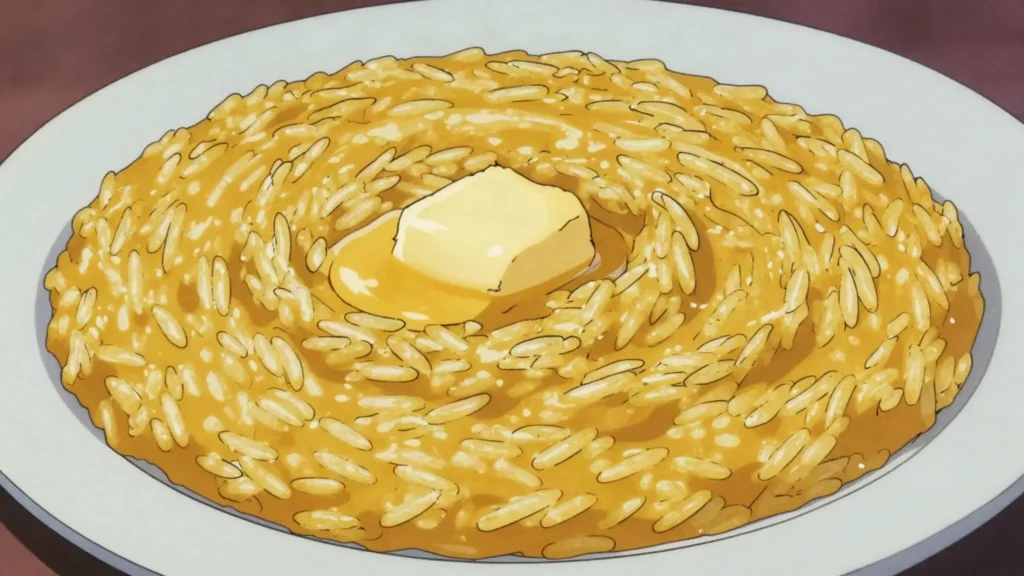
- Beat it vigorously for a good minute, which is more energetic than anything earlier in the process. Now cover it and let it rest for 2 minutes. Check the consistency: it should be all’onda, wavy, and spread slowly across a tilted plate. A risotto that holds a mound is too dry, and one that runs is too wet.
- Serve immediately on warm flat plates, spread out rather than heaped. Risotto continues absorbing and stiffens within minutes of leaving the pan.
Technique
- Leftover risotto is pressed into balls and fried as riso al salto or arancini.
- The marrow is traditional and many modern Milanese cooks leave it out.
- Never add cream, which is not in any traditional Milanese recipe.
Substitutions
- Arborio rice, which is more prone to overcooking.
- Vegetable broth for a meat-free version.
Variations
- Risotto al salto, the fried leftover cake.
- With ossobuco, as the classic Milanese plate.
- With gold leaf, which is a modern restaurant flourish.
History
Rice slowly cooked in broth and butter, stirred continuously to release the rice’s natural starch and create a creamy texture, coloured a distinctive golden yellow with saffron, developed in Milan, in the Lombardy region of northern Italy, an area historically well suited to rice cultivation given its many rivers and irrigated agricultural plains, unlike much of the rest of Italy, which favors wheat and pasta. Its saffron colouring, one popular though not fully verified origin story attributes to a Milanese stained-glass worker who added saffron pigment to a risotto as a wedding joke, reflects saffron’s genuine historical importance and cost across northern Italian cooking regardless of that specific story’s accuracy. Risotto alla milanese remains one of Milan’s most iconic traditional dishes.
Frequently asked questions
What is Risotto alla milanese?
Risotto alla milanese is a main from Italy: saffron-gilded risotto, classic beside ossobuco. Rice slowly cooked in broth and butter, stirred continuously to release the rice’s natural starch and create a creamy texture, coloured a distinctive golden yellow with saffron, developed in Milan, in the Lombardy region of northern Italy, an area historically well suited to rice cultivation given its many rivers and irrigated agricultural plains, unlike much of the rest of Italy, which favors wheat and pasta. Its saffron colouring, one popular though not fully verified origin story attributes to a Milanese stained-glass worker who added saffron pigment to a risotto as a wedding joke, reflects saffron’s genuine historical importance and cost across northern Italian cooking regardless of that specific story’s accuracy. Risotto alla milanese remains one of Milan’s most iconic traditional dishes.
How long does Risotto alla milanese take to make?
Risotto alla milanese takes 15 min of preparation and 30 min of cooking. The recipe makes 4 servings. It is rated medium to make.
What can I substitute in Risotto alla milanese?
Yes, within limits. Arborio rice, which is more prone to overcooking. Vegetable broth for a meat-free version.
What is the most important thing to get right in Risotto alla milanese?
Use Carnaroli or Vialone Nano rather than Arborio if you can. Crush the saffron threads in a mortar with a pinch of coarse salt, then steep them in a ladleful of hot broth.