Ingredients
The sponge base
- 100 gbutter, softened
- 100 gsugar
- 2eggs
- 140 gplain flour
- 1 teaspoonvanilla
The soufflé layer
- 10 gagar agar
- or 20 g gelatine
- see the note
- 400 gsugar
- 150 mlwater
- 200 gbutter, softened
- 100 gcondensed milk
- 2egg whites
- pasteurised
- a pinch of citric acid
The glaze
- 200 gdark chocolate
- 100 mlcream
- 20 gbutter
The equipment
- a springform tin
- a sugar thermometer
- a stand mixer helps
Directions
- Use pasteurised whites if any will eat it. The syrup reaches soft ball stage. Pour it down the side of the bowl. Never pour it onto the moving whisk. Pour it slowly and very steadily. Agar sets firm as it cools down. Beat the butter and sugar together.
- Beat them until pale and light. Add the eggs in one at a time. Add the vanilla along with them. Sift the flour over the mixture. Fold the flour in very gently.
- Fold rather than beating it in. Stop as soon as the flour disappears. Spread it thinly in a lined tin. Bake it at one hundred and eighty degrees. Give it about fifteen minutes. Spread it about a centimetre thick. Let the sponge cool completely.
- Warm sponge melts the soufflé layer. It must be entirely cold first. Set the sponge in a springform tin. Line the sides with a strip of paper. The paper collar helps it release. Set it up before you start the soufflé. Beat the softened butter until light.
- Beat in the condensed milk gradually. It should be smooth and quite pale. Set it aside ready to use later. Soak the agar in the cold water. Give it about thirty full minutes.
- Bring the agar and water to a boil. It must genuinely come to a boil. Let it boil for a full minute. Add the sugar to the boiling agar. Stir it until the sugar dissolves. Use a larger pan than seems needed. Boil it to about one hundred and ten degrees. That is called the soft ball stage.
- Whip the egg whites to soft peaks. Add the citric acid in to them. It helps them hold their volume. Start the whites when the syrup boils. Keep the whisk running throughout. Pour the hot syrup in a thin stream.
- Pour it down the side of the bowl. A thin steady stream is essential. Take a full minute over the pour. Keep whipping after the syrup is in. Give it about five full minutes. Add the butter and condensed milk mixture. Whip it in only very briefly indeed.
- Add it quickly and whip it just enough. The mixture must stay pourable. Work fast from this point onward. Pour it over the sponge immediately. It sets within just a few minutes.
- Pour it out and level it fast. Have a palette knife ready first. Work quickly and quite confidently. Setting it firm is the next stage. Let it set at room temperature. It does not need refrigeration to set. Warm the cream gently in a pan. Pour it over the chopped chocolate.
- Let it stand a minute before stirring. Then stir it into a smooth ganache. Stir in the butter for the gloss. Let it cool until barely warm. Hot glaze melts the soufflé layer.
- Pour the glaze over the set cake. Spread it right out to the edges. Work out from the centre outward. Let it flow rather than pushing it. A thin even layer is what is wanted. Cut it into squares with a hot knife. Dip the knife in very hot water. A cold knife drags and cracks it. Keep it covered so it does not dry.
Technique
- The soufflé layer is set with agar rather than gelatine, and they work in opposite ways: agar must genuinely boil to activate, above ninety degrees, where gelatine must never boil at all. Agar also sets firmer and at room temperature. Do not substitute one for the other casually — the method changes completely and gelatine gives a softer wobblier layer that is really a different cake. The atlas gives the authentic agar version.
- Agar sets as it cools and sets at room temperature, which gives a narrow working window: have the tin, sponge base and palette knife ready before you start, since the mixture sets within minutes of the butter going in and there is no time to prepare anything. Stop whipping while it is still warm and pourable — whipping too long sets it in the bowl.
- The syrup reaches soft ball stage at around one hundred and ten degrees, far hotter than boiling water, and sticks to skin and burns very badly. Pour it into the running whites down the side of the bowl in a thin steady stream, never onto the moving whisk, which throws hot syrup outward onto hands and arms.
Substitutions
- The hot syrup partly cooks the egg whites but does not reliably pasteurise them, so use pasteurised whites if anyone pregnant, very young or with low immunity will eat it.
- Soak the agar in the water for thirty minutes before boiling, since it hydrates before it dissolves and undissolved agar will not set.
Variations
- The sweet was produced from 1968 and Vladimir Guralnik turned it into a cake at Moscow’s Praga restaurant in 1978, receiving the first Soviet confectionery patent — genuinely notable, since recipes were not usually patented there.
- Ptichye moloko means bird’s milk, a Russian idiom for something impossibly rare.
- Cut it with a knife dipped in hot water and wiped between every cut, which gives clean edges through the glaze; a cold knife drags and cracks it.
History
Made as a sweet from 1968 and turned into a cake in 1978 by Vladimir Guralnik at Moscow’s Praga restaurant, the first Soviet confectionery patent.
Frequently asked questions
What is Ptichye moloko?
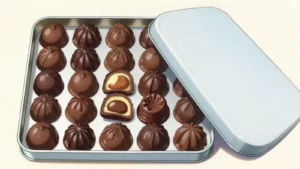
Ptichye moloko is a dessert from Russia: soufflé-like marshmallow layer under dark chocolate, cut in squares. Made as a sweet from 1968 and turned into a cake in 1978 by Vladimir Guralnik at Moscow’s Praga restaurant, the first Soviet confectionery patent.
How long does Ptichye moloko take to make?
Ptichye moloko takes 1 hour plus setting of preparation and 30 minutes of cooking. The recipe makes serves 12. It is rated hard to make.
What can I substitute in Ptichye moloko?
Yes, within limits. The hot syrup partly cooks the egg whites but does not reliably pasteurise them, so use pasteurised whites if anyone pregnant, very young or with low immunity will eat it. Soak the agar in the water for thirty minutes before boiling, since it hydrates before it dissolves and undissolved agar will not set.
What is the most important thing to get right in Ptichye moloko?
Use pasteurised whites if any will eat it. The syrup reaches soft ball stage. Pour it down the side of the bowl. Never pour it onto the moving whisk. Pour it slowly and very steadily. Agar sets firm as it cools down. Beat the butter and sugar together.