
Ingredients
Peppers
- 400 gpimientos de Padrón, small green
To cook
- 4 tbspgood olive oil
To finish
- coarse flaky sea salt
To serve
- bread
- a glass of Albariño
Directions
- Wash them and, most importantly, dry them completely. Dry them properly on a cloth. Leave the stems on, because they are the handle you hold to eat them.
- Prick each pepper once with the tip of a knife. Unpricked peppers inflate and burst in the pan, throwing hot oil. Add the peppers in one layer and let them sit for 30 seconds without moving. Then shake the pan and toss them, cooking for 4 to 6 minutes in total.
- Keep them moving after that first contact so they blister on several sides. They are done when the skins have blistered and blackened in patches and the flesh has collapsed and gone soft.
- Take them to a proper blister with real black spots. Do not crowd the pan, which drops the temperature and steams them.
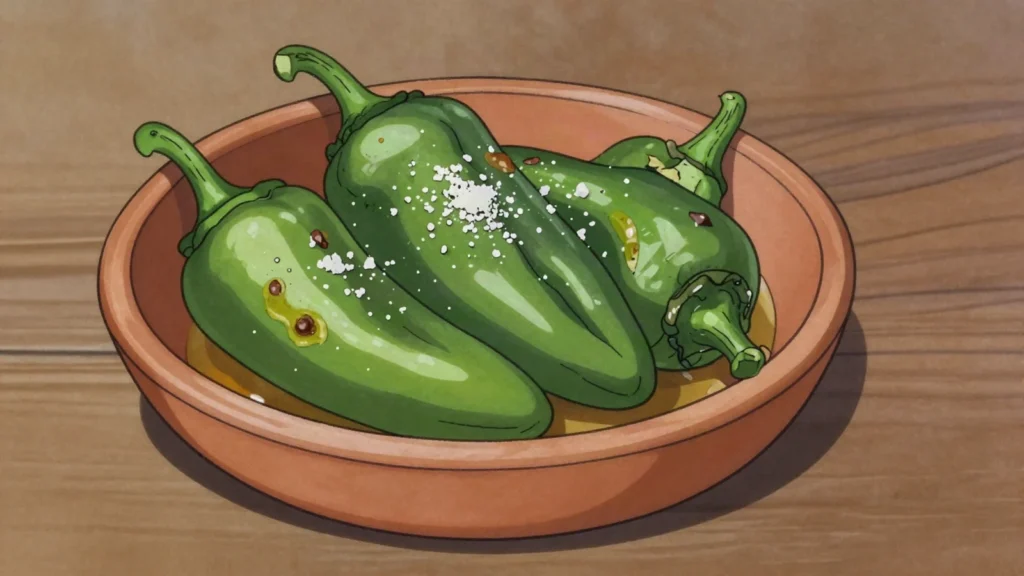
- Lift them out with a slotted spoon and pile them on a plate. Scatter coarse flaky salt over them generously while they are still hot and glossy.
- Salt them at the last moment, on the plate rather than in the pan. Salt in the pan draws out water and stops them blistering.
- Use flaky salt rather than fine, because the crunch against the soft pepper is part of it. Serve immediately, hot, with bread to mop the oil.
Technique
- The proportion of hot ones rises through the summer as the plants mature.
- Shishito peppers are the closest Japanese equivalent and behave the same way.
- They are eaten hot from the pan and do not keep.
Substitutions
- Shishito peppers, which are milder and very similar.
- Any small thin-skinned green pepper.
Variations
- Grilled over charcoal instead of fried.
- With a squeeze of lemon, which purists do not do.
- Deep fried in a light batter.
History
Small green peppers, quickly fried whole in olive oil and finished with a generous sprinkle of coarse salt, documented across Spain, specifically associated with the town of Padrón in the Galicia region of northwestern Spain, where this particular pepper variety has been cultivated for generations. Its distinctive culinary appeal lies partly in its unpredictability, since while the vast majority of Padrón peppers are mild, a small percentage carry significant heat, making the dish something of a playful culinary gamble for diners, commonly summarized in the well-known Galician saying that some are hot and some are not. Pimientos de Padrón remains one of the most popular and distinctively regional tapas dishes across Spain today.
Frequently asked questions
What is Pimientos de Padrón?
Pimientos de Padrón is a salad & side from Spain: blistered small green peppers with flaky salt; some fiery. Small green peppers, quickly fried whole in olive oil and finished with a generous sprinkle of coarse salt, documented across Spain, specifically associated with the town of Padrón in the Galicia region of northwestern Spain, where this particular pepper variety has been cultivated for generations. Its distinctive culinary appeal lies partly in its unpredictability, since while the vast majority of Padrón peppers are mild, a small percentage carry significant heat, making the dish something of a playful culinary gamble for diners, commonly summarized in the well-known Galician saying that some are hot and some are not. Pimientos de Padrón remains one of the most popular and distinctively regional tapas dishes across Spain today.
How long does Pimientos de Padrón take to make?
Pimientos de Padrón takes 5 min of preparation and 10 min of cooking. The recipe makes 4 servings. It is rated easy to make.
What can I substitute in Pimientos de Padrón?
Yes, within limits. Shishito peppers, which are milder and very similar. Any small thin-skinned green pepper.
What is the most important thing to get right in Pimientos de Padrón?
Take them to a proper blister with real black spots. Do not crowd the pan, which drops the temperature and steams them.