
Ingredients
Chillies
- 200 gfresh red hot chillies, bird’s eye or habanero
- stems removed
Aromatics
- 6 clovesgarlic
- 1onion, chopped
- 2cm ginger, optional
Also
- 2 tbspoil
- 1 tspsalt
- juice of 1 lemon, or 2 tbsp vinegar
- 1 tbsptomato purée, optional
Optional
- 1stock cube
- 1 tbspground dried shrimp
Equipment
- a mortar, or a blender
- gloves
Directions
- Work in a ventilated room, because blending or frying this many chillies fills the air and will make everyone cough. Do not lean over the blender when you open it.
- Remove the stems from the chillies but leave the seeds in. Take some or all of the pith out if you want it milder, though that is a compromise.
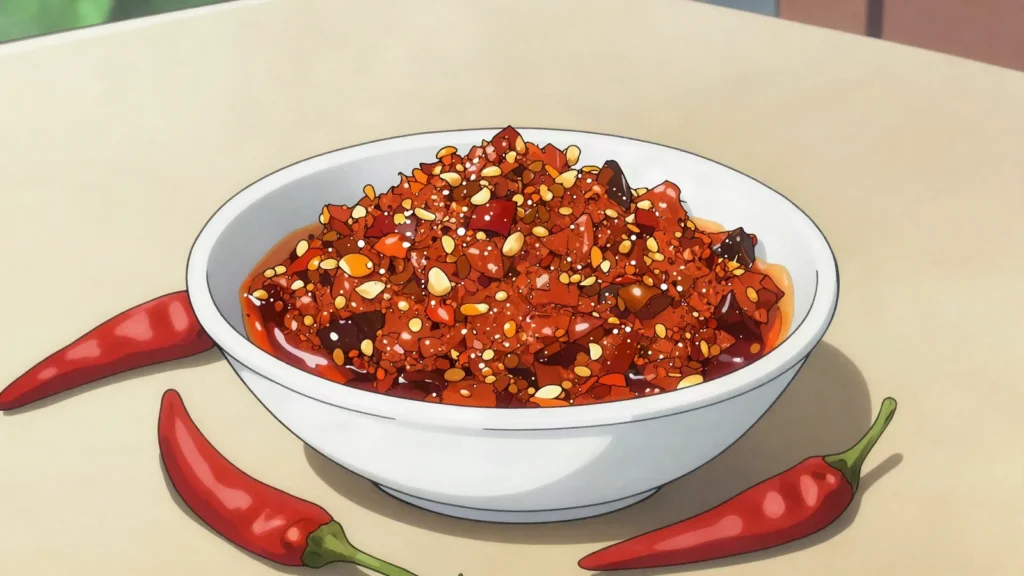
- Pound the chillies with the garlic, onion, ginger and salt in a mortar, or pulse them in a blender. Keep it coarse rather than smooth. Pili pili should have visible texture and flecks, and a smooth purée is a different thing.
- Fry it gently for 8 to 10 minutes, stirring, until the raw smell has gone and the oil separates. Frying it is what takes the harsh raw edge off and lets it keep.
- Add the tomato purée and stock cube now if using them. Take the pan off the heat and stir in the lemon juice or vinegar. Add the acid off the heat, which keeps it bright and also helps preserve the sauce.
- Take the pan off the heat and let it cool completely. Taste it very cautiously, on the tip of a spoon, with something to hand. Spoon it into a clean jar and cover the surface with a thin film of oil. That oil seal keeps air off it and it will keep several weeks in the fridge.
- Wash your hands, the board and the blender thoroughly with soap and hot water afterwards, and do so before touching your face.
Technique
- Piri piri in Portuguese-speaking Africa and pili pili in French and Swahili-speaking Africa are the same word and the same idea.
- The African bird’s eye chilli is the traditional one and is very hot.
- It is also blended into a marinade for grilled chicken across the region.
Substitutions
- Any hot fresh chilli, adjusting the quantity to its heat.
- Vinegar in place of lemon juice, which keeps longer.
Variations
- Made raw, without frying, which is sharper.
- With tomato, as a milder table sauce.
- Steeped in oil alone, as a chilli oil.
History
Chilies arrived in Central Africa through Portuguese Atlantic trade and became the region’s universal condiment, named for the Swahili word for pepper.
Frequently asked questions
What is Pili pili?
Pili pili is a sauce & condiment from Central African Republic: crushed hot chili paste set on the table beside every dish. Chilies arrived in Central Africa through Portuguese Atlantic trade and became the region’s universal condiment, named for the Swahili word for pepper.
How long does Pili pili take to make?
Pili pili takes 20 min of preparation and 15 min of cooking. The recipe makes about 300 ml. It is rated easy to make.
What can I substitute in Pili pili?
Yes, within limits. Any hot fresh chilli, adjusting the quantity to its heat. Vinegar in place of lemon juice, which keeps longer.
What is the most important thing to get right in Pili pili?
Work in a ventilated room, because blending or frying this many chillies fills the air and will make everyone cough. Do not lean over the blender when you open it.