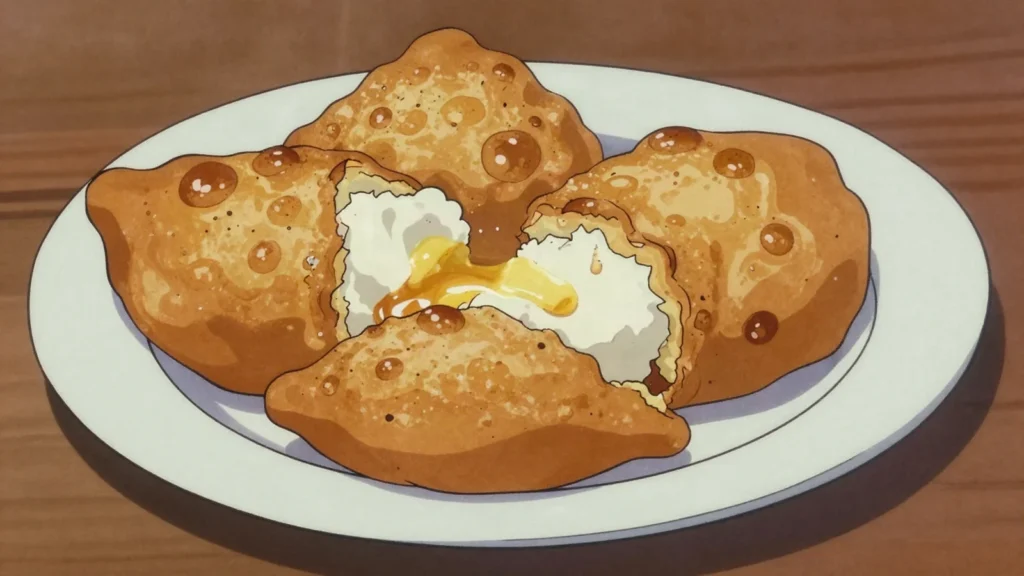

Ingredients
The dough
- 600 gplain flour
- 350 mlwarm water
- 7 gdried yeast
- 1 tablespoonsugar
- 1 teaspoonsalt
The quick version
- 600 gself-raising flour
- or plain flour with baking powder
- 350 mlwarm water or milk
- 1 teaspoonsalt
To fry
- oil, for deep frying
- a deep heavy pot
To serve
- butter
- golden syrup
- or jam, or savoury fillings
Directions
- Fry bread feeds a crowd cheaply. Fry breads exist across many indigenous communities. There is real discussion about fried breads. Cool oil soaks into the dough. Hot oil seals the outside immediately. Warm the water gently in a jug. Stir the yeast and sugar into it.
- Let it stand there for ten minutes. The yeast should foam up visibly. Discard it and start again if it does not. It costs ten minutes to be certain. Put the flour and salt in a large bowl. Add the yeast water to the flour. Bring it together into a soft dough. It should be soft and slightly sticky.
- Knead it for about eight minutes. Eight minutes is enough for this. Put the dough in an oiled bowl. Cover it and leave it somewhere warm. Give it about one full hour there. Mix the self-raising flour and salt. Add the water and bring it together.
- Knead it only briefly to combine it. Divide it into about twelve pieces. Flatten each piece with your hands. Aim for about a centimetre thick. Keep them all about the same size.
- Let the shaped pieces rest ten minutes. Ten minutes is quite enough for it. Pour the oil into a deep heavy pot. Fill it no more than half full. Heat it to about one hundred and eighty degrees. A deep pot of hot oil is genuinely dangerous. Keep a lid nearby to smother any flare-up. Never put water on an oil fire at all.
- Keep children well away from the pot. Oil rises sharply when food goes in. Drop a small scrap of dough in. It should sizzle and rise immediately.
- Adjust the heat before the batch. Do not crowd the pot at any point. Work in small batches instead. They should puff up within seconds. Turn them once they are golden below. Give them about two minutes a side. Tear the first one open to check. The inside should be cooked through. Fry them for longer if it is not. Lift them out onto a wire rack.
- Let all the excess oil drip away. That softens the outside within minutes. Set paper under the rack to catch drips. Serving them is always done hot. Tear them open with your hands. Spread butter into the hot bread. Pour golden syrup over the top. They are best within the hour.
Technique
- The dough puffs into a hollow pillow because the water in it turns to steam and inflates the piece from inside while the outside sets around it. Hot oil at about one hundred and eighty degrees is what makes that happen: cool oil soaks in and gives a greasy heavy bread, and a piece that stays flat was rolled too thick. Aim for about a centimetre.
- A deep pot of hot oil is genuinely dangerous. Fill it no more than half full, since oil rises sharply when food goes in and a full pot can overflow onto the flame — that is the single most important precaution. Never leave it unattended, lower food in gently, keep a lid nearby to smother a flare-up, never put water on an oil fire, and keep children away.
- These breads carry a complicated history: wheat flour arrived through nineteenth-century trade and settlement rather than being native, and fry breads arose across many indigenous communities where that happened. They also became genuinely loved foods, and both of those things are true at once. There is real discussion within communities about fried breads and diet-related illness, which the atlas records — but whole food systems changed through colonisation, and framing one bread as the cause would be unfair.
Substitutions
- The quick version uses self-raising flour and needs no rising at all, going straight to shaping; it gives a denser bread where the yeasted one is lighter and chewier. Both are genuinely made.
- They are filled savoury as often as sweet — meat, salad or a boil-up filling — and work either way entirely.
Variations
- Paraoa is the Māori word for flour or bread and parai a transliteration of the English fry, so the name means fried bread exactly.
- Work in small batches, since crowding the pot drops the oil temperature and gives greasy heavy bread.
- Drain them on a wire rack rather than paper alone, which traps steam and softens them within minutes.
History
Made once wheat flour arrived through nineteenth-century trade, it became a staple of marae gatherings and is fried rather than baked.
Frequently asked questions
What is Paraoa Parai?
Paraoa Parai is a bread & pastry from New Zealand: puffy Maori fry bread torn hot and spread with butter and golden syrup. Made once wheat flour arrived through nineteenth-century trade, it became a staple of marae gatherings and is fried rather than baked.
How long does Paraoa Parai take to make?
Paraoa Parai takes 20 minutes plus rising of preparation and 20 minutes of cooking. The recipe makes about 12 pieces. It is rated medium to make.
What can I substitute in Paraoa Parai?
Yes, within limits. The quick version uses self-raising flour and needs no rising at all, going straight to shaping; it gives a denser bread where the yeasted one is lighter and chewier. Both are genuinely made. They are filled savoury as often as sweet — meat, salad or a boil-up filling — and work either way entirely.
What is the most important thing to get right in Paraoa Parai?
Let the shaped pieces rest ten minutes. Ten minutes is quite enough for it. Pour the oil into a deep heavy pot. Fill it no more than half full. Heat it to about one hundred and eighty degrees. A deep pot of hot oil is genuinely dangerous. Keep a lid nearby to smother any flare-up. Never put water on an oil fire at all.