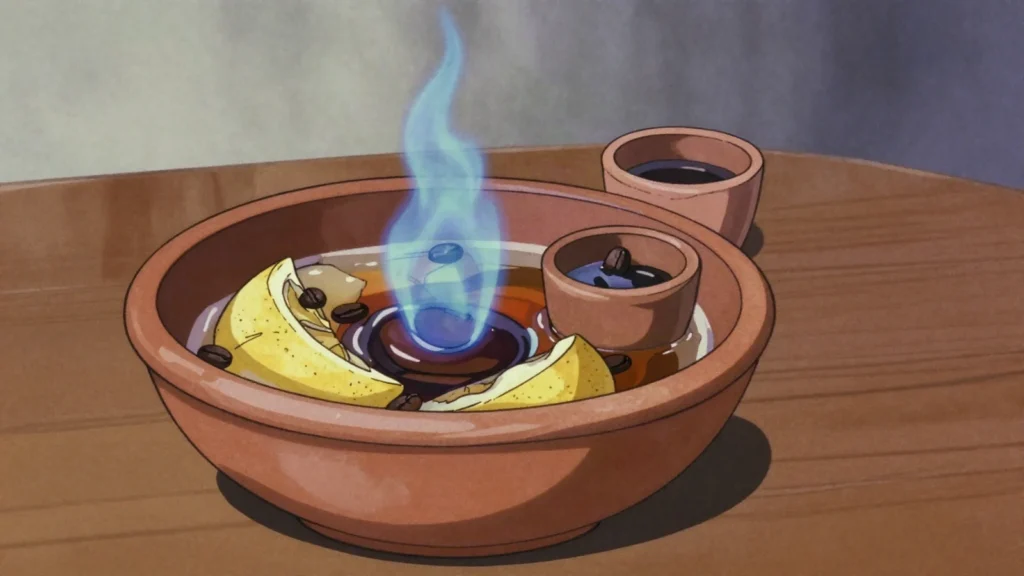

A clear grape-pomace brandy from Galicia and the north, often infused with herbs or coffee. In the queimada ritual it is set alight with sugar and lemon peel while a spell is recited over the burning bowl.
Distilling is illegal without a licence, pomace yields methanol that only a correct cut removes, and the queimada involves setting a bowl of high-strength spirit on fire.
What goes into it
- grape pomace — skins, pips and stems
- water
- herbs or coffee, for the infused versions
How it is made
Pomace left after pressing is fermented and then distilled, traditionally in a small copper alquitara over a wood fire. The distiller cuts away the head and the tail and keeps the heart. Most is bottled clear; the herb and coffee versions are macerated afterwards.
How long it takes: weeks to ferment, then distilling
How it is eaten
Neat after a meal, in a queimada set alight in a clay bowl, or as a herb liqueur.
History
Distilled from pressed grape skins in Galicia, where the queimada ritual sets it alight with sugar and lemon while a spell is recited.
Frequently asked questions
What is Orujo?
Orujo is a wine & spirit from Spain: clear grape-pomace brandy from Galicia and the north, often herb-infused. Distilled from pressed grape skins in Galicia, where the queimada ritual sets it alight with sugar and lemon while a spell is recited.
How is Orujo made?
Pomace left after pressing is fermented and then distilled, traditionally in a small copper alquitara over a wood fire. The distiller cuts away the head and the tail and keeps the heart. Most is bottled clear; the herb and coffee versions are macerated afterwards. It takes weeks to ferment, then distilling.
Can I make Orujo at home?
No, and the atlas gives no method for it. Distilling is illegal without a licence, pomace yields methanol that only a correct cut removes, and the queimada involves setting a bowl of high-strength spirit on fire.
What goes into Orujo?
Grape pomace — skins, pips and stems, water, herbs or coffee, for the infused versions.
How is Orujo eaten?
Neat after a meal, in a queimada set alight in a clay bowl, or as a herb liqueur.