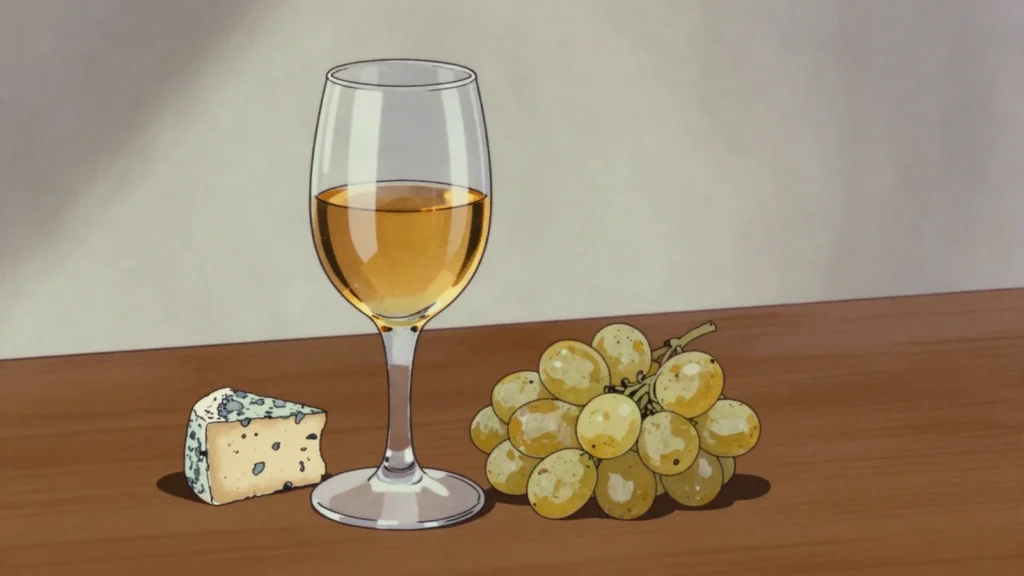

A golden sweet wine from Moldavian Cotnari, made from grapes shrivelled on the vine. The vineyards date to Stephen the Great’s fifteenth-century Moldavia, and the Grasă grape’s noble rot has invited comparison with Tokaj for centuries.
It depends on noble rot arriving in a specific vineyard and on repeated selective hand-picking, and it is a protected appellation made in a licensed cellar.
What goes into it
- Grasă de Cotnari grapes, botrytised or shrivelled
- yeast
How it is made
The grapes are left on the vine well past ordinary ripeness, where noble rot and simple dehydration concentrate their sugar. They are picked selectively over several passes, pressed, and fermented slowly; the fermentation stops on its own when the alcohol level exceeds what the yeast can survive, leaving a great deal of sugar. The wine then ages for years.
How long it takes: weeks of selective picking, then years of ageing
How it is eaten
Cold in a small glass after dinner, with blue cheese or on its own.
History
The Cotnari vineyards date to Stephen the Great’s fifteenth-century Moldavia; the Grasă grape shrivels to give wines compared with Tokaj.
Frequently asked questions
What is Grasă de Cotnari?
Grasă de Cotnari is a wine & spirit from Romania: golden sweet wine from Moldavian Cotnari made from shrivelled grapes. The Cotnari vineyards date to Stephen the Great’s fifteenth-century Moldavia; the Grasă grape shrivels to give wines compared with Tokaj.
How is Grasă de Cotnari made?
The grapes are left on the vine well past ordinary ripeness, where noble rot and simple dehydration concentrate their sugar. They are picked selectively over several passes, pressed, and fermented slowly; the fermentation stops on its own when the alcohol level exceeds what the yeast can survive, leaving a great deal of sugar. The wine then ages for years. It takes weeks of selective picking, then years of ageing.
Can I make Grasă de Cotnari at home?
No, and the atlas gives no method for it. It depends on noble rot arriving in a specific vineyard and on repeated selective hand-picking, and it is a protected appellation made in a licensed cellar.
What goes into Grasă de Cotnari?
Grasă de Cotnari grapes, botrytised or shrivelled, yeast.
How is Grasă de Cotnari eaten?
Cold in a small glass after dinner, with blue cheese or on its own.