
Ingredients
Meat
- 600 gbeef or buffalo, in chunks
- 150 gdried buffalo or beef, torn into strips
Sakhan
- 1 pieceof sakhan wood, about 20 cm, split lengthways
Vegetables
- 300 gThai aubergines, quartered
- 150 gpea aubergines
- 200 glong beans, cut short
- 150 gwood ear mushrooms
- 1 pieceof luffa or courgette, sliced
Aromatics
- 6shallots
- 1 headof garlic
- 4dried red chillies
- 2 stalkslemongrass, bruised
- 1 tbsppadaek, or 2 tbsp fish sauce
- salt
Herbs
- a large handful of dill
- a handful of spring onions
- a handful of pak tem, or coriander
To serve
- sticky rice
Directions
- Cut it into two or three lengths if it is long. It is very hard and must be softened first. Soak it in warm water for twenty minutes. Tear it into shreds along the grain. Roast the unpeeled shallots and garlic in a dry pan.
- Turn them until blackened in patches and soft inside. Toast the dried chillies briefly in the same pan. Peel the shallots and garlic once cool enough to handle. Pound them with the chillies and a pinch of salt in a mortar.
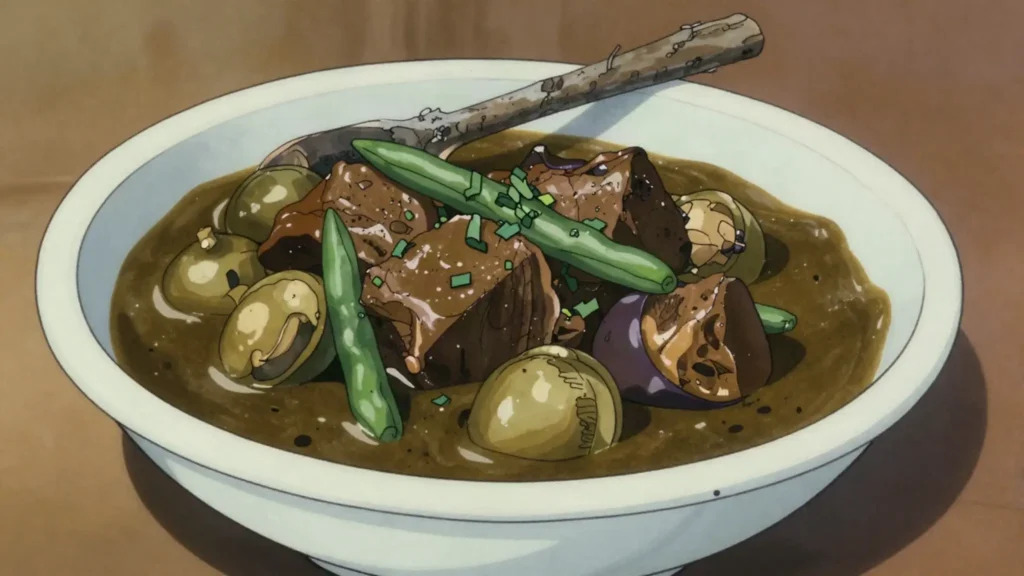
- Work them into a rough thick paste. Building the stew is done in a large pot. Put the fresh meat in the pot with about a litre of water. Add the bruised lemongrass and the split sakhan. Bring it to a simmer and skim the foam. Simmer it covered for forty-five minutes. The meat should be tender and the broth strongly aromatic.
- Stir in the pounded aromatic paste. Add the torn dried meat as well. Add the padaek and season with salt. Simmer for another fifteen minutes. Adding the vegetables is done by cooking time. Add the Thai aubergines first, since they take longest.
- Cook them for about eight minutes. Add the pea aubergines and the wood ear mushrooms. Cook them for five minutes more. Add the long beans and the luffa. Cook everything for a final five minutes. The vegetables should be tender but should keep their shape.
- Crush some of the cooked aubergine against the side of the pot. It should end up thick and stewy rather than soupy. Remove the lemongrass stalks as well. Warn anyone at the table if you leave a piece in by accident.
- Take the pot off the heat entirely. Stir in the dill, spring onion and pak tem. The residual heat is enough to release the aroma. Serve it out in a wide shared bowl.
Technique
- Sakhan is woody and is removed before serving; it is simmered for flavour, not eaten.
- It produces a tingling numbness rather than chilli heat.
- Crush some cooked aubergine into the pot, which is what thickens the stew.
Substitutions
- Sichuan peppercorns give a related tingle if sakhan is unavailable.
- Beef in place of buffalo, which is what most cooks use now.
Variations
- Made with chicken instead of buffalo.
- With more dried meat for a smokier stew.
- Vegetarian, with mushrooms and no padaek.
History
Luang Prabang stew flavoured with sakhan, a peppery woody vine that tingles the mouth, plus dried buffalo meat and eggplant.
Frequently asked questions
What is Or Lam?
Or Lam is a soup & stew from Laos: luang Prabang stew of buffalo, eggplant and numbing chili wood. Luang Prabang stew flavoured with sakhan, a peppery woody vine that tingles the mouth, plus dried buffalo meat and eggplant.
How long does Or Lam take to make?
Or Lam takes 40 min of preparation and 1 hour 30 min of cooking. The recipe makes 6 servings. It is rated medium to make.
What can I substitute in Or Lam?
Yes, within limits. Sichuan peppercorns give a related tingle if sakhan is unavailable. Beef in place of buffalo, which is what most cooks use now.
What is the most important thing to get right in Or Lam?
Cut it into two or three lengths if it is long. It is very hard and must be softened first. Soak it in warm water for twenty minutes. Tear it into shreds along the grain. Roast the unpeeled shallots and garlic in a dry pan.