
Ingredients
Batter
- 200 gplain flour
- 200 mldashi, cold
- 4eggs
- 150 gnagaimo, grated
- ½ tspsalt
- 1 tspsugar
Main
- 600 gcabbage, very finely shredded
- 6spring onions, sliced
- 50 gtenkasu, tempura scraps
- 2 tbspbeni shoga, red pickled ginger
Topping
- 12thin slices pork belly
- oil, for the griddle
To finish
- okonomiyaki sauce
- Japanese mayonnaise
- aonori, green seaweed powder
- katsuobushi, bonito flakes
Note
- this is the Osaka style, mixed rather than layered
Directions
- Shred the cabbage as finely as you can, close to 3 mm, and do not chop it into squares. Grate the peeled nagaimo on a fine grater into a slippery, sticky purée. It can irritate skin, so wear gloves or rinse your hands if they itch.
- Whisk the flour, cold dashi, grated nagaimo, salt and sugar into a smooth batter and rest it in the fridge for 30 minutes.
- Mix the batter and the cabbage in separate bowls and combine them only at the last moment. Cabbage sitting in batter releases water and the whole mixture goes soupy within minutes, so combine one portion at a time.
- Fold the cabbage, spring onions, tenkasu and beni shoga into the batter lightly, lifting rather than stirring. Fold gently and briefly. The mixture should look like barely-held-together cabbage rather than a batter with cabbage in it.
- Heat a flat griddle or heavy pan over a medium heat with a film of oil. Pile a quarter of the mixture on and shape it into a round about 2 cm thick with a spatula. Do not press it down. Lay the pork slices flat across the top. Cook 5 to 6 minutes until the underside is deep golden and the edges look set.
- Use two spatulas and commit to the turn, because a hesitant flip breaks it apart. Cook 5 to 6 minutes more, then flip it back and give it another 2 minutes. Still do not press it down at any point.
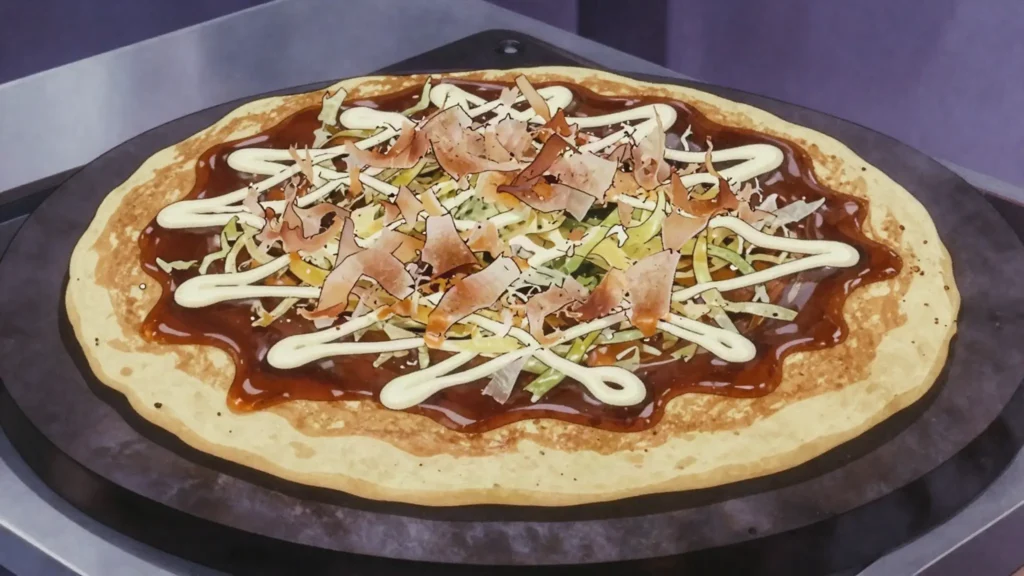
- Brush generously with okonomiyaki sauce, then zigzag Japanese mayonnaise across it. Scatter aonori over and finish with a thick handful of katsuobushi. Serve immediately, cut into wedges, eaten from the griddle in Osaka.
Technique
- Okonomiyaki sauce is thick, sweet and fruity, closer to a brown sauce than to soy.
- Japanese mayonnaise is made with egg yolk and rice vinegar and is noticeably tangier than Western mayonnaise.
- Squid, prawns and cheese are all common additions.
Substitutions
- Grated potato at a pinch in place of nagaimo, which is not the same but adds some body.
- Brown sauce mixed with ketchup and a little honey, in place of okonomiyaki sauce.
Variations
- Hiroshima style, layered with yakisoba noodles and a fried egg.
- Negiyaki, made with a great deal of spring onion and no cabbage.
- Vegetarian, with kombu dashi and no pork or bonito.
History
A savory, griddle-cooked pancake whose name translates roughly to ‘grilled as you like it,’ reflecting its genuinely flexible composition of batter, shredded cabbage and whatever additional ingredients, seafood, meat or vegetables, a cook or diner chooses to add. Its modern form developed out of a simpler prewar Japanese snack food, and it spread significantly in the years of postwar food scarcity following the Second World War, when cheap flour, provided partly through American aid, made a filling pancake an accessible way to stretch limited ingredients. Osaka-style and Hiroshima-style okonomiyaki diverged into genuinely different dishes rather than mere variations, most notably in whether the noodles and ingredients are mixed directly into the batter, as in Osaka, or layered separately, as in Hiroshima’s more elaborate stacked version.
Frequently asked questions
What is Okonomiyaki?
Okonomiyaki is a main from Japan: savory cabbage pancake grilled with pork, sauce, mayonnaise and bonito flakes. A savory, griddle-cooked pancake whose name translates roughly to ‘grilled as you like it,’ reflecting its genuinely flexible composition of batter, shredded cabbage and whatever additional ingredients, seafood, meat or vegetables, a cook or diner chooses to add. Its modern form developed out of a simpler prewar Japanese snack food, and it spread significantly in the years of postwar food scarcity following the Second World War, when cheap flour, provided partly through American aid, made a filling pancake an accessible way to stretch limited ingredients. Osaka-style and Hiroshima-style okonomiyaki diverged into genuinely different dishes rather than mere variations, most notably in whether the noodles and ingredients are mixed directly into the batter, as in Osaka, or layered separately, as in Hiroshima’s more elaborate stacked version.
How long does Okonomiyaki take to make?
Okonomiyaki takes 25 min of preparation and 30 min of cooking. The recipe makes 4 pancakes. It is rated medium to make.
What can I substitute in Okonomiyaki?
Yes, within limits. Grated potato at a pinch in place of nagaimo, which is not the same but adds some body. Brown sauce mixed with ketchup and a little honey, in place of okonomiyaki sauce.
What is the most important thing to get right in Okonomiyaki?
Shred the cabbage as finely as you can, close to 3 mm, and do not chop it into squares. Grate the peeled nagaimo on a fine grater into a slippery, sticky purée. It can irritate skin, so wear gloves or rinse your hands if they itch.