
Ingredients
The mushrooms
- 1 kgmushrooms
- cultivated button, chestnut or oyster
- see the safety note on wild mushrooms
- or wild mushrooms only if identified by an expert
- cleaned and trimmed
- small ones whole, large ones halved
The marinade
- 500 mlwater
- 250 mlwhite vinegar
- at 5 percent acidity
- see the note, this quantity is a safety matter
- 2 tablespoonssalt
- non-iodised
- 1 tablespoonsugar
The spices
- 6black peppercorns
- 4allspice berries
- 3bay leaves
- 4 clovesgarlic, sliced
- 1 teaspoondill seed
- or a dill head
- 2cloves, optional
- 1small onion, sliced, optional
To finish
- sunflower oil, to seal
- chopped dill
- sliced onion
Directions
- Use cultivated mushrooms. Never eat a wild mushroom raw. Take a sample of the mushroom if you can. Enough acid, and cold storage. Use vinegar at five percent acidity. Check the bottle.
- Keep these jars refrigerated. Cold prevents growth even if the acid is marginal. Brush the dirt off rather than soaking them. Waterlogged mushrooms go soft and dilute the marinade.
- Trim the stem ends. Halve or quarter anything large. Small whole mushrooms look best and keep their texture.
- Boil the mushrooms in salted water for ten to fifteen minutes. Drain them and discard the water. Bring the water, vinegar, salt, sugar and spices to the boil.
- Simmer it five minutes. Use stainless steel or enamel. Add the drained mushrooms to the marinade. Simmer them ten minutes more. Wash them hot, then dry them in a low oven. Never pour hot liquid into a cold jar. Pack the hot mushrooms into warm jars.
- Pour the hot marinade over to cover them. Everything must stay under the marinade. Oil is not a substitute for acid or for cold. So it helps with mould and does nothing against botulism.
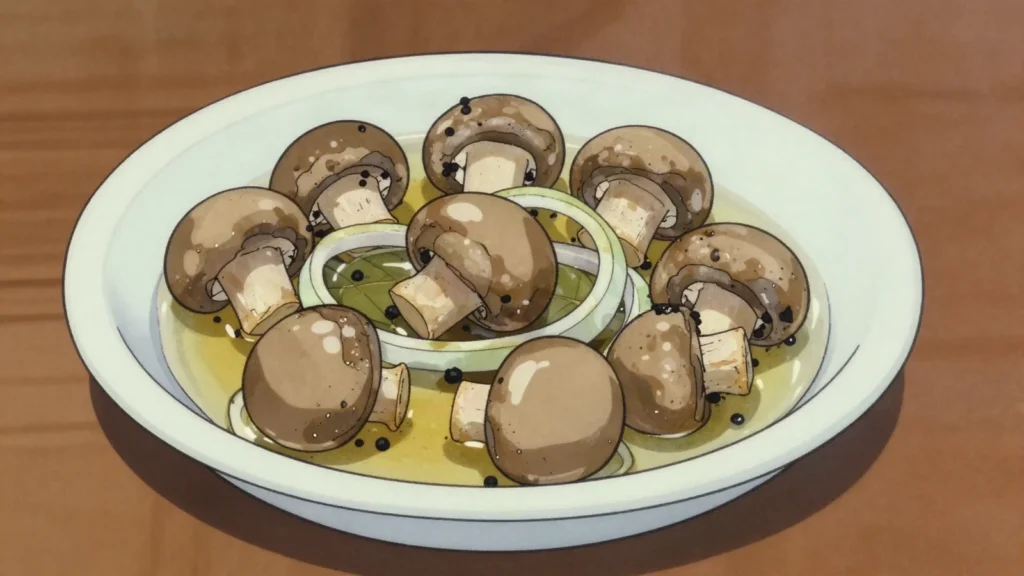
- Let the jars cool, then refrigerate them. The mushrooms need to take up the marinade. Serve them cold in a shallow dish. It goes soft and grey. Keep everything under the marinade. Discard for a bulging lid, fizzing, cloudiness or any off smell.
Technique
- Wild mushroom misidentification kills people every year in Europe, most often through Amanita phalloides, the death cap, which looks unremarkable, is mistaken for edible species and tastes pleasant. Symptoms are delayed six to twenty-four hours, by which time liver damage is under way, and there is often an apparent recovery before collapse — so feeling fine after eating a mushroom means nothing.
- There is no reliable folk test. A silver spoon does not turn black; peeling the cap proves nothing; insects or animals eating it prove nothing; and cooking, drying and boiling do not destroy amatoxins, which are heat stable. No kitchen process removes them.
- Use cultivated mushrooms, or wild ones identified by someone who genuinely knows — an experienced local forager, a mycological society, or one of the mushroom inspection services several countries run in season. Not a phone app, not a photograph in a book, not a website.
- Never eat a wild mushroom raw, and try only a small amount of a species new to you — even edible species disagree with some people. Several commonly gathered species are edible only after boiling and discarding the water, and anyone gathering needs to know which. Some, such as Coprinopsis atramentaria, react badly with alcohol.
- If someone is ill after eating mushrooms, seek medical help immediately rather than waiting for symptoms to worsen, and take a sample of the mushroom if you can.
- Mushrooms are low in acid, grow in soil that carries botulinum spores, and get packed into sealed jars — the classic botulism combination, and home-canned low-acid vegetables are the commonest documented cause of home botulism.
- The vinegar here is not a flavouring. Do not reduce it and do not add water to soften the taste: diluting raises the pH, and botulinum grows above about pH four and a half. Use vinegar at five percent acidity and check the bottle.
- Keep these jars refrigerated. Cold prevents growth even if the acid is marginal. Traditionally they sat in a cold cellar, which is genuinely near refrigerator temperature — a modern warm cupboard is not the same place, and the atlas says so rather than letting the tradition mislead.
- The atlas gives no method for pressure canning these for cupboard storage. That requires a pressure canner and validated times and is not something to improvise.
- The oil layer excludes air, which helps against mould and does nothing against botulism — botulinum is precisely what grows without air. It is not a substitute for acid or for cold.
- Discard for a bulging lid, gas or fizzing on opening, an unusual smell, or new cloudiness — and do not taste to check. Botulinum toxin gives no smell, taste or visible sign and a tiny amount is enough.
- Brush the dirt off rather than soaking. Mushrooms absorb water readily, and waterlogged ones go soft and dilute the marinade.
- Boil them ten to fifteen minutes first. That cooks them through and drives out air trapped in the tissue, which is a problem in a sealed jar. Properly cooked mushrooms sink and undercooked ones float — the traditional test, and it works.
- Add the oil and raw onion at the table rather than in the jar. Onion in the jar goes soft and grey and adds water.
- Give them three days before eating and a week if you can, so they take up the marinade.
- Wild forest mushrooms, boletes especially, taste better in this than cultivated ones — the atlas says so rather than pretending otherwise. Use them if you have a trustworthy identified source; cultivated mushrooms still make a genuinely good jar.
- Wild mushrooms concentrate caesium from soil, parts of Belarus were contaminated by the Chernobyl accident in 1986, and restrictions and monitoring on wild mushrooms from affected areas have been in place since. Anyone gathering there should follow local guidance.
- Use stainless steel or enamel, never aluminium or copper. Simmering vinegar gives off sharp fumes, so open a window.
Substitutions
- Button, chestnut, oyster or shiitake mushrooms all work cultivated.
- Boletes, chanterelles and honey fungus are the traditional wild choices, identified by an expert.
- Cider vinegar replaces white for a rounder flavour at the same acidity.
- Coriander seed, mustard seed and juniper all belong in variant spice mixes.
- Any neutral oil replaces sunflower for the seal.
- A hotter version adds dried chilli to the jar.
Variations
- Salted mushrooms, salyonyya hryby, are the fermented rather than marinated version.
- Dried mushrooms are the other Belarusian preservation, used in soups.
- Mushroom caviar, ikra, chops them into a spread.
- Marinated mushrooms with more garlic and dill are the Ukrainian style.
- Grzyby marynowane in Poland are the same jar.
- A jar with onion added at serving is the standard way they reach the table.
History
Belarus’s woods make mushrooming a national pastime, and jars are put up every autumn.
Frequently asked questions
What is Marynavanyya hryby?
Marynavanyya hryby is a fermented & pickled from Belarus: forest mushrooms preserved in vinegar brine with peppercorns and bay. Belarus’s woods make mushrooming a national pastime, and jars are put up every autumn.
How long does Marynavanyya hryby take to make?
Marynavanyya hryby takes 40 minutes of preparation and 30 minutes of cooking. The recipe makes makes 2 medium jars. It is rated medium to make.
What can I substitute in Marynavanyya hryby?
Yes, within limits. Button, chestnut, oyster or shiitake mushrooms all work cultivated. Boletes, chanterelles and honey fungus are the traditional wild choices, identified by an expert. Cider vinegar replaces white for a rounder flavour at the same acidity. Coriander seed, mustard seed and juniper all belong in variant spice mixes. Any neutral oil replaces sunflower for the seal. A hotter version adds dried chilli to the jar.
What is the most important thing to get right in Marynavanyya hryby?
Use cultivated mushrooms. Never eat a wild mushroom raw. Take a sample of the mushroom if you can. Enough acid, and cold storage. Use vinegar at five percent acidity. Check the bottle.