
Ingredients
What goes into the still (distillery scale)
- malted barley, largely imported from Scotland, in peated and unpeated lots
- soft Japanese water, often from granite aquifers such as Yamazaki or Hakushu
- several distillers yeast strains, chosen per component whisky
- wooden or stainless washbacks
- copper pot stills of many shapes and neck angles, so that one distillery can make dozens of different spirits
- casks: ex-bourbon American oak, sherry butts, and mizunara, Japanese oak
Serves
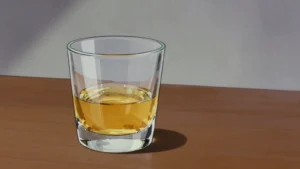
- 30 mlwhisky, neat, in a tulip glass
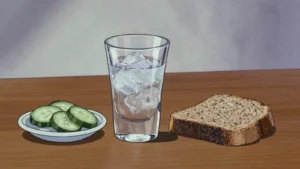
- for mizuwari: 30 ml whisky, 60 ml still mineral water, ice
- for oyuwari: 30 ml whisky, 60 ml hot water at 80°C (175°F)
Directions
- Mill and mash the malt, then ferment 60–90 hours, longer than typical Scottish practice, to build the lactic, fruity notes that define the Japanese style.
- Distil twice in copper pot stills. Because Japanese distilleries historically did not trade spirit with one another, each site runs many still shapes and cut points in order to make every component of its own blends.
- Fill into cask and mature in warehouses that swing hard between summer humidity and winter cold, which drives faster wood interaction than Scotland.
- Age a proportion in mizunara, Japanese oak: porous, difficult to coopering, leaky, but after 20 years it gives the sandalwood, coconut and incense note the style is famous for.
- Blend. The chief blender assembles dozens of component whiskies; blending, not single-cask bravado, is the craft that Japan is known for.
- Since April 2021 the label rule is explicit: to be called Japanese whisky, mashing, fermentation, distillation, ageing of at least 3 years and bottling must all happen in Japan, at 40 percent ABV or more.
- Serve neat in a tulip glass at room temperature to judge it, adding a few drops of water to open the top notes.
- For mizuwari, the everyday Japanese serve, fill a chilled glass with ice, add whisky, stir 13 times, add water at 2 parts to 1, and stir 3 more times.
- For oyuwari, pour the hot water into the cup first and then the whisky, never the other way round, so the spirit warms gently and the aromatics lift rather than blow off.
Technique
- Japanese whisky descends directly from Scotland: Masataka Taketsuru studied chemistry in Glasgow and apprenticed at Longmorn and Hazelburn, then built Yamazaki for Shinjiro Torii in 1923 and Yoichi for himself in 1934.
- Before 2021 the category was loosely policed and many bottles labelled Japanese contained imported bulk whisky. Check for the new standard or for a stated distillery.
- Mizunara casks leak, warp and are hard to season, so mizunara-aged whisky is expensive for good reason, not marketing.
- Never attempt to distil spirit at home: it is illegal without a licence almost everywhere and dangerous when done badly.
Substitutions
- If a named Japanese single malt is unaffordable, the Japanese blends made for the domestic highball market are the honest everyday choice and are built to be mixed.
- A gentle Speyside or Lowland malt is the nearest Scottish equivalent for drinking neat.
Variations
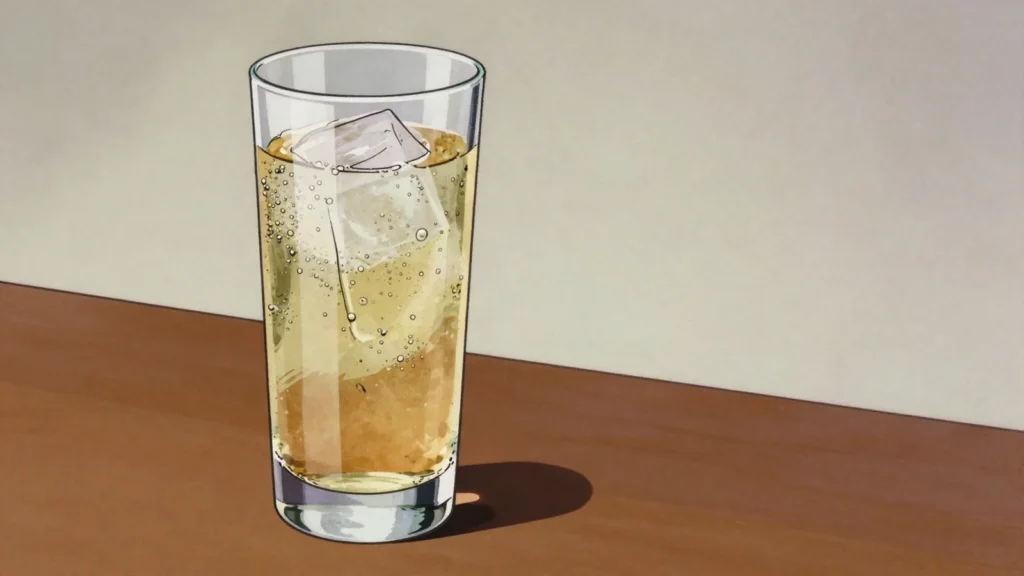
- The highball, the national serve, at 1 part whisky to 3 or 4 parts cold soda.
- Mizunara-finished expressions, and the heavily peated Yoichi style from Hokkaido, which is closer to Islay.
- Whisky with a hand-carved ice ball, a bar ritual in itself, cut in front of the guest with a three-pronged pick.
History
Masataka Taketsuru studied distilling in Scotland in 1918; with Shinjiro Torii he opened the Yamazaki distillery near Kyoto in 1923.
Frequently asked questions
What is Japanese Whisky?
Japanese Whisky is a wine & spirit from Japan: delicate malt whisky often finished in mizunara oak, prized worldwide. Masataka Taketsuru studied distilling in Scotland in 1918; with Shinjiro Torii he opened the Yamazaki distillery near Kyoto in 1923.
How long does Japanese Whisky take to make?
Japanese Whisky takes 10 min of preparation and minimum 3 years in wood, usually 10 to 18 of cooking. The recipe makes 1 bottle (700 ml), plus three serves. It is rated hard to make.
What can I substitute in Japanese Whisky?
Yes, within limits. If a named Japanese single malt is unaffordable, the Japanese blends made for the domestic highball market are the honest everyday choice and are built to be mixed. A gentle Speyside or Lowland malt is the nearest Scottish equivalent for drinking neat.
What is the most important thing to get right in Japanese Whisky?
Since April 2021 the label rule is explicit: to be called Japanese whisky, mashing, fermentation, distillation, ageing of at least 3 years and bottling must all happen in Japan, at 40 percent ABV or more.