
Ingredients
Pork and marinade
- 4 kgbone-in pork leg or shoulder, skin on
- 2whole heads of garlic, peeled and pounded to a paste
- 2 tbspcoarse salt
- 2 tbspground cumin
- 2 tbspachiote (annatto) paste or 3 tbsp achiote oil
- 1 tbspdried oregano
- 1 tbspground black pepper
- 500 mlchicha de jora, or dark beer
- juice of 4 limes
- 2onions, sliced
Agrio (the sauce)
- 250 mlchicha de jora or beer
- 2tomatoes, finely diced
- 1red onion, finely diced
- 2 tbspwhite vinegar
- 1 tbspachiote oil
- 2 tspsugar
- a handful of coriander, chopped
- 1aji chilli, finely chopped
- salt
To serve
- llapingachos (potato and cheese patties, fried)
- 400 gmote (cooked hominy)
- avocado slices and lettuce
Directions
- Pound the garlic with the salt, cumin, oregano, pepper and achiote to a thick red-brown paste.
- Stab the pork deeply all over with a thin knife and force the paste into every hole and across all the flesh. Leave the skin dry and rub it with salt only.
- Sit the meat in a tub with the chicha, lime juice and sliced onion, skin above the liquid, and marinate 24 hours in a cool place, turning once.
- Lift out, drain, and roast skin side up at 150°C (300°F) for 4 hours, basting the flesh with the marinade hourly. In Ecuador this happens in a wood-fired adobe oven, and the whole pig goes in overnight.
- Uncover, dry the skin thoroughly with kitchen paper, salt it again, and blast at 230°C (450°F) for 25–30 minutes until it blisters into crisp golden cuero. Cover any exposed lean meat with foil so it does not dry.
- For the agrio, simmer the chicha, vinegar, sugar and achiote oil for 5 minutes, then take it off the heat and stir in the raw tomato, onion, coriander and chilli. It should be sharp, sweet and thin, not a thick salsa.
- Rest the pork 25 minutes, then pull the meat off the bone in coarse hunks rather than slicing it, and shatter the crackling into shards.
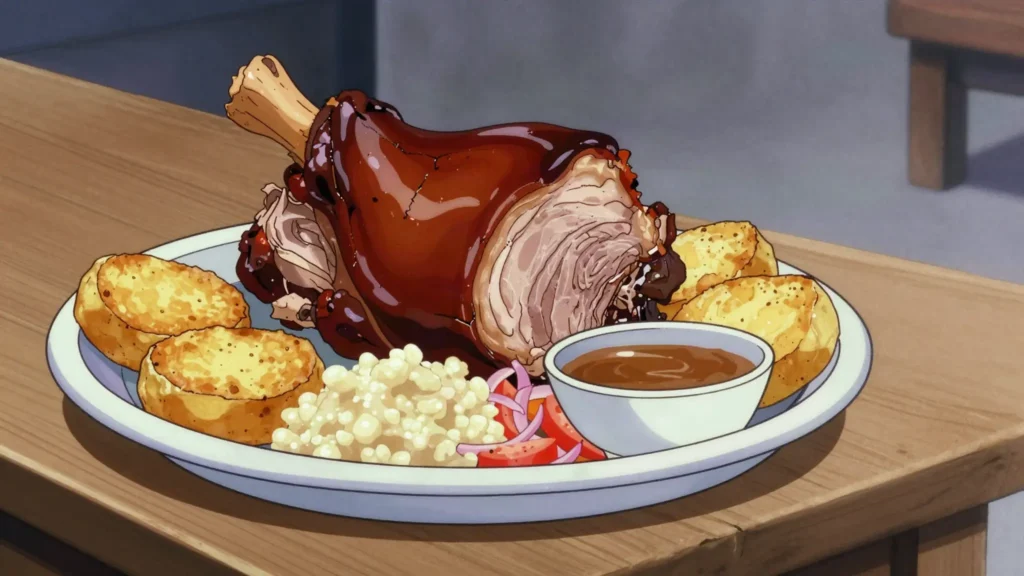
- Serve on a plate with llapingachos, mote, avocado and lettuce, with the agrio poured over the meat at the last moment.
Technique
- Chicha de jora, a lightly fermented maize beer of pre-Columbian origin, is the traditional marinade and the base of the agrio. Its mild acidity tenderises the pork and gives a sourness beer only approximates.
- Hornado is market food. In Ambato, Latacunga and the Otavalo market a whole pig is displayed on the counter and pulled apart to order, head and crackling included.
- Never wet the skin during the long roast. All liquid goes on the flesh; the skin must stay dry so it can blister at the end.
Substitutions
- No chicha de jora: use a dark unhopped beer or a light lager with 2 tbsp of cider vinegar, which gets close to the sour-sweet effect.
Variations
- Fritada, the smaller everyday cousin: pork cubes simmered in water and orange juice until the liquid evaporates, then fried in their own fat.
- Hornado served in a bread roll as a sanduche de hornado, a Quito street standard.
History
Whole pig rubbed with chicha and roasted in a wood oven, carved at Andean market stalls and served with llapingachos and agrio sauce.
Frequently asked questions
What is Hornado?
Hornado is a main from Ecuador: slow-roasted whole pork served at markets with llapingachos and mote. Whole pig rubbed with chicha and roasted in a wood oven, carved at Andean market stalls and served with llapingachos and agrio sauce.
How long does Hornado take to make?
Hornado takes 40 min plus 24 hr marinating of preparation and 5 hr of cooking. The recipe makes 10 servings. It is rated medium to make.
What can I substitute in Hornado?
Yes, within limits. No chicha de jora: use a dark unhopped beer or a light lager with 2 tbsp of cider vinegar, which gets close to the sour-sweet effect.
What is the most important thing to get right in Hornado?
Lift out, drain, and roast skin side up at 150°C (300°F) for 4 hours, basting the flesh with the marinade hourly. In Ecuador this happens in a wood-fired adobe oven, and the whole pig goes in overnight.