
Ingredients
Soured milk
- 2 litreswhole milk
- 4 tbsplive lait caillé or plain live yoghurt, as starter
To serve
- sugar or honey, to taste
- millet couscous or thiakry, cooked and cooled
- a pinch of salt
Directions
- Warm the milk to about 35°C (95°F) — blood heat. In a Fulani household this is simply the temperature the milk arrives at, so there is nothing to heat.
- Stir in the starter until it is evenly through the milk.
- Pour into a gourd, a clay pot or a jar and cover with a cloth rather than a lid, so gas can escape. A sealed container makes the curd rise and split unevenly.
- Leave at warm room temperature for 24 to 36 hours, until it has set thick and tastes sharply sour. It should hold together when you tilt the jar.
- Stir it smooth — this one is not drained, and the loose, pourable texture is the point.
- Chill well. Sweeten with sugar or honey just before serving, and add a pinch of salt, which sharpens the sourness rather than making it salty.
- Pour over millet couscous or thiakry, or drink it cold from a bowl.
Technique
- Keep four spoonfuls back to start the next batch. A gourd that has held lait caillé for years carries its own culture in the wood, which is exactly how Fulani households maintain it.
- Do not sweeten before it sets. Sugar early feeds the wrong organisms and the milk goes yeasty rather than sour.
- Ultra-pasteurised milk sets poorly. Ordinary whole milk gives a far better curd.
Substitutions
- Buttermilk as a starter if there is no yoghurt to hand.
- Powdered milk reconstituted at full strength, which is what many West African households now use and which sours perfectly well.
Variations
- Drained through cloth it becomes a thick spread, closer to Botswanan madila.
- Poured over millet dough pellets it becomes dèguè; stirred with millet flour it becomes gappal.
History
Fulani herders sour surplus milk in gourds where residual cultures set the next batch, the same dairy craft that produces dèguè and gapal.
Frequently asked questions
What is Lait caillé?
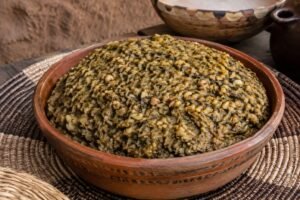
Lait caillé is a cheese & dairy from Burkina Faso: thick soured cow’s milk ladled from calabashes, sweetened or poured over millet. Fulani herders sour surplus milk in gourds where residual cultures set the next batch, the same dairy craft that produces dèguè and gapal.
How long does Lait caillé take to make?
Lait caillé takes 10 min plus 1 to 2 days souring of preparation and no cooking at all. The recipe makes makes 1.5 litres. It is rated easy to make.
What can I substitute in Lait caillé?
Yes, within limits. Buttermilk as a starter if there is no yoghurt to hand. Powdered milk reconstituted at full strength, which is what many West African households now use and which sours perfectly well.
What is the most important thing to get right in Lait caillé?
Pour into a gourd, a clay pot or a jar and cover with a cloth rather than a lid, so gas can escape. A sealed container makes the curd rise and split unevenly.