
Ingredients
Ferment
- 1 kgcoarse bulgur
- 3 litresfull-fat yoghurt, or laban
- 2 tbspsalt
To cook, per serving
- 3 tbspkishk powder
- 300 mlwater or stock
- 1onion, chopped and fried in ghee
- 2 clovesgarlic, crushed
- olive oil and pine nuts, to finish
Directions
- Soak the bulgur in a third of the yoghurt with the salt, mix well, cover, and leave at cool room temperature.
- Each day for the next eight days, add a further portion of yoghurt and work the mixture hard with your hands for several minutes. In Lebanese villages this is done communally, and the daily kneading is not optional — it aerates the mass and distributes the culture, and an unworked batch goes sour on the surface and stays raw underneath.
- By day nine the mixture should be thick, sharply sour, and smell strongly fermented.
- Spread it in a thin layer on clean cloths or trays and dry it in the sun for two to three days, crumbling it with your hands as it hardens and turning it.
- It must dry completely hard — brittle enough to crush to powder between your fingers. Anything still soft will mould in storage and take the batch with it.
- Rub the dried lumps through a coarse sieve to make a powder, then store it in cloth bags or jars somewhere dry. It keeps for a year or more.
- To make the soup, whisk the powder into cold water or stock, bring slowly to a simmer, stirring constantly, and cook 10 minutes until thickened.
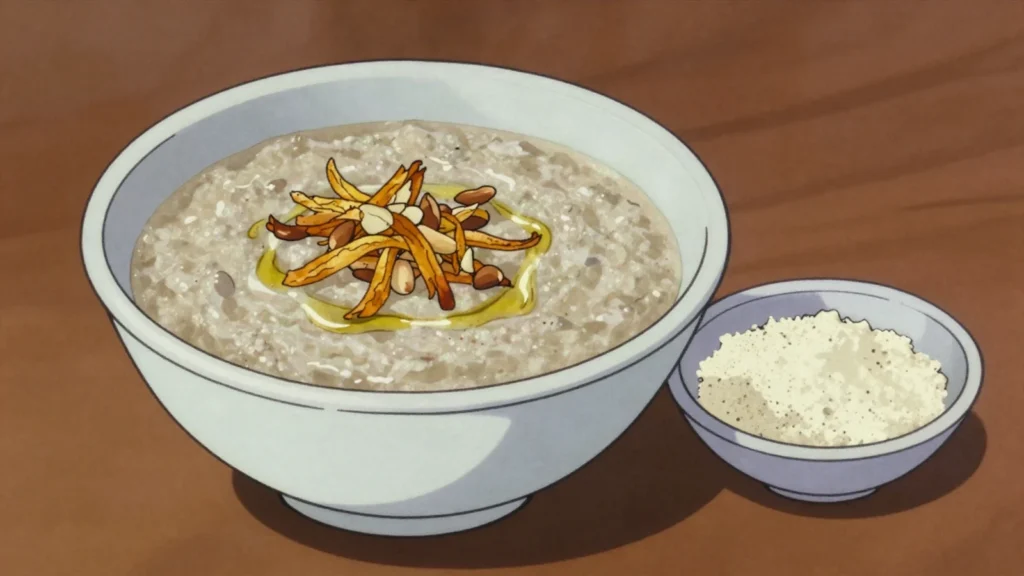
- Finish with fried onion, garlic, olive oil and pine nuts, and serve hot for breakfast with flatbread.
Technique
- Knead it daily. This is the step that turns a bucket of soured bulgur into kishk.
- Dry it until it is genuinely brittle. Half-dry kishk moulds and the year’s work is lost.
- Whisk it into cold liquid, not hot. Added to a hot pan it lumps immediately.
Substitutions
- Goat’s or sheep’s milk yoghurt, which is what mountain villages use and which is tangier.
- A dehydrator at 55°C (131°F) where the sun will not oblige.
Variations
- Kishk el fouqara — poor man’s kishk — is made with milk rather than yoghurt and is milder.
- Baked onto manakish with tomato and onion rather than made into soup.
History
Made communally in mountain villages each autumn and dried on sheets; also baked onto manakish.
Frequently asked questions
What is Kishk?
Kishk is a fermented & pickled from Lebanon: sour powder of bulgur fermented with milk, cooked into breakfast soup. Made communally in mountain villages each autumn and dried on sheets; also baked onto manakish.
How long does Kishk take to make?
Kishk takes 1 hour plus 9 days fermenting and 3 days drying of preparation and no cooking at all. The recipe makes makes about 1.5 kg dried. It is rated medium to make.
What can I substitute in Kishk?
Yes, within limits. Goat’s or sheep’s milk yoghurt, which is what mountain villages use and which is tangier. A dehydrator at 55°C (131°F) where the sun will not oblige.
What is the most important thing to get right in Kishk?
Each day for the next eight days, add a further portion of yoghurt and work the mixture hard with your hands for several minutes. In Lebanese villages this is done communally, and the daily kneading is not optional — it aerates the mass and distributes the culture, and an unworked batch goes sour on the surface and stays raw underneath.