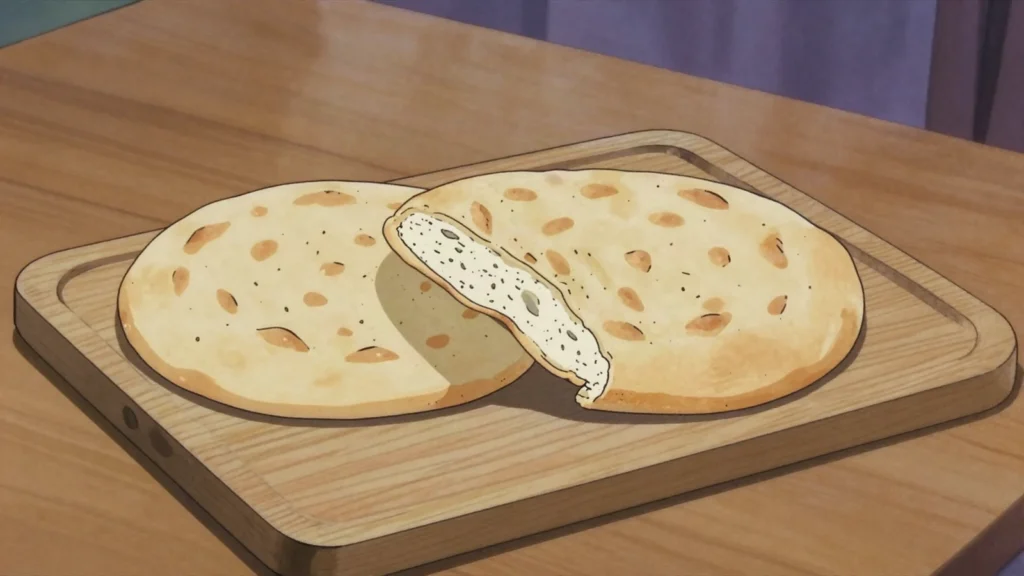

Ingredients
The dough
- 400 gfine semolina
- smida, durum semolina
- 200 gstrong white flour
- or plain flour
- 7 gsachet fast-action dried yeast
- 2 teaspoonssalt
- 1 teaspoonsugar
- 2 tablespoonsolive oil
- about 380 ml warm water
Sometimes added
- 1 tablespoonaniseed
- or sesame seeds
- 1 tablespoonnigella seeds
- a handful of wholemeal flour
- in place of some white
For shaping and baking
- extra semolina, for dusting
- a clean cloth
- to cover and to carry
To serve
- with every meal
- with tagine
- with olive oil
- with mint tea
Directions
- Use fine semolina rather than coarse. Mix the dough and let it rest ten minutes. Then judge whether it needs more water. Put the semolina and flour in a large bowl. Add the yeast and sugar to one side. Add the salt to the opposite side.
- Add the aniseed or sesame if you are using them. Stir the dry ingredients together. Warm it until it is just warm to the touch. It must not be hot at any point.
- Heat kills yeast. Add most of the water and the olive oil. Mix with your hand into a rough dough. Let it rest ten minutes. Then add more water if it is stiff. Turn it out onto a lightly floured surface. Knead it for a full ten minutes. Semolina needs more work than white flour. Divide the dough into four pieces. Roll each into a smooth ball.
- Press each ball into a flat disc. Aim for about eighteen centimetres across. Flatten it more than feels right. Dust a board or tray with semolina. Lay the discs on it. That dusting stops sticking and gives a crust texture. Cover them with a clean cloth.
- Leave them somewhere warm for about an hour. They should look visibly puffed. Prick the tops all over with a fork. That stops large bubbles forming under the crust. Heat it as hot as it will go. Put a baking stone or heavy tray in to heat. Give it a full thirty minutes.
- Put a tray of boiling water in the oven base. Steam keeps the crust soft for the first minutes. Stand back and keep your face away. Slide the loaves onto the hot stone.
- Bake them for about twenty to twenty-five minutes. They should be pale golden rather than dark. Cool them on a rack. Warm bread is genuinely good. But bread cut very hot has a gummy crumb. Cut each loaf into wedges. Serve it in a basket at the centre of the table. Eating is done with the right hand. Freeze it whole and thaw it in the oven.
Technique
- Rest the dough ten minutes after mixing, then judge whether it needs more water. Semolina absorbs water slowly and absorbs more of it, so a dough that looks right immediately will have stiffened by the time you knead it.
- Knead a full ten minutes. Semolina’s gluten develops more slowly than white flour’s and this is a genuine minimum, not a rounding.
- Flatten the loaves more than feels right — about eighteen centimetres across and one and a half thick. Khobz is a flat loaf, not a boule, and its density and close crumb are what let a torn wedge scoop up a tagine without collapsing.
- Prick the tops all over with a fork before baking. It stops large bubbles forming under the crust and keeps the loaf flat and even.
- Heat a baking stone or heavy tray for a full thirty minutes and bake on it. Immediate bottom heat gives spring and sets the base, and it is the most useful home approximation of a wood-fired oven floor.
- Use steam — a tray of boiling water in the oven base. It keeps the crust soft long enough for the loaf to expand fully; without it the crust sets early and limits the rise. Open the oven carefully, standing back from the scalding cloud.
- Use fine semolina, sold as smida or as Italian semola rimacinata. Coarse semolina gives a crumbly loaf.
- All semolina gives a dense crumbly loaf and all white flour gives an ordinary bread. Two parts semolina to one of flour gives structure and character together, and households vary it considerably.
- The dough will not double on rising. A stiff semolina dough puffs visibly and no more, which is expected.
- Cool on a rack, not a solid surface, or the base steams and goes soggy. Give it fifteen minutes before cutting, since very hot bread has a gummy crumb.
- Keep it in a cloth, never in plastic, which softens the crust, and never in the refrigerator, which stales it faster.
- The ferran, the neighbourhood oven, still bakes household dough in many places — families shape their loaves at home, mark them, and carry them on a board. It existed because home ovens were uncommon and fuel expensive, and the same building often heated the hammam with its waste heat.
Substitutions
- Italian semola rimacinata replaces Moroccan smida exactly.
- Plain flour replaces strong white flour, giving a slightly softer loaf.
- A handful of wholemeal flour in place of some white gives a darker, denser bread.
- Aniseed, sesame or nigella seeds are all used; plain is equally normal.
- A heavy baking tray replaces a baking stone if it is preheated thoroughly.
- The olive oil can be left out for a plainer and crustier loaf.
Variations
- Batbout is the soft pocket bread cooked on a griddle rather than baked.
- Msemen is the folded flaky square pan-fried bread.
- Harcha is the semolina griddle cake, closer to a scone in texture.
- Rghaif and meloui are the coiled pan-fried relatives.
- Khobz with aniseed and sesame is common in some regions.
- A wholemeal khobz is made where barley or wholemeal flour is used.
Frequently asked questions
What is Khobz?
Khobz is a bread & pastry from Morocco: round crusty semolina loaves accompanying every meal, often baked communally.
How long does Khobz take to make?
Khobz takes 30 minutes plus 2 hours rising of preparation and 25 minutes of cooking. The recipe makes makes 4 loaves. It is rated medium to make.
What can I substitute in Khobz?
Yes, within limits. Italian semola rimacinata replaces Moroccan smida exactly. Plain flour replaces strong white flour, giving a slightly softer loaf. A handful of wholemeal flour in place of some white gives a darker, denser bread. Aniseed, sesame or nigella seeds are all used; plain is equally normal. A heavy baking tray replaces a baking stone if it is preheated thoroughly. The olive oil can be left out for a plainer and crustier loaf.
What is the most important thing to get right in Khobz?
Use fine semolina rather than coarse. Mix the dough and let it rest ten minutes. Then judge whether it needs more water. Put the semolina and flour in a large bowl. Add the yeast and sugar to one side. Add the salt to the opposite side.