
Ingredients
Tuna
- 600 gtuna steaks, cut into 3 cm cubes (traditionally whole small tuna, cut across)
- 1 tspsalt
- 800 mlrefined vegetable oil, for deep frying
Attiéké
- 800 gfresh attiéké (fermented cassava couscous)
- 100 mlhot water
- ½ tspsalt
Piment garba
- 3 tbspground dried chilli
- 1 tspsalt
- 1stock cube, crushed
- 1 tspground dried onion or garlic powder, optional
To dress
- 2onions, sliced into thin half-moons
- 2firm tomatoes, diced
- 1cucumber, diced
- 2 tbspof the frying oil
- Juice of 1 lemon
Directions
- Sprinkle the attiéké with the hot water and salt, fluff it with your fingers, then steam it for 10 minutes until warm, loose and slightly springy.
- Pat the tuna cubes completely dry and salt them; wet fish drops the oil temperature and spits.
- Heat the oil in a deep pan to 180°C (350°F). Vendors use one wide pan of well-used oil kept hot all day, which is part of the flavour of real garba.
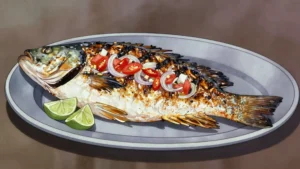
- Fry the tuna in batches for 4–5 minutes, turning once, until the outside is dark golden and crusted and the inside is cooked through but not dried out. Drain on paper.
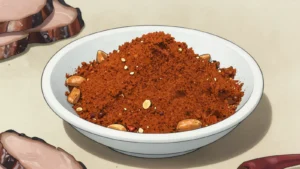
- Mix the ground chilli, salt, stock cube and onion powder in a small bowl to make the piment; it is used dry, sprinkled rather than spooned.
- Toss the sliced onion, tomato and cucumber with the lemon juice and a pinch of salt, keeping it crunchy and raw.
- Pile a generous mound of warm attiéké on each plate, ideally on paper or in a plastic bowl the way it is sold.
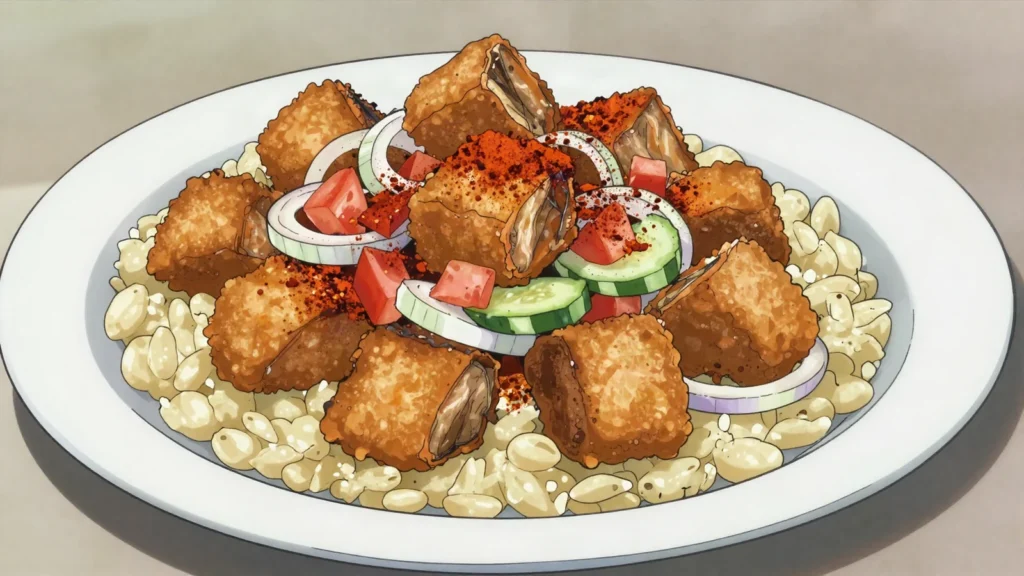
- Top with the hot fried tuna, spoon over a little of the frying oil, scatter the raw onion, tomato and cucumber, then dust with as much piment as you can take.
- Eat immediately with your fingers, mixing everything together as you go, while the tuna is still crisp.
Technique
- Garba is Abidjan’s cheapest hot meal and a genuine social institution, sold from wooden kiosks run mostly by Nigerien Hausa vendors, who are themselves called ‘garba’.
- The dish is a contrast machine: sour fermented attiéké, hot oily fried tuna, raw crunchy vegetables and dry chilli. Remove any one and it stops working.
- Frying oil that has cooked fish all day gives the vendor version its taste. At home, use fresh oil and accept a cleaner, slightly less funky result.
- Tuna is the correct fish. Any dense, meaty fish will fry the same way, but the dish is named around tuna.
Substitutions
- Fresh attiéké is best; dried attiéké from an African grocer rehydrates with an equal volume of hot salted water and 10 minutes of steaming.
- Where tuna is expensive, use bonito, mackerel or kingfish steaks cut the same size.
Variations
- Garba djêbê is served with more oil and extra chilli; garba kôkô uses larger tuna chunks.
- Some kiosks now offer garba with a fried egg or with a spoonful of raw pepper-onion sauce.
History
Fried tuna served over attieke, a fermented cassava couscous, developed specifically in Abidjan, Côte d’Ivoire’s largest city, as an inexpensive, filling street food meal, generally understood to have emerged sometime in the 1900s though its precise date and place of invention within the city are not well documented beyond its clear urban Abidjan origin. Its two-component structure, fried fish paired with attieke rather than plain rice or another starch, reflects attieke’s own central place in Ivorian coastal cooking, itself a labor-intensive fermented cassava product with roots among Ivorian coastal ethnic groups predating the specific garba combination. Garba remains an extremely popular, affordable everyday meal sold from small stands across Abidjan and other Ivorian cities, closely tied to urban working-class food culture.
Frequently asked questions
What is Garba?
Garba is a street food from Côte d’Ivoire: attiéké piled with fried tuna, chili, onion and tomato; beloved cheap eat. Fried tuna served over attieke, a fermented cassava couscous, developed specifically in Abidjan, Côte d’Ivoire’s largest city, as an inexpensive, filling street food meal, generally understood to have emerged sometime in the 1900s though its precise date and place of invention within the city are not well documented beyond its clear urban Abidjan origin. Its two-component structure, fried fish paired with attieke rather than plain rice or another starch, reflects attieke’s own central place in Ivorian coastal cooking, itself a labor-intensive fermented cassava product with roots among Ivorian coastal ethnic groups predating the specific garba combination. Garba remains an extremely popular, affordable everyday meal sold from small stands across Abidjan and other Ivorian cities, closely tied to urban working-class food culture.
How long does Garba take to make?
Garba takes 15 min of preparation and 20 min of cooking. The recipe makes 4 servings. It is rated easy to make.
What can I substitute in Garba?
Yes, within limits. Fresh attiéké is best; dried attiéké from an African grocer rehydrates with an equal volume of hot salted water and 10 minutes of steaming. Where tuna is expensive, use bonito, mackerel or kingfish steaks cut the same size.
What is the most important thing to get right in Garba?
Mix the ground chilli, salt, stock cube and onion powder in a small bowl to make the piment; it is used dry, sprinkled rather than spooned.