
Ingredients
Soup
- 800 ggoat or lamb on the bone, in 4 cm pieces
- 3 tbspvegetable oil or ghee
- 2onions, finely chopped
- 6garlic cloves, crushed
- 3cm ginger, grated
- 3tomatoes, grated or chopped
- 2 tbsptomato puree
- 2 tspxawaash spice mix (see notes)
- 1 tspground turmeric
- 2green chillies, split lengthways
- 2 Lwater
- 1large potato, in 3 cm chunks
- 2carrots, in thick rounds
- quarter of a white cabbage, in wedges
- 1courgette, in thick half-moons
- salt
Finishing
- 1large bunch coriander, leaves and stalks, chopped
- 2limes, cut into wedges
- 4canjeero (spongy fermented flatbreads) or a French baguette
Directions
- Brown the meat hard in the oil in a heavy pot over high heat, in batches, until the pieces are properly coloured on all sides. This is what makes the broth taste of roasted bone rather than boiled meat.
- Lower the heat, add the onions and cook 8 minutes until translucent, then the garlic, ginger, xawaash and turmeric, frying 1 minute until the spices smell toasted.
- Stir in the tomatoes and tomato puree and cook 5 minutes until the mixture darkens and the oil separates at the edges.
- Return the meat, add the water and split green chillies, bring to the boil, skim the foam, then simmer covered for 1 hour 15 minutes until the meat is falling off the bone.
- Add the potato and carrot and cook 12 minutes, then the cabbage and courgette and cook 8 minutes more, so nothing collapses into mush.
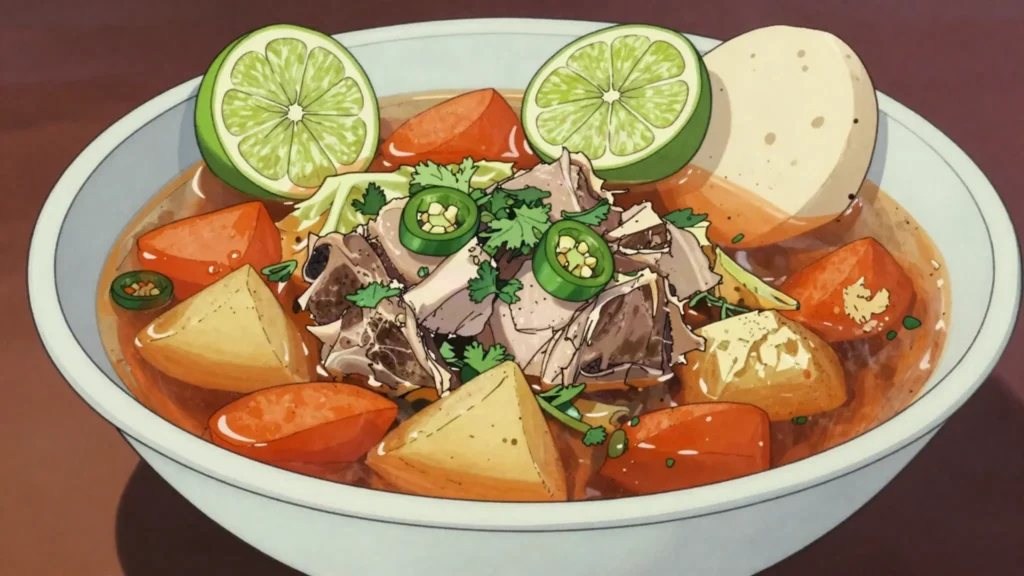
- Taste and salt properly. The broth should be thin, peppery and clean, not thickened; fah-fah is a soup you drink as much as eat.
- Throw in the whole bunch of chopped coriander in the last 60 seconds, off the heat, so it stays green and fragrant.
- Serve in deep bowls with lime wedges to squeeze in at the table, and torn canjeero or baguette for dipping.
Technique
- Xawaash is the Somali household spice blend: roughly equal cumin and coriander seed with black pepper, cardamom, cinnamon and cloves, toasted and ground, sometimes with turmeric. Every family mixes its own.
- The heat comes from whole split green chillies steeped in the broth, not from ground chilli, so it is fragrant and sharp rather than dull and burning.
- The lime and the coriander go in at the very end. Both are volatile, and cooking them destroys the fresh, high notes that define the dish.
Substitutions
- No goat: lamb shoulder on the bone behaves almost identically. Beef shin also works but needs 30 minutes longer.
Variations
- Fah-fah suqaar, made with small cubes of boneless meat fried hard instead of bone-in pieces, for a quicker weekday bowl.
- A Djiboutian French-influenced version served with a baguette and a spoon of harissa on the side.
History
A spiced meat soup, most often made with goat or beef, developed in Djiboutian home cooking, its name believed to derive from the sound of the boiling broth, reflecting a straightforward, onomatopoeic naming approach rather than referencing any particular story or historical figure. Its preparation, simmering meat with warming spices until tender, reflects broader Horn of Africa culinary traditions shaped by the region’s historic trade connections across the Red Sea and Indian Ocean, which carried spices from Arabia, India and beyond into local cooking over many centuries. Fah-fah remains a common, warming dish across Djibouti, particularly valued during cooler evenings, and it is typically eaten with bread or rice as an accompaniment.
Frequently asked questions
What is Fah-fah?
Fah-fah is a soup & stew from Djibouti: peppery goat and vegetable soup eaten with spongy bread. A spiced meat soup, most often made with goat or beef, developed in Djiboutian home cooking, its name believed to derive from the sound of the boiling broth, reflecting a straightforward, onomatopoeic naming approach rather than referencing any particular story or historical figure. Its preparation, simmering meat with warming spices until tender, reflects broader Horn of Africa culinary traditions shaped by the region’s historic trade connections across the Red Sea and Indian Ocean, which carried spices from Arabia, India and beyond into local cooking over many centuries. Fah-fah remains a common, warming dish across Djibouti, particularly valued during cooler evenings, and it is typically eaten with bread or rice as an accompaniment.
How long does Fah-fah take to make?
Fah-fah takes 25 min of preparation and 1 hr 45 min of cooking. The recipe makes 4 servings. It is rated easy to make.
What can I substitute in Fah-fah?
Yes, within limits. No goat: lamb shoulder on the bone behaves almost identically. Beef shin also works but needs 30 minutes longer.
What is the most important thing to get right in Fah-fah?
Brown the meat hard in the oil in a heavy pot over high heat, in batches, until the pieces are properly coloured on all sides. This is what makes the broth taste of roasted bone rather than boiled meat.