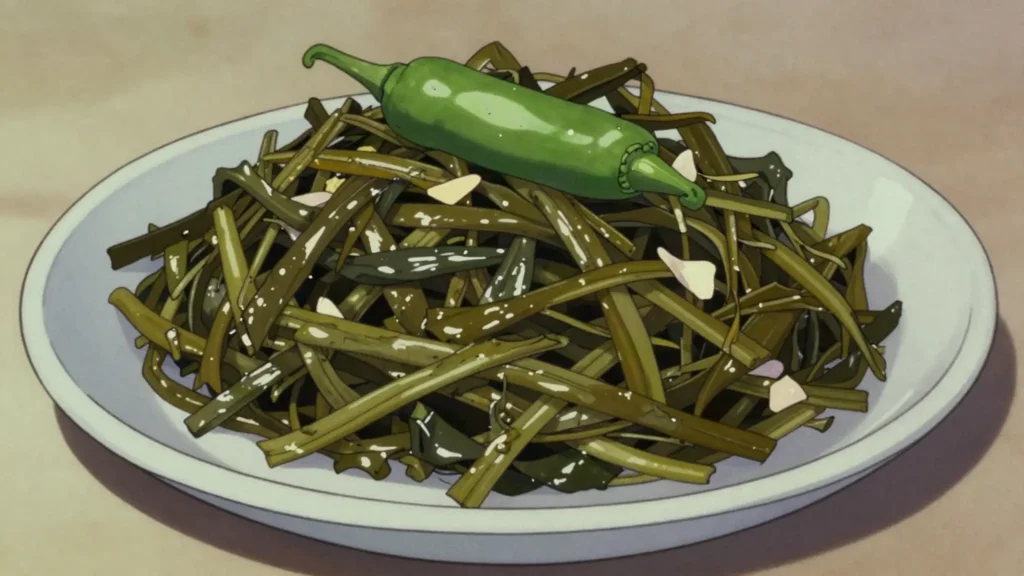

Ingredients
The greens
- 1 kgcollard greens
- or kale, or spring greens
- thick stems removed
- leaves shredded finely
The base
- 2onions, finely chopped
- 4 tablespoonsoil
- or 4 tablespoons niter kibbeh
- the spiced clarified butter
- 6 clovesgarlic, crushed
- a thumb of ginger, grated
- optional
- 2green chillies, slit
- or to taste
- half a teaspoon turmeric
- optional
- salt, to taste
- black pepper
- about 200 ml water
Sometimes added
- 1tomato, chopped
- 1potato, diced small
- a squeeze of lemon
To serve
- injera, the sour flatbread
- alongside other dishes
- with a hot zigni for contrast
- with ayib, fresh curd cheese
Directions
- Strip the leaves from the thick central stems. Wash them thoroughly in cold water. Lift them out rather than pouring off. Stack the leaves, roll them and slice across.
- Shred them fairly finely. That helps them collapse into the right texture. Put the chopped onions in a dry pot first. Use no fat at all at this stage. Cook them over a medium heat, stirring.
- Continue until that liquid has gone. That takes about twelve minutes. Add the oil or niter kibbeh. Stir it through the softened onions. Cook for five minutes more. Add the crushed garlic. Use a generous amount of it. Add the ginger if you are using it.
- Add the slit green chillies. Add the turmeric if you want colour. Cook them for two minutes. Add them in batches as they wilt. Add a splash of water to help them steam. Cover the pot and lower the heat.
- Cook for about thirty minutes. Stir it from time to time. Add water if the pot runs dry. The greens should become genuinely soft.
- Cook off excess liquid at the end. Season with salt and taste carefully. Grind over black pepper. Add a squeeze of lemon if you like. Zigni is the Eritrean hot meat stew with berbere.
- Serve it warm rather than piping hot. Serve it on injera among other dishes. Serve ayib alongside, the fresh curd cheese. That cools the hot dishes further. Serve a hot wat or zigni for contrast. Real injera needs teff and days of fermentation.
Technique
- Cook the onions dry first, in a pot with no fat at all, until the liquid they release has cooked away — about twelve minutes. That is a genuine technique of Eritrean and Ethiopian cooking and it deepens the onions in a way frying from the start does not.
- The greens are cooked long and slow until they collapse and darken, not blanched briefly to stay bright. That texture is deliberate and characteristic, and it surprises cooks used to European greens.
- Use a generous amount of garlic. It is the defining flavour of hamli and the dish is thin without it.
- Wash the greens by plunging and lifting out of a bowl rather than pouring the water off. Grit sinks, and pouring tips it straight back over the leaves.
- Cook off any excess liquid at the end. The greens should be moist rather than swimming.
- Keep it mild. Hamli is the gentle dish on the platter — the heat comes from the red berbere stews it sits alongside, and that contrast is structural rather than accidental.
- Greens absorb more salt than people expect. Taste at the end and season again.
- Niter kibbeh carries much of the flavour of this cooking and keeps for months unrefrigerated because it is clarified. Buy it from an Eritrean or Ethiopian grocer; ghee with a little cardamom is the nearest substitute and is not the same thing.
- Cooked in oil rather than butter, this is a fasting dish and equally proper. Orthodox fasting excludes all animal products and is observed on most Wednesdays and Fridays plus long periods before major feasts, which is why so much of this cooking is naturally vegan — an old religious practice rather than a modern choice.
- Diced potato cooked with the greens thickens the dish and makes it more substantial. It is a common variation.
- Injera needs teff and days of fermentation and is sold ready made by Eritrean and Ethiopian shops. Its sourness is part of the balance of the meal, so bread or rice is a substitute rather than an equivalent.
- Eritrea and Ethiopia share a great deal of food, a shared history, and a difficult political one since Eritrean independence in 1993 and the border war of 1998 to 2000. The atlas records the shared cooking and attributes dishes as its sources give them, without adjudicating national claims.
Substitutions
- Kale, spring greens or any sturdy brassica replace collards; all need the same long cooking.
- Oil replaces niter kibbeh for a fasting or vegan version, which is entirely traditional.
- Ghee with a pinch of cardamom is the nearest substitute for niter kibbeh if you cannot buy it.
- Diced potato cooked alongside makes a more substantial dish.
- The chillies can be left out entirely, since this is meant to be the mild dish.
- Bread or rice replaces injera where teff flatbread is unavailable.
Variations
- Gomen is the Amharic name for the same dish across the border.
- Ayib be gomen folds fresh curd cheese through the cooked greens.
- Gomen be siga adds beef to the greens for a fuller dish.
- Alicha, the mild turmeric stew, is the other gentle dish on the same platter.
- Zigni, the hot berbere meat stew, is the Eritrean red counterpart.
- Shiro, made from ground pulses, is the everyday stew of both countries.
Frequently asked questions
What is Hamli?
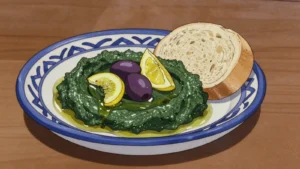
Hamli is a salad & side from Eritrea: collard greens sautéed with garlic and oil.
How long does Hamli take to make?
Hamli takes 20 minutes of preparation and 40 minutes of cooking. The recipe makes serves 6 as a side. It is rated easy to make.
What can I substitute in Hamli?
Yes, within limits. Kale, spring greens or any sturdy brassica replace collards; all need the same long cooking. Oil replaces niter kibbeh for a fasting or vegan version, which is entirely traditional. Ghee with a pinch of cardamom is the nearest substitute for niter kibbeh if you cannot buy it. Diced potato cooked alongside makes a more substantial dish. The chillies can be left out entirely, since this is meant to be the mild dish. Bread or rice replaces injera where teff flatbread is unavailable.
What is the most important thing to get right in Hamli?
Strip the leaves from the thick central stems. Wash them thoroughly in cold water. Lift them out rather than pouring off. Stack the leaves, roll them and slice across.