
Ingredients
Coffee
- 150 ggreen (unroasted) arabica coffee beans, highland Eritrean or Ethiopian
- 1.2 litrescold water
- sugar, about 2 tsp per cup
- 4green cardamom pods, a slice of ginger or a sprig of rue (tena adam), optional
Equipment and table
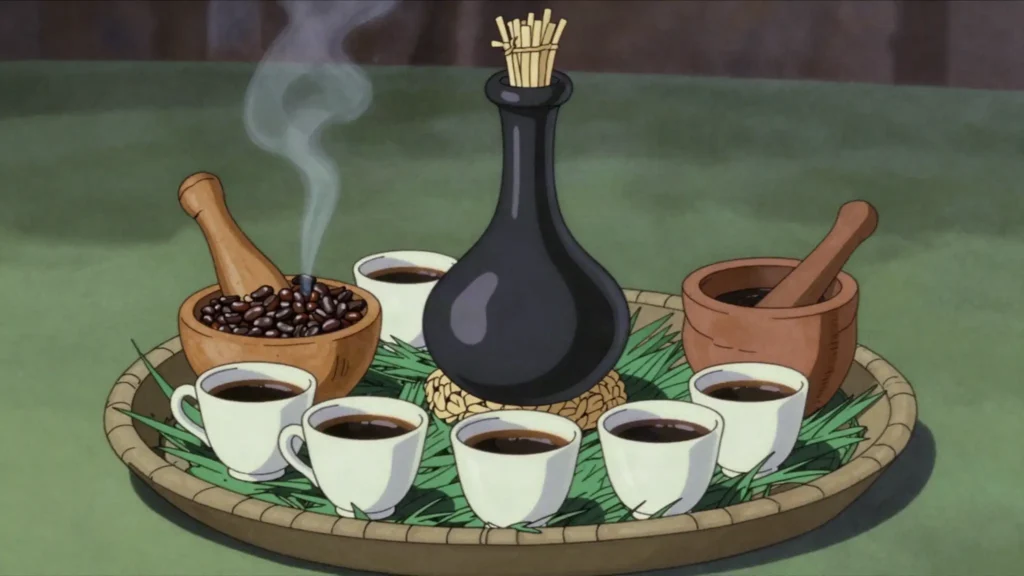
- a jebena, the unglazed clay coffee pot with a straw or horsehair filter in the spout
- a menkeshkesh or heavy flat pan for roasting
- a mukecha and zenezena, the wooden mortar and pestle
- finjal, small handleless cups, on a rekebot tray
- frankincense on a charcoal burner
- fresh grass for the floor
- popcorn, roasted barley (kolo) or himbasha bread, to serve
Directions
- Scatter fresh grass on the floor around the tray and light frankincense on charcoal. The smoke, the grass and the waiting are as much the ceremony as the coffee.
- Wash the green beans in cold water two or three times, rubbing off the chaff, and drain them still damp.
- Roast the wet beans in the flat pan over charcoal or low-medium gas, shaking constantly, for 12–18 minutes: they pale, yellow, crackle at first crack, and finally darken to glossy chestnut with a faint sheen of oil.
- Carry the smoking pan around the room so each guest can waft the smoke towards their face. Nobody skips this part.
- Tip the beans out to cool for a minute, then pound them in the mukecha to a coarse, uneven grind, somewhere between filter and espresso.
- Boil the water in the jebena, lift it off the heat, spoon in the grounds and any cardamom or ginger, and set it back at the edge of the fire.
- Let the coffee rise up the neck of the pot, lift it away just before it boils over, and repeat two or three times. Then stand the jebena on its ring for 5 minutes so the grounds settle.
- Pour from about 30 cm above the cups in one unbroken pass down the row, filling each a little at a time and going back along the line so every cup gets equal strength.
- Serve the first round, awel, with sugar and popcorn. Refill the same grounds with water for the second round, kalaay, and the third, bereka, which carries the blessing and which no guest leaves before.
Technique
- Three rounds from a single charge of grounds is the structure of the ceremony, each weaker than the last, and bereka is the one that matters socially.
- Roasting the beans while still damp is deliberate: the moisture slows the roast and evens it out over an open flame.
- The unglazed jebena is never washed with soap. It seasons over years, and the porous clay is what gives the brew its round, faintly earthy body.
- The whole thing runs well over an hour and is meant to. Leaving early is a real discourtesy.
Substitutions
- No jebena: use a small unglazed clay pot or a narrow-necked saucepan and brew, rest and pour the same way. Do not use a filter machine, since the coffee is meant to be unfiltered and slightly silty.
Variations
- Some households serve the first cup with salt or a spoonful of spiced clarified butter instead of sugar.
- In the highlands a knob of ginger or a few cardamom pods goes into the pot itself rather than the cup.
History
The three rounds are called awel, kalaii and bereka; incense burns throughout and popcorn or himbasha is passed, and leaving early is rude.
Frequently asked questions
What is Eritrean coffee ceremony?
Eritrean coffee ceremony is a drink from Eritrea: green beans roasted, pounded and brewed in a clay jebena over three rounds. The three rounds are called awel, kalaii and bereka; incense burns throughout and popcorn or himbasha is passed, and leaving early is rude.
How long does Eritrean coffee ceremony take to make?
Eritrean coffee ceremony takes 20 min of preparation and 1 hr of cooking. The recipe makes 3 rounds for 4–6 people. It is rated medium to make.
What can I substitute in Eritrean coffee ceremony?
Yes, within limits. No jebena: use a small unglazed clay pot or a narrow-necked saucepan and brew, rest and pour the same way. Do not use a filter machine, since the coffee is meant to be unfiltered and slightly silty.
What is the most important thing to get right in Eritrean coffee ceremony?
The unglazed jebena is never washed with soap. It seasons over years, and the porous clay is what gives the brew its round, faintly earthy body.