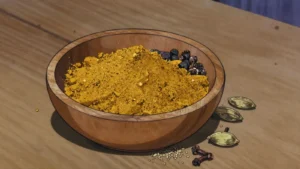

Ingredients
Fenugreek
- 3 tbspfenugreek seed
- cold water, for soaking
Beans
- 150 gdried faba beans
Paste
- 1onion
- 3 clovesgarlic
- 1 tspberbere
- juice of 1 lemon
- salt
To serve
- kitcha
- injera
Directions
- Soak the fenugreek seed in cold water for three days, changing the water twice a day.
- Three days of soaking, not three hours. Tigrinya households leach fenugreek far longer than Yemenite ones do, and that is exactly why hilbet is pale, mild and faintly sweet where hilbeh is sharp and bitter.
- The seeds will swell, soften and begin to show a tiny sprout, which is what you are waiting for.
- Soak the faba beans overnight and boil them until completely soft, about an hour, then drain them.
- Rinse the fenugreek one last time and drain it well.
- Blend the fenugreek, cooked beans, onion, garlic and a little water to a very smooth pale paste.
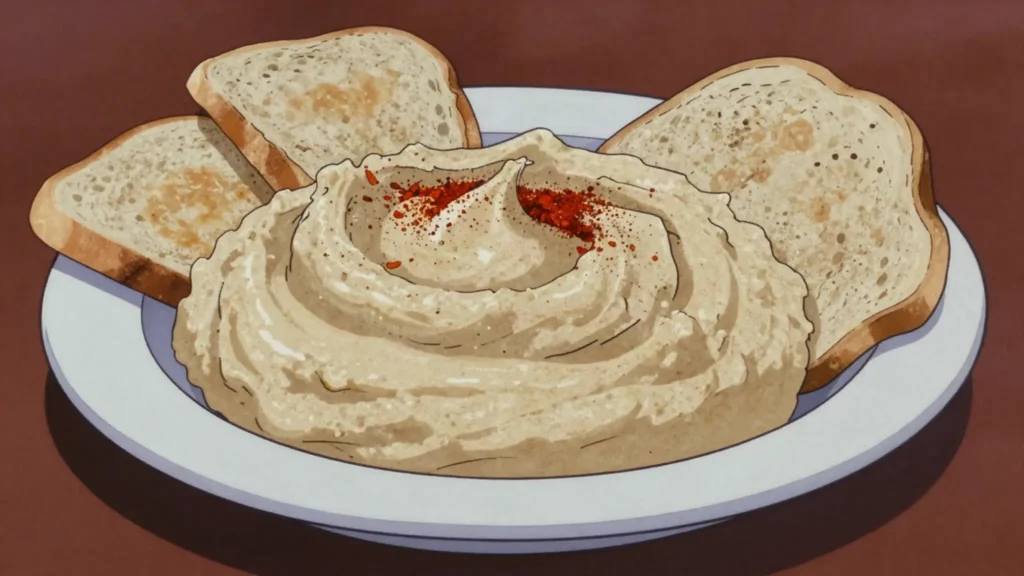
- Blend it for far longer than seems needed. Hilbet should be completely smooth, with the texture of thick cream and no grain left in it at all.
- Beat in cold water a spoonful at a time until it lightens in colour and thickens like whipped cream.
- The same saponins that foam in hilbeh work here too, and that beating is what turns a bean purée into hilbet.
- Season with the berbere, lemon juice and salt.
- Serve it in a bowl with kitcha, the unleavened bread, or with injera.
- It is served through Orthodox fasts, when animal products are avoided, and given to nursing mothers as strengthening food.
- The Yemenite hilbeh is the same idea with a much shorter soak and no beans, and the two sit at opposite ends of one technique.
Technique
- The faba beans are what make it Eritrean and are the clearest difference from the Yemenite version.
- It thickens as it stands, so slacken it with water before serving.
- It is made in quantity through fasting seasons and kept in the fridge for several days.
Substitutions
- Tinned broad beans, drained and rinsed well.
- Ground fenugreek, soaked for a day and a half rather than three days.
Variations
- Hilbeh, the Yemenite version, hotter and sharper.
- With more berbere for a redder, spicier paste.
- Without beans at all, which is closer to the Yemenite form.
History
Fenugreek is soaked for days to leach its bitterness; Tigrinya households serve it during Orthodox fasts and to nursing mothers.
Frequently asked questions
What is Hilbet?
Hilbet is a sauce & condiment from Eritrea: whipped fenugreek and faba-bean paste, pale and bitter-sweet, eaten with kitcha. Fenugreek is soaked for days to leach its bitterness; Tigrinya households serve it during Orthodox fasts and to nursing mothers.
How long does Hilbet take to make?
Hilbet takes 20 min plus 3 days soaking of preparation and 1 hr of cooking. The recipe makes 1 bowl. It is rated medium to make.
What can I substitute in Hilbet?
Yes, within limits. Tinned broad beans, drained and rinsed well. Ground fenugreek, soaked for a day and a half rather than three days.