
Ingredients
Cabbage
- 1large white cabbage
Filling
- 500 gminced pork, or half pork and half beef
- 150 grice
- 1onion, chopped and fried
- 1egg
- 2 tspsalt
- 1 tspblack pepper
- 1 tspdried marjoram
Pot
- a few slices of smoked bacon
- stock or water, to cover
Sauce
- 30 gbutter
- 1 tbspplain flour
- 500 mlpassata
- 1 tspsugar
- salt
Directions
- Cut the core out of the cabbage in a deep cone.
- Lower the whole head into a large pot of boiling salted water, cook it for 5 minutes, then start peeling the outer leaves away with tongs as they soften.
- Return the head to the water between leaves. Stripping a raw or half-softened cabbage tears every leaf, and the whole dish depends on getting them off whole.
- Shave the thick rib of each leaf down with a knife held flat, so that it will roll without cracking.
- Cook the rice for only half its usual time and drain it.
- Half-cook the rice. It finishes inside the roll, absorbing the meat juices, and fully cooked rice turns to paste by the end of the braise.
- Mix the meat, parboiled rice, fried onion, egg, salt, pepper and marjoram, and work it together thoroughly with your hands.
- Marjoram is the Polish signature here, more than any other herb, and it wants using generously.
- Put a spoonful of filling at the base of each leaf, fold the sides in, and roll it up into a tight parcel.
- Line the pot with the torn leftover leaves and the bacon, then pack the rolls in seam side down in tight layers.
- Pack them tightly. Loose rolls unwind as they cook, but packed shoulder to shoulder they hold their shape without any tying.
- Pour over stock or water to just cover, weight them with a plate, cover, and simmer very gently for 1 hour 30 minutes, or bake at 160°C (320°F) for 2 hours.
- For the sauce, melt the butter, stir in the flour to a pale roux, then whisk in the passata and a ladleful of the pot liquid, and season with the sugar and salt.
- Pour the sauce over for the last 20 minutes, or serve it separately over the rolls.
- They are better the next day, reheated, which is the standard advice in every Polish kitchen.
Technique
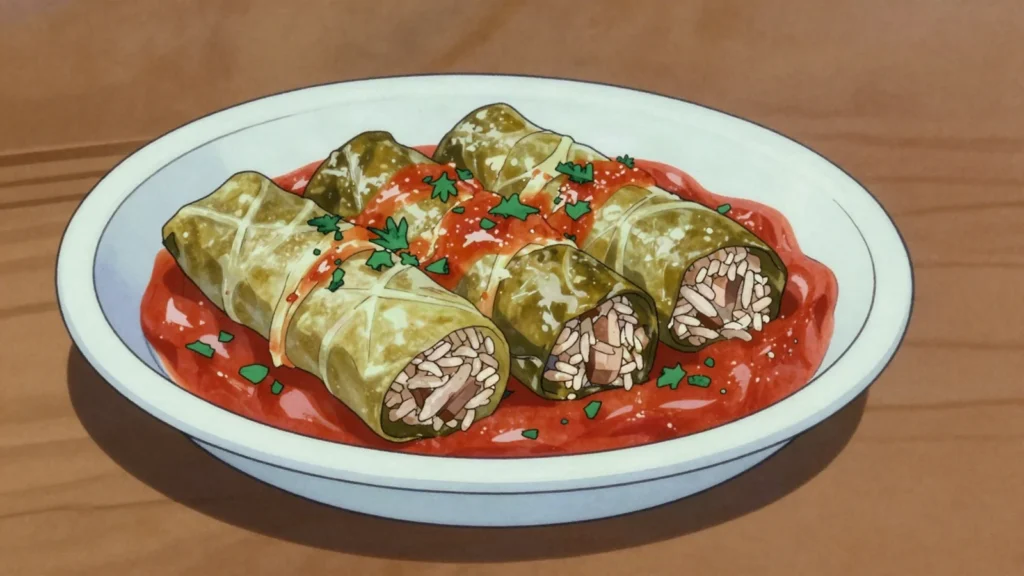
- The name means little pigeons, which has nothing to do with the filling and everything to do with the shape.
- They freeze extremely well, cooked, and reheat straight from frozen in the sauce.
- Softening the cabbage by freezing the whole head overnight and thawing it works as well as boiling and is much less trouble.
Substitutions
- Savoy cabbage, which peels far more easily than white.
- Buckwheat or barley in place of the rice.
Variations
- With a mushroom sauce instead of tomato, which is common at Christmas.
- Vegetarian, filled with mushrooms and barley.
- Wrapped in sauerkraut leaves for a sourer version.
History
Cabbage rolls of minced meat and rice; cheap and filling, they were a mainstay of communist-era canteens and remain celebration food.
Frequently asked questions
What is Gołąbki?
Gołąbki is a main from Poland: cabbage leaves rolled around pork and rice, tomato sauce. Cabbage rolls of minced meat and rice; cheap and filling, they were a mainstay of communist-era canteens and remain celebration food.
How long does Gołąbki take to make?
Gołąbki takes 1 hr of preparation and 2 hr of cooking. The recipe makes about 14 rolls. It is rated medium to make.
What can I substitute in Gołąbki?
Yes, within limits. Savoy cabbage, which peels far more easily than white. Buckwheat or barley in place of the rice.
What is the most important thing to get right in Gołąbki?
Lower the whole head into a large pot of boiling salted water, cook it for 5 minutes, then start peeling the outer leaves away with tongs as they soften.