
Ingredients
Broth
- 1.2 kgmutton or lamb on the bone (shoulder, neck and a few ribs)
- 2onions, halved
- 1 tbspsalt
- 2.5 litrescold water
- 1 tspblack peppercorns
To assemble
- 3rounds of chorek or other dense flatbread, at least a day old
- 3large onions, very finely chopped
- 1 tspsalt
- 1 tspground black pepper
- Fat skimmed from the broth
Directions
- Put the meat in a large pot with the cold water, bring slowly to a boil and skim off every trace of grey foam – a clear broth is the point of the dish.
- Add the halved onions, peppercorns and salt, drop to the barest simmer and cook uncovered 2.5–3 hours until the meat falls from the bone. Never let it gallop, or the broth turns cloudy.
- Lift the meat out, strain the broth through a fine sieve and let it settle, then skim the fat into a bowl and keep it – it is used to season the bread.
- Pull the meat off the bones and tear it into small shreds with your fingers, discarding gristle. Traditionally nothing is cut with a knife: dograma means crumbled or torn.
- Tear the dry chorek into pieces the size of a thumbnail. Old bread is essential – fresh bread turns to paste in the broth.
- Combine the torn bread, shredded meat and raw chopped onion in a large bowl, season with salt and pepper and rub the mixture together with your hands so the onion juice works into the bread.
- Drizzle over a few spoons of the skimmed fat and toss again. This can be prepared ahead and it is often assembled communally by several people at once.
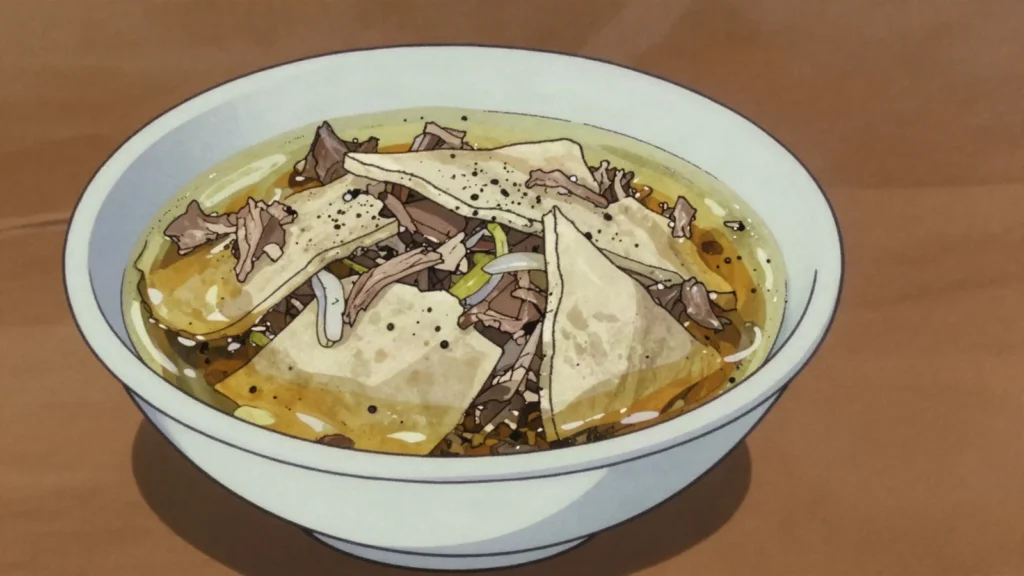
- Pack the mixture loosely into deep bowls, pour over very hot broth to just cover and let it stand 2 minutes so the bread swells. Serve immediately, traditionally eaten with the hands rather than a spoon.
Technique
- Dograma is a festival and hospitality dish, made for weddings, funerals and religious holidays, often for large numbers, with the tearing done by a group sitting together.
- Everything is torn, never chopped. The irregular pieces are what give the dish its texture, and Turkmen cooks are firm that a knife changes the result.
- The broth must be clear and hot enough to soften the bread instantly. Lukewarm broth leaves the bread stodgy on the outside and dry within.
Substitutions
- Beef shin gives a good broth if mutton is unavailable, but you lose the sweet fattiness that carries the raw onion.
- Any dense, dry, unsalted flatbread will stand in for chorek; avoid soft sandwich bread, which disintegrates.
Variations
- A version with chickpeas cooked in the broth and scattered through.
- Ichlekli and other Turkmen pies are often served alongside at the same feasts.
History
A dish combining shredded flatbread with diced boiled meat and onion, moistened with the meat’s own cooking broth, considered a traditional Turkmen dish reflecting the country’s Central Asian nomadic and pastoral herding heritage, in which meat, particularly mutton, has long held central dietary and cultural importance. Its preparation, tearing bread into small pieces and mixing it thoroughly with meat and broth rather than serving the components separately, reflects a practical approach to creating one complete, filling dish from simple, readily available ingredients well suited to Turkmenistan’s traditionally pastoral economy. Dograma remains a traditional Turkmen dish, closely tied to the country’s Central Asian nomadic culinary heritage and its historic emphasis on mutton and bread as dietary staples.
Frequently asked questions
What is Dograma?
Dograma is a soup & stew from Turkmenistan: festive soup of shredded bread, mutton and onion. A dish combining shredded flatbread with diced boiled meat and onion, moistened with the meat’s own cooking broth, considered a traditional Turkmen dish reflecting the country’s Central Asian nomadic and pastoral herding heritage, in which meat, particularly mutton, has long held central dietary and cultural importance. Its preparation, tearing bread into small pieces and mixing it thoroughly with meat and broth rather than serving the components separately, reflects a practical approach to creating one complete, filling dish from simple, readily available ingredients well suited to Turkmenistan’s traditionally pastoral economy. Dograma remains a traditional Turkmen dish, closely tied to the country’s Central Asian nomadic culinary heritage and its historic emphasis on mutton and bread as dietary staples.
How long does Dograma take to make?
Dograma takes 40 min of preparation and 3 hr of cooking. The recipe makes 6 servings. It is rated medium to make.
What can I substitute in Dograma?
Yes, within limits. Beef shin gives a good broth if mutton is unavailable, but you lose the sweet fattiness that carries the raw onion. Any dense, dry, unsalted flatbread will stand in for chorek; avoid soft sandwich bread, which disintegrates.
What is the most important thing to get right in Dograma?
Put the meat in a large pot with the cold water, bring slowly to a boil and skim off every trace of grey foam – a clear broth is the point of the dish.