
Ingredients
Pork
- 1.5 kgpork shoulder or belly, in large cubes
- 1 tbspsalt
Braising liquid
- juice of 3 oranges, or 1 naranjilla
- juice of 2 limes
- 1onion, quartered
- 8 clovesgarlic, crushed
- 1 tbspground cumin
- 2 tspblack pepper
- water to cover
To serve
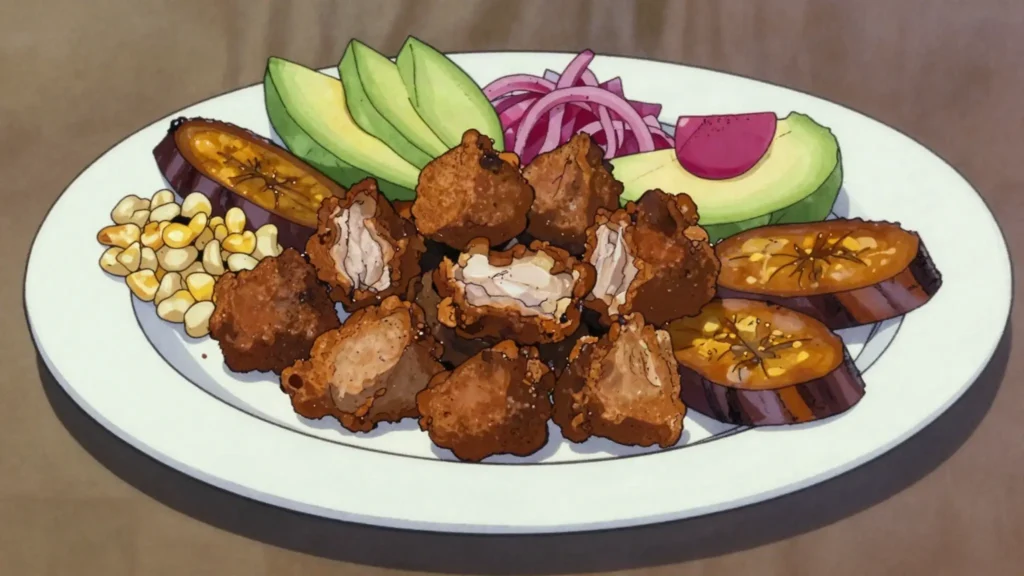
- mote, cooked hominy
- llapingachos, potato cakes
- fried ripe plantain, maduro
- curtido, pickled onion and tomato salsa
- tostado, toasted maize
- aji criollo
Equipment
- a wide heavy pan, traditionally a bronze paila
Directions
- Use shoulder or belly rather than loin, since the dish depends on the pork rendering enough of its own fat to fry in. A lean cut leaves a dry pan at the crucial moment and the meat scorches instead of frying.
- Cut it into large cubes, about five centimetres, since it shrinks considerably. The acid tenderises the pork and the sugars in the juice help the crust caramelise later. Put the pork, citrus juice, onion, garlic, cumin, pepper and salt in a wide heavy pan. Add water until the pork is just covered, and no more.
- Use a wide pan rather than a deep one, since the liquid needs a large surface to evaporate from within a reasonable time. Bring it to a boil, then reduce it to a steady simmer. Simmer it uncovered for about an hour, until the pork is completely tender.
- Leave it uncovered throughout, since the whole point is for the liquid to evaporate rather than to be retained. Test a piece: it should give completely under a fork with no resistance.
- Stir and turn the pieces regularly so they colour on all sides. Now let it fry for ten to fifteen minutes until deep golden brown and crisp at the edges.
- Let it develop real colour rather than stopping early, since the crisp caramelised exterior against the soft interior is the whole appeal. That residue is concentrated flavour and it should end up on the pork rather than left in the pan.
- Lift the pork out and let it drain briefly. Mote is large hominy maize, boiled soft, and it is the starch of the highlands. Serve aji criollo, the Ecuadorian chilli sauce, at the table.
Technique
- The pork braises and then fries in the same pan without changing fat.
- The change from bubbling to sizzling signals the liquid has gone.
- Naranjilla is the traditional citrus, with orange and lime as the substitute.
Substitutions
- Orange and lime juice in place of naranjilla.
- Pork belly for a richer result.
Variations
- Served in a sandwich, as a common street version.
- With more cumin, which varies by region.
- Made with a whole leg, for a celebration.
Frequently asked questions
What is Fritada?
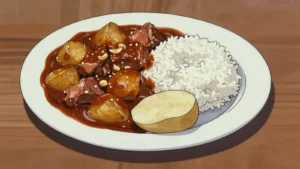
Fritada is a main from Ecuador: pork braised then crisped in its fat, with hominy and plantain.
How long does Fritada take to make?
Fritada takes 20 min of preparation and 1 hr 30 min of cooking. The recipe makes 6 servings. It is rated medium to make.
What can I substitute in Fritada?
Yes, within limits. Orange and lime juice in place of naranjilla. Pork belly for a richer result.
What is the most important thing to get right in Fritada?
Use shoulder or belly rather than loin, since the dish depends on the pork rendering enough of its own fat to fry in. A lean cut leaves a dry pan at the crucial moment and the meat scorches instead of frying.