
Ingredients
The starch
- 6ripe but firm plantains
- 600 gcassava, sweet variety
- water, for boiling
- 1 teaspoonsalt
Equipment
- a large wooden mortar
- a long wooden pestle
- or a strong stand mixer
- a bowl of water, for wetting hands
To serve
- sauce graine, palm nut sauce
- or peanut sauce
- or okra sauce
- meat or fish, from the sauce
Directions
- Peel away the whole pink layer under the bark. Never taste the raw root at any point. Cut the ends off and score the skin. Peeling the cassava takes real effort. Cut the root into manageable lengths. Stand each length up on the board.
- Slice the skin off downwards in strips. A vegetable peeler is not strong enough. Cut both into large even chunks. Put them in a pot of salted water. Cassava takes a little longer than plantain.
- Add the cassava first and the plantain after. Give it about thirty minutes in total.
- Drain them both very thoroughly. Put the hot chunks in a large wooden mortar. Work while they are still very hot. Cold starch goes hard and will not pound.
- Begin by crushing them down with the pestle. It is often done by two people together. Keep pounding until it is completely smooth. Pull a piece and it should stretch. It should have no lumps or grain at all.
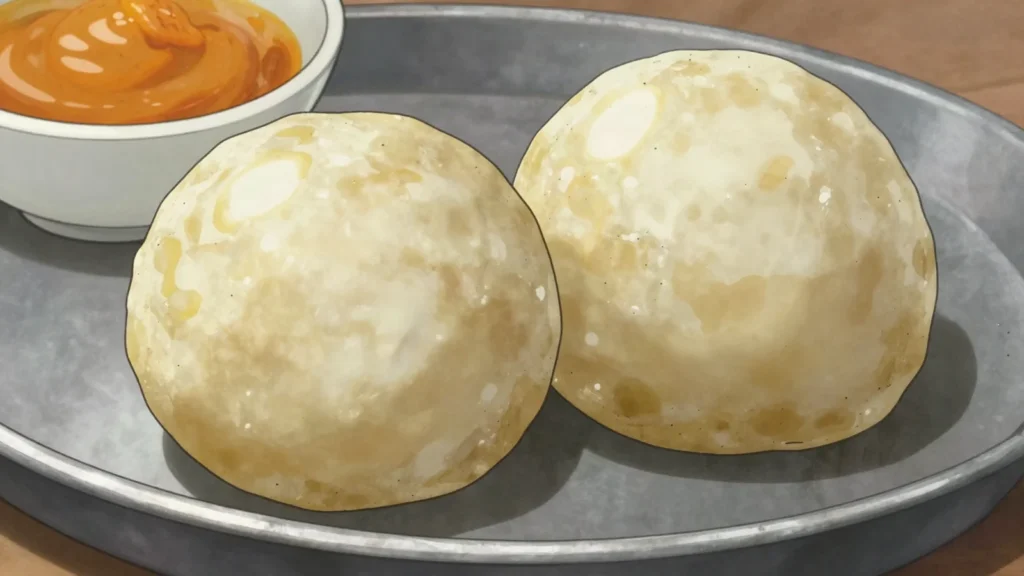
- Work in batches while the starch is hot. Shaping it takes properly wet hands. Take a portion of the pounded mass. Roll it into a smooth ball between your palms. Water stops it sticking to your hands.
- Set each ball down into a bowl. Serving it is done immediately. Ladle sauce around it rather than over it. Tear off a piece with your fingers. Dip the torn piece into the sauce. It does not keep at all well cold.
Technique
- Foutou is the Ivorian name for the family of pounded starch dishes others call fufu, and different regions pound plantain, cassava or yam.
- Plantain alone gives a soft sweet foutou and cassava alone a very sticky one, so the two are pounded together for balance, roughly two parts plantain to one of cassava.
- Pounding is genuinely hard work often done by two people, one striking while the other turns and folds the mass with a wetted hand between strokes.
Substitutions
- A strong stand mixer with a dough hook approximates the pounding while the starch is hot.
- Electric foutou machines are sold across West Africa and are now widely used.
Variations
- Foutou igname is made with yam and is more common in the north.
- Cassava alone is also pounded into a stickier foutou.
- Sauce graine, peanut sauce and okra sauce all go with it.
History
The southern Ivorian plantain version of foutou, pounded in a wooden mortar and torn by hand into palm-nut or peanut sauce.
Frequently asked questions
What is Foutou banane?
Foutou banane is a main from Côte d’Ivoire: plantain pounded with cassava into a smooth elastic ball, eaten with sauce graine. The southern Ivorian plantain version of foutou, pounded in a wooden mortar and torn by hand into palm-nut or peanut sauce.
How long does Foutou banane take to make?
Foutou banane takes 30 minutes of preparation and 45 minutes of cooking. The recipe makes serves 6. It is rated hard to make.
What can I substitute in Foutou banane?
Yes, within limits. A strong stand mixer with a dough hook approximates the pounding while the starch is hot. Electric foutou machines are sold across West Africa and are now widely used.
What is the most important thing to get right in Foutou banane?
Peel away the whole pink layer under the bark. Never taste the raw root at any point. Cut the ends off and score the skin. Peeling the cassava takes real effort. Cut the root into manageable lengths. Stand each length up on the board.