
Ingredients
Fruit
- 3 kgmulberries or grapes
To clarify
- 1 tspbicarbonate of soda, or the traditional white earth
To serve
- pastries
- yoghurt
- tea
Directions
- Wash the fruit and crush it thoroughly by hand or with a masher.
- Strain the juice through a cloth, squeezing hard, and discard the skins and pips.
- Traditionally the juice is clarified with a special white earth stirred in and left to settle, which takes the sharpness out of it. At home a teaspoon of bicarbonate of soda achieves something similar.
- Let the juice stand for several hours, then decant the clear liquid carefully off the sediment.
- Pour it into a wide pan and bring it to the boil.
- Skim the foam off constantly during the first 30 minutes. Everything you leave in makes the finished syrup cloudy and faintly bitter.
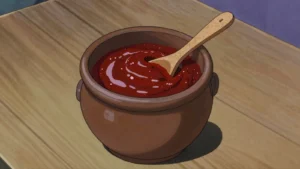
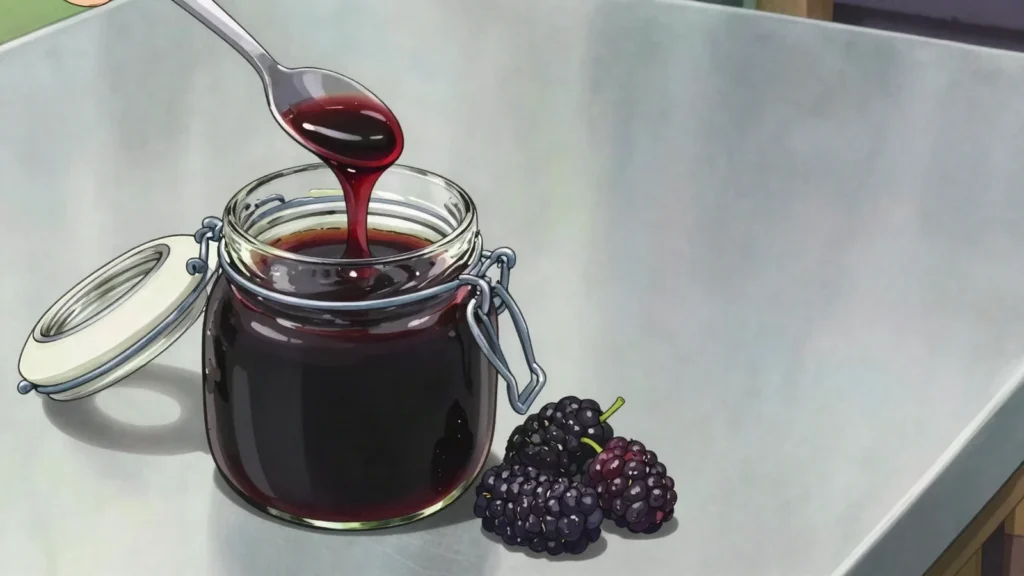
- Simmer uncovered for 3 to 4 hours, until it has reduced to about a sixth of its volume and turned dark, thick and glossy.
- A wide pan matters more than you would think. Reduction happens at the surface, and a deep pot takes twice as long and scorches at the base.
- Test it on a cold plate. It should be about the thickness of honey once cool.
- Pour it hot into sterilised jars, where it keeps for a year or more.
- Spoon it over pastries or into yoghurt, or stir it into tea.
- It was made in quantity before sugar was affordable, and mulberry doshab from the north is also taken as a folk remedy.
Technique
- Mulberry doshab is darker and more mineral; grape doshab is sweeter and rounder. Both are called doshab.
- There is no added sugar at any point. All the sweetness is concentrated out of the fruit.
- It crystallises slightly over a year, which is normal and does not mean it has spoiled.
Substitutions
- Bottled grape or mulberry juice with no additives, which shortens the process considerably.
- A mixture of both fruits, which is common.
Variations
- Stirred into tahini, as it is eaten across the region.
- Used to sweeten sujuk, the walnut and grape must sweet.
- Thinned with water and drunk hot in winter.
History
Fruit molasses made before sugar was affordable; mulberry doshab from the north is also taken as a folk remedy.
Frequently asked questions
What is Doshab?
Doshab is a sauce & condiment from Azerbaijan: dark syrup boiled down from mulberries or grapes, spooned over pastries. Fruit molasses made before sugar was affordable; mulberry doshab from the north is also taken as a folk remedy.
How long does Doshab take to make?
Doshab takes 45 min of preparation and 4 hr of cooking. The recipe makes about 500 ml. It is rated medium to make.
What can I substitute in Doshab?
Yes, within limits. Bottled grape or mulberry juice with no additives, which shortens the process considerably. A mixture of both fruits, which is common.