
Ingredients
Sauce
- 500 gghee, at room temperature
- 200 mlwater
- 2 tbsprock salt
- a little cold milk, optional
To serve
- millet bread
- matoke
- beef or smoked meat
Directions
- Dissolve the rock salt in the water and let the grit settle, then use only the clear brine from the top.
- Rock salt is what gives eshabwe its particular taste, and Ankole households use a specific salty rock or its ash rather than table salt.
- Put the ghee into a wide bowl and begin working it with a wooden spoon or a whisk.
- Add the salt water a few drops at a time, beating hard after each addition.
- Add the liquid very slowly indeed. This is an emulsion in exactly the way mayonnaise is, and adding water faster than the ghee can absorb it will split the sauce.
- Keep beating as it lightens, thickens and turns from yellow to white.
- Continue for 15 to 20 minutes, until it is pale, smooth and holds soft peaks.
- If it does split, start again with a fresh spoonful of ghee and beat the broken mixture into it drop by drop, which is the same rescue you would use for mayonnaise.
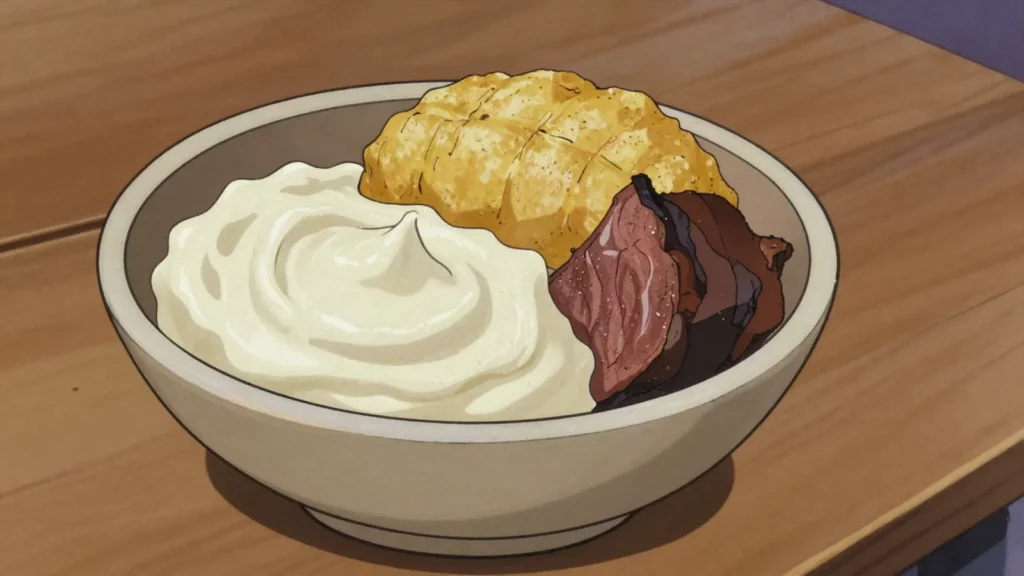
- Serve at room temperature in a bowl, with millet bread, matoke, beef or smoked meat to dip into it.
- It is served at introduction ceremonies and weddings in western Uganda and is treated as a dish of honour rather than an everyday sauce.
Technique
- Room temperature ghee is essential. Cold ghee will not take up water at all and warm ghee will not hold the emulsion.
- It is hard physical work and it is traditionally done by hand rather than by machine.
- It should be white by the end. Yellow means it has not been beaten long enough.
Substitutions
- Good clarified butter in place of ghee.
- Fine sea salt if rock salt is unavailable, dissolved the same way.
Variations
- With a little milk beaten in for a softer sauce.
- Made in larger quantity for a feast, which is when it is usually seen.
- Served alongside eshabwe-dipped roast beef, which is the ceremonial pairing.
History
Ankole ghee whipped with rock salt and water into a white sauce, served at introduction ceremonies and weddings in western Uganda.
Frequently asked questions
What is Eshabwe?
Eshabwe is a sauce & condiment from Uganda: whipped ghee sauce from western Uganda, served at feasts. Ankole ghee whipped with rock salt and water into a white sauce, served at introduction ceremonies and weddings in western Uganda.
How long does Eshabwe take to make?
Eshabwe takes 30 min of preparation and no cooking at all. The recipe makes 6 servings. It is rated medium to make.
What can I substitute in Eshabwe?
Yes, within limits. Good clarified butter in place of ghee. Fine sea salt if rock salt is unavailable, dissolved the same way.
What is the most important thing to get right in Eshabwe?
Rock salt is what gives eshabwe its particular taste, and Ankole households use a specific salty rock or its ash rather than table salt.