
Ingredients
Coconut
- 500 gfreshly grated coconut, white flesh only
Syrup
- 400 gsugar
- 150 mlwater
Sometimes
- a few drops rose water
- a pinch of ground cardamom
- a drop of food colouring, for pink or green versions
To serve
- at a wedding, or from an island shop, as a children’s sweet
Directions
- Grate only the white flesh and leave the brown skin behind. Pare the brown layer off with a peeler before grating if your coconut has it. Grate it finely rather than in long shreds. Traditionally this is done on a hoshi, a Maldivian coconut scraper. Brush down the sides of the pan with a wet brush to dissolve stray crystals. Boil the syrup to the soft ball stage, around 115 to 118°C.
- Use a thermometer if you have one, since this is not easy to judge by eye. Below that temperature the mixture stays sticky and will not set into firm sticks. Drop a little syrup into cold water: it should form a soft ball that flattens when squeezed between your fingers. If it dissolves away, keep boiling; if it sets hard, you have gone too far.
- Add the grated coconut to the syrup and stir continuously over a low heat. Stir without stopping from this point on, since the mixture catches and scorches readily. It will look wet at first and gradually dry out. Cook it until the mixture pulls away from the sides of the pan in a mass. Drag the spoon across the base: it should leave a clear channel that does not fill back in.
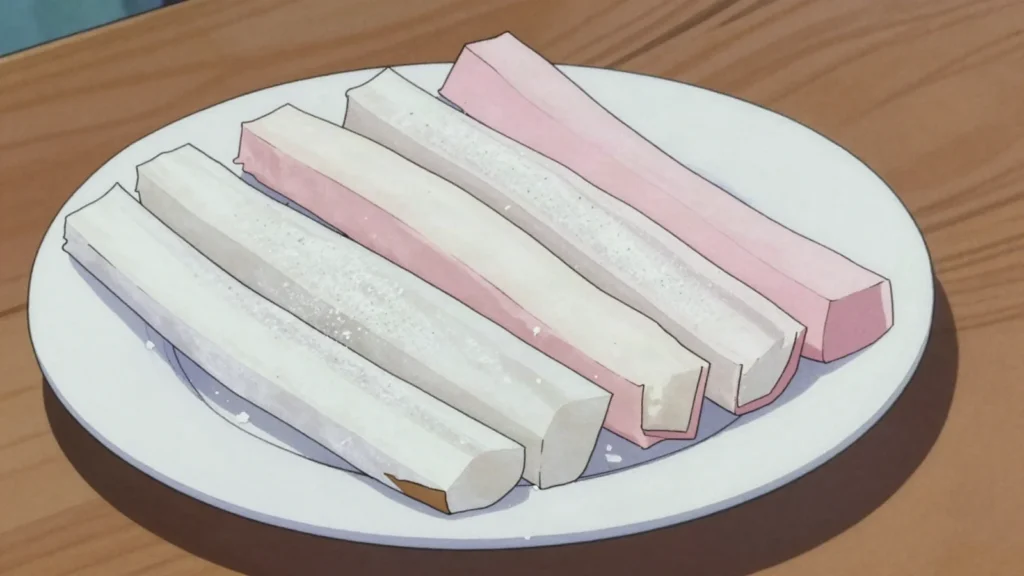
- Keep the heat low throughout so the sugar does not caramelise. Bondi should be white, and any browning means the heat was too high. Turn the mixture out onto a greased surface or a tray. Let it cool just enough to handle, then roll portions into sticks about the thickness of a finger.
- Shape them while still warm and pliable, since the mixture sets hard within minutes. Work quickly and keep the rest of the mixture warm while you shape. Grease your hands, since the mixture is extremely sticky.
- Take care, since sugar at this temperature causes serious burns and it sticks to skin. Roll them to about ten centimetres long and a centimetre and a half thick. They are eaten by biting pieces off the stick, so the size should suit that.
- Lay them on a tray, not touching, and leave them to set completely. They harden as they cool and are firm within an hour. Keep them in an airtight jar, where they last several weeks.
Technique
- Fresh grated coconut is essential; desiccated will not bind.
- The syrup must reach soft ball stage or the sticks will not set.
- Keep the heat low so the sugar does not caramelise and colour them.
Substitutions
- Frozen grated coconut, which works reasonably.
- There is no good substitute for fresh coconut here.
Variations
- Coloured pink or green, as sold in island shops.
- Flavoured with rose water or cardamom.
- Made softer, as a spoonable coconut sweet.
History
Handed out at Maldivian weddings and celebrations and sold in island shops as a children’s sweet.
Frequently asked questions
What is Bondi?
Bondi is a snack from Maldives: white sticks of grated coconut cooked with sugar and rolled firm. Handed out at Maldivian weddings and celebrations and sold in island shops as a children’s sweet.
How long does Bondi take to make?
Bondi takes 20 min of preparation and 40 min of cooking. The recipe makes about 20 sticks. It is rated medium to make.
What can I substitute in Bondi?
Yes, within limits. Frozen grated coconut, which works reasonably. There is no good substitute for fresh coconut here.
What is the most important thing to get right in Bondi?
Grate only the white flesh and leave the brown skin behind. Pare the brown layer off with a peeler before grating if your coconut has it. Grate it finely rather than in long shreds. Traditionally this is done on a hoshi, a Maldivian coconut scraper. Brush down the sides of the pan with a wet brush to dissolve stray crystals. Boil the syrup to the soft ball stage, around 115 to 118°C.