
Ingredients
The steak
- 2sirloin steaks with the fat cap on, 350–400 g each and at least 4 cm thick
- 2 tbspcoarse salt (sal parrillera)
The fire
- 2 kghardwood charcoal
- A parrilla with an adjustable grate
To serve
- 150 mlchimichurri
- 1lemon, halved
- Ensalada mixta of lettuce, tomato and onion dressed with oil and vinegar
- Crusty bread
Directions
- Take the steaks out of the fridge a full hour ahead. A 4 cm steak straight from the fridge cannot cook evenly over embers.
- Burn the charcoal down to grey embers, spread them and set the grate 12–15 cm above. Hold your hand at grate height: 5–6 seconds is right, hotter than for ribs.
- Score the fat cap in a criss-cross at 1 cm intervals, cutting into the fat but not the meat, so it renders instead of curling.
- Salt heavily on both sides with coarse salt immediately before grilling. The crystals sit on the surface and draw out just enough moisture to build a crust.
- Stand the steaks on the fat edge first for 4–5 minutes, propped against each other, until the fat is golden and has given up its dripping.
- Lay them flat and grill 7–9 minutes on the first side without moving them, until a dark crust has formed and beads of juice appear on the top face.
- Turn once and grill another 6–8 minutes for a punto (medium), or 5 for jugoso. An instant-read thermometer should show 52–54°C (125–130°F) at the centre for jugoso, 57–60°C (135–140°F) for a punto.
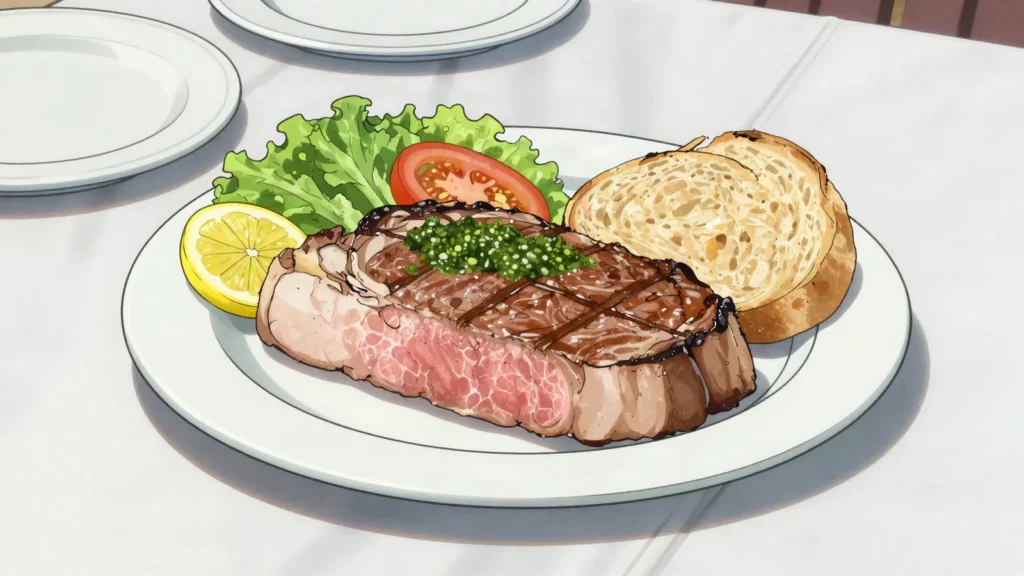
- Rest on a warm board 8 minutes so the juices settle, then serve whole, unsliced, with chimichurri, lemon and salad on the side.
Technique
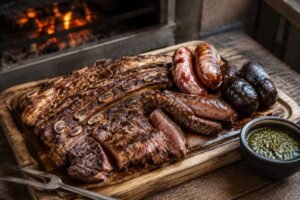
- The name misleads English speakers: this is a sirloin steak, nothing to do with chorizo sausage. The Argentine cut keeps the fat cap, which is treated as the best part.
- Doneness language matters when ordering or cooking: vuelta y vuelta is barely seared, jugoso is rare to medium rare, a punto is medium, bien cocido is well done and is what most parrillas serve by default.
- Turn once. Argentine asadores judge the moment by watching juice rise to the surface rather than by clock alone.
- Never press the steak with a spatula; you squeeze out the juice that makes the cut worth its price.
Substitutions
- No parrilla: a heavy cast-iron pan smoking hot, 4 minutes a side, then 8–10 minutes in a 180°C (350°F) oven, gives a good result indoors.
- Ojo de bife (ribeye) or cuadril (rump) can be cooked the same way; ribeye needs slightly less time as it carries more internal fat.
Variations
- Bife de chorizo a la parrilla, plain over embers, the standard order.
- Bife de chorizo a caballo, topped with two fried eggs.
- Bife de lomo, the leaner tenderloin equivalent, grilled the same way but for less time.
History
Argentina’s cut from the strip loin, named for its shape rather than for sausage, served rare to medium with chimichurri.
Frequently asked questions
What is Bife de chorizo?
Bife de chorizo is a main from Argentina: thick sirloin steak with a fat edge, the standard parrilla order. Argentina’s cut from the strip loin, named for its shape rather than for sausage, served rare to medium with chimichurri.
How long does Bife de chorizo take to make?
Bife de chorizo takes 10 min of preparation and 25 min of cooking. The recipe makes 2 servings. It is rated medium to make.
What can I substitute in Bife de chorizo?
Yes, within limits. No parrilla: a heavy cast-iron pan smoking hot, 4 minutes a side, then 8–10 minutes in a 180°C (350°F) oven, gives a good result indoors. Ojo de bife (ribeye) or cuadril (rump) can be cooked the same way; ribeye needs slightly less time as it carries more internal fat.
What is the most important thing to get right in Bife de chorizo?
Score the fat cap in a criss-cross at 1 cm intervals, cutting into the fat but not the meat, so it renders instead of curling.