
Ingredients
Starches, choose two or three
- 800 gcassava, peeled and cored
- 600 gyam, peeled
- 4green plantains, peeled
- 500 gsweet potato
- 400 gtaro or cocoyam
To boil
- water, to cover
- 1 tablespoonsalt
To serve
- a groundnut sauce
- or a palm oil and fish stew
- or caldo de mancarra
- red palm oil, for drizzling
Directions
- Remove both the brown skin and the pink layer beneath. Cut out the woody core running down the middle. Never eat cassava raw at any stage. Cook it thoroughly and never taste it raw. Preparing cassava takes the most effort. Cut the root into lengths of about eight centimetres.
- Stand each piece on end on the board. Score the thick skin lengthways with a sharp knife. Work the blade under the skin and lever it off. Both the brown and pink layers must come away.
- Rinse the white flesh under cold running water. Drop the pieces into cold water as you work. Preparing the yam takes similar care. Cut the yam into thick rounds first. Cut away any discoloured flesh. Keep the peeled pieces in cold water. Cut both ends off with a knife.
- Score the skin lengthways along the ridges. Warm water helps if it will not move. Cut it into thick even pieces. Boiling them needs some sequencing. Bring a large pot of salted water to the boil. Add the cassava and yam first. Give them about twelve minutes.
- Add the taro and sweet potato. Give them another eight minutes. Add the plantain in last of all. Give it about eight to ten minutes. Lift each kind out as it finishes cooking. Do not leave anything sitting in the water.
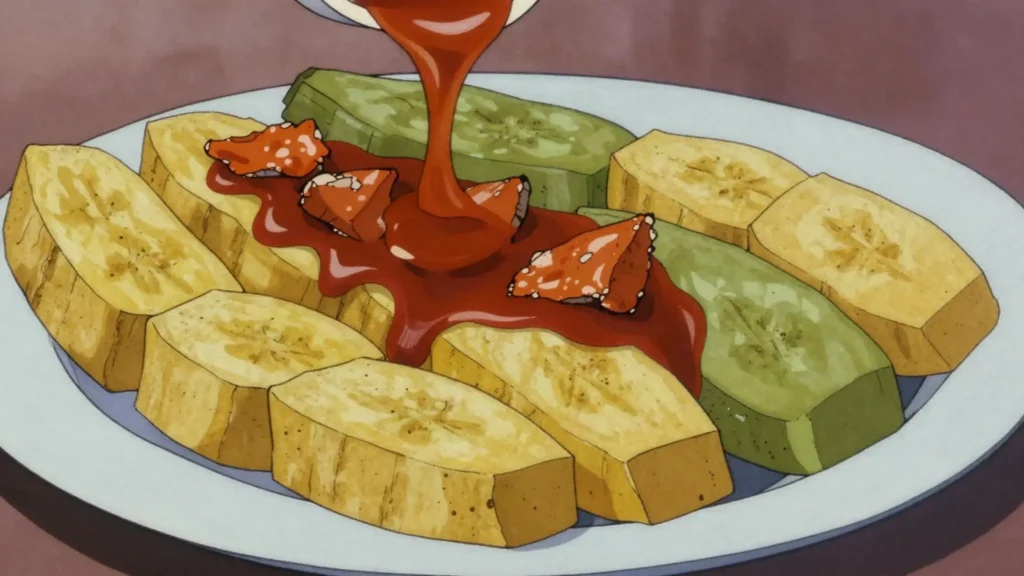
- Drain everything thoroughly in a colander. Let it steam dry for a minute or two. Pull out any woody cores you missed. Serving it is done hot on a wide plate. Arrange the pieces in groups on the plate. Keep each kind visibly separate from the others.
- Ladle the sauce into a bowl beside them. Drizzle red palm oil over the plate if you like. Break off a piece and dip it in the sauce. Leftovers keep two days refrigerated.
Technique
- Bianda is a Guinea-Bissau Creole term for the starch component of a meal rather than for any single dish.
- In coastal areas rice usually fills that role, while roots and plantain are more common in the interior.
Substitutions
- Any combination of the starches works, and households use whatever is available.
- Potato can stand in at a pinch, though it is not traditional.
Variations
- Some households serve only cassava, which is the cheapest option.
- Boiled bianda is often fried the next day as leftovers.
- Similar plates of boiled roots are eaten across West Africa under other names.
History
Bianda is Creole for the starch that carries the meal; in Guinea-Bissau it means roots and plantain rather than rice, especially in the interior.
Frequently asked questions
What is Bianda?
Bianda is a main from Guinea-Bissau: boiled cassava, yam or plantain served under a sauce or stew. Bianda is Creole for the starch that carries the meal; in Guinea-Bissau it means roots and plantain rather than rice, especially in the interior.
How long does Bianda take to make?
Bianda takes 20 minutes of preparation and 35 minutes of cooking. The recipe makes serves 6. It is rated easy to make.
What can I substitute in Bianda?
Yes, within limits. Any combination of the starches works, and households use whatever is available. Potato can stand in at a pinch, though it is not traditional.
What is the most important thing to get right in Bianda?
Remove both the brown skin and the pink layer beneath. Cut out the woody core running down the middle. Never eat cassava raw at any stage. Cook it thoroughly and never taste it raw. Preparing cassava takes the most effort. Cut the root into lengths of about eight centimetres.