
Ingredients
Rice mould
- 500 gglutinous rice
- banana or fig leaves, for covering
- or a purchased koji starter
Soybeans
- 500 gdried yellow soybeans
Brine
- 2 litreswater, boiled and cooled
- 300 gcoarse salt
Equipment
- a large glazed earthenware jar
- a cloth cover
- a long wooden stick for stirring
Directions
- Use scrupulously clean jars and utensils throughout. Discard the batch if it smells of rot or shows fuzzy black growth. Wash the glutinous rice and soak it for four hours. Steam it until it is fully cooked and tender.
- Spread it on a tray in a layer about two centimetres deep. Let it cool to body temperature. Cover it loosely with banana or fig leaves. Leave it in a warm, humid place for three to five days. A green or yellow mould should develop over it.
- Sprinkle the starter over the cooled rice and mix it in. Incubate it at about thirty degrees for two days. Discard it if it smells sour, rotten or of ammonia. Discard it if black or pink growth appears. Roast them in a dry heavy pan over medium heat. Stir them constantly with a wooden spoon. Keep going for about twenty minutes. They should be deep brown and smell strongly nutty.
- Let them cool and rub off the loose skins. Steeping the beans takes several days. Crack the roasted beans coarsely in a mill or mortar. Put them into a clean jar and cover with boiled cooled water. Leave them for five to seven days in a warm place.
- Stir them once each day with a clean stick. Add the moulded rice to the bean jar. Pour in the salt brine and stir it thoroughly. The mixture should be loose and pourable.
- Cover the jar with a cloth rather than a lid. Stand the jar outside in full sun during the day. Bring it in or cover it against rain. Stir it thoroughly every single day. Use a clean stick every single time. It needs at least a month and often three.
- Taste it from time to time as it develops. It should taste salty, savoury and faintly sweet. Pour it into clean bottles or jars. It keeps for a year or more at room temperature.
Technique
- Ban village in Hung Yen province is the best known tuong producer, and Cu Da and Nam Dan are two other famous sources.
- Each has its own bean-to-rice ratio and fermenting time, and the resulting sauces differ noticeably.
Substitutions
- Bought tuong from a Vietnamese shop is far easier and is what most households use.
- Japanese miso is a distant relative and can stand in for cooking, though the flavour is quite different.
Variations
- Tuong Cu Da is smoother and lighter in colour.
- Tuong Nam Dan from Nghe An is made with a coarser bean and is saltier.
- A sweeter version with added sugar is sold for table use.
History
Made in Ban village in Hung Yen province, where jars ferment in the sun; a northern vegetarian staple.
Frequently asked questions
What is Tuong Ban?
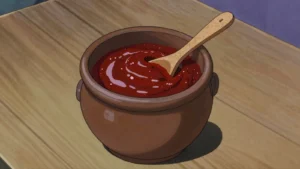
Tuong Ban is a sauce & condiment from Vietnam: thick fermented soybean and glutinous rice sauce, salty and faintly sweet. Made in Ban village in Hung Yen province, where jars ferment in the sun; a northern vegetarian staple.
How long does Tuong Ban take to make?
Tuong Ban takes 1 hour plus weeks of fermenting of preparation and 1 hour of cooking. The recipe makes about 2 litres. It is rated hard to make.
What can I substitute in Tuong Ban?
Yes, within limits. Bought tuong from a Vietnamese shop is far easier and is what most households use. Japanese miso is a distant relative and can stand in for cooking, though the flavour is quite different.
What is the most important thing to get right in Tuong Ban?
Cover the jar with a cloth rather than a lid. Stand the jar outside in full sun during the day. Bring it in or cover it against rain. Stir it thoroughly every single day. Use a clean stick every single time. It needs at least a month and often three.