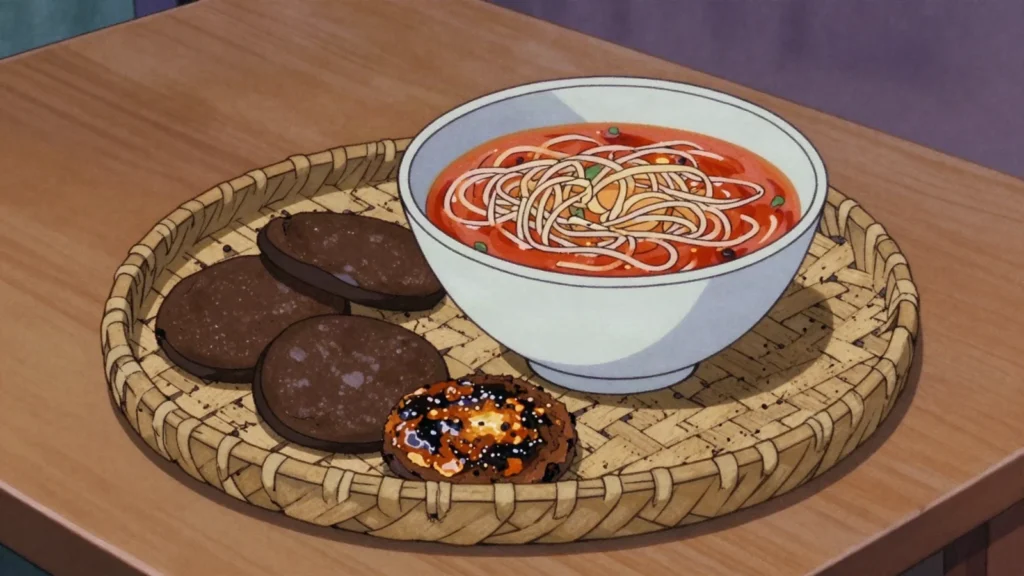

Fermented soybeans mashed and dried into thin discs, toasted before use. It is a Shan and northern Thai staple used where fish sauce is scarce, and it is sold in stacks at Chiang Mai markets.
It is an alkaline Bacillus ferment of a high-protein bean held warm for days with no salt, where the leaves and basket carry the inoculum; what colonises beans left warm elsewhere is often not the same organism.
What goes into it
- soybeans
- leaves or a lined basket
- salt, added after fermenting
How it is made
Soybeans are boiled soft, drained and wrapped warm in leaves or packed into a basket, then kept warm for two to three days while Bacillus subtilis colonises them and turns them sticky and ammoniacal. They are pounded to a paste, spread thin on discs and dried hard in the sun, then toasted over a flame before use.
How long it takes: two to three days of fermenting, then sun-drying
How it is eaten
Toasted until it blisters, then crumbled into curries, dips and noodle soups.
History
A Shan and northern Thai staple used where fish sauce is scarce, sold in stacks at Chiang Mai markets.
Frequently asked questions
What is Tua Nao?
Tua Nao is a fermented & pickled from Thailand: fermented soybeans mashed and dried into thin discs, toasted before use. A Shan and northern Thai staple used where fish sauce is scarce, sold in stacks at Chiang Mai markets.
How is Tua Nao made?
Soybeans are boiled soft, drained and wrapped warm in leaves or packed into a basket, then kept warm for two to three days while Bacillus subtilis colonises them and turns them sticky and ammoniacal. They are pounded to a paste, spread thin on discs and dried hard in the sun, then toasted over a flame before use. It takes two to three days of fermenting, then sun-drying.
Can I make Tua Nao at home?
No, and the atlas gives no method for it. It is an alkaline Bacillus ferment of a high-protein bean held warm for days with no salt, where the leaves and basket carry the inoculum; what colonises beans left warm elsewhere is often not the same organism.
What goes into Tua Nao?
Soybeans, leaves or a lined basket, salt, added after fermenting.
How is Tua Nao eaten?
Toasted until it blisters, then crumbled into curries, dips and noodle soups.