
Ingredients
The grain
- 2 kgred sorghum
- whole dry grain, sound and clean
- not mouldy or discoloured
- see the note on mycotoxins
- water, for steeping
The brew
- 12 litresclean water
- roughly, adjusted as it boils down
The starter
- the dried yeast sediment from a previous brew
- kept back, see the note
- or 1 sachet of dried baker’s or brewer’s yeast
- for a first batch
Equipment
- a large clean pot
- food grade, see the safety note
- a wide basket or tray, for germinating
- a mill, or a grain mill at a market
- a straining cloth
- a wide vessel with a cloth cover
- calabashes or cups, to serve
Directions
- Use food-grade vessels only. Use stainless steel, food-grade plastic, or unglazed clay made for food. Do not brew in a repurposed drum or an old paint container. Discard mouldy malt during germination too. Give it twelve to twenty-four hours. Drain it thoroughly. Spread the wet grain in a shallow layer.
- Cover it with a damp cloth or leaves. Keep it in a warm shaded place. Turn the grain twice a day. Sprinkle it with water if it dries. Stop when the shoot is about the grain’s length. Discard any patch that goes fuzzy, coloured or slimy.
- Spread the sprouted grain in the sun and dry it hard. Drying stops the germination where you want it. Keep it below about fifty degrees. Mix the milled malt with water in the pot.
- Bring it up slowly and cook it for hours. Stir it often. Stir it and keep the heat moderate. Let the solids settle and draw off the liquid. Strain it through a cloth.
- Leave the strained liquid overnight in a covered vessel. Acid suppresses what you do not want. Boil the soured liquid again. Reduce it to the strength you want. Cool it to about thirty degrees. Never add the yeast to hot liquid. Heat kills yeast.
- Add the dried sediment kept from the last brew. A brewing household keeps its culture going for years.
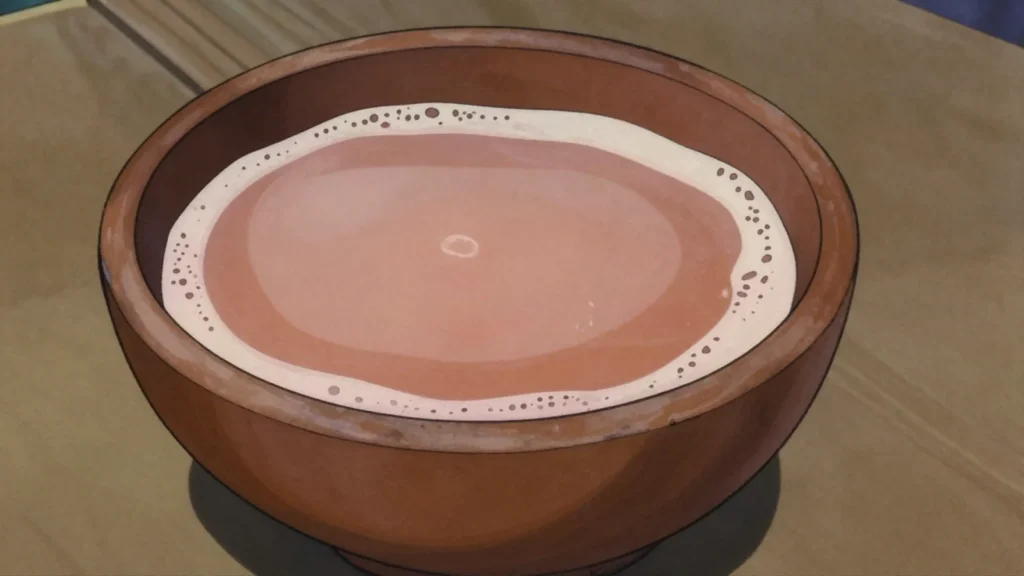
- Use a sachet of dried yeast. Cover the vessel with a cloth. Leave it warm for twelve to twenty-four hours. That is why it does not keep. Serve it warm or at room temperature. Stir or swirl it before pouring. Cloudy, tan and thick.
Technique
- Never seal it. It is drunk while actively fermenting and producing gas, and a sealed vessel builds pressure until glass or rigid plastic bursts.
- Use food-grade vessels only. Contamination of traditionally brewed beer from improvised metal containers has been documented, with soldered joints and galvanised surfaces the specific concern, because acidic fermenting liquid pulls metal out of them. Stainless steel, food-grade plastic or food-grade clay — never a repurposed drum.
- Sort the grain and discard anything mouldy, discoloured or musty, and discard any mouldy patch during germination. Mould on malt carries mycotoxins that cooking will not remove; the mawè entry carries the fuller account.
- This is not a botulism risk. Beer is acidic and alcoholic and hostile to those organisms, and the atlas says so rather than inventing a hazard.
- Turn the germinating grain twice a day. Germinating grain generates heat, and an unturned heap overheats in the middle, mats together and moulds.
- Stop germination when the shoot is about the length of the grain. Longer, and the grain eats the starch you want to keep — it feeds itself instead of feeding you.
- Keep drying below about fifty degrees. High heat destroys the enzymes you spent days making.
- Mill the malt coarsely. Fine flour makes a mash you cannot strain.
- Sorghum mash catches on the base easily and a burnt mash ruins the whole brew. Stir often and keep the heat moderate.
- The overnight souring is deliberate and is the character of the beer. It also protects the brew, since acid suppresses what you do not want.
- How long you boil after souring decides how strong and how sweet the beer is. That is where the brewer’s judgement lies.
- Never add yeast to hot liquid. Heat kills it, and you are left with sour porridge water.
- The dried sediment kept from the last brew is the household’s yeast and the starter for the next — the same principle as a bread starter. A first batch with a sachet of dried yeast will not taste identical and will work.
- It is drunk during fermentation and has no finished state, getting sourer and stronger by the hour. Young it is sweet and barely alcoholic; later it is sour and stronger; by the second day sharp and thin. People have preferences and there is no correct stage.
- It is served warm or at room temperature rather than chilled, which surprises people who expect beer to be cold. Swirl it before pouring — the solids settle and the cloudiness is part of the drink.
- Strength varies enormously between batches and through the day, and there is no label to read.
- It is filling, closer to a thin porridge than to a lager.
- Brewing is women’s work and women’s trade in northern Benin, and a real source of income — worth recording rather than treating as decoration.
- Do not drink alcohol if you are pregnant or driving.
Substitutions
- Millet replaces sorghum and is used in some areas.
- Maize is used in related beers across the region.
- Dried baker’s or brewer’s yeast replaces a kept sediment for a first batch.
- Ready-made sorghum malt is sold by some homebrew suppliers.
- Dolo, pito or burukutu are the same beer under other names.
- Bissap or ginger juice is the non-alcoholic drink at the same gatherings.
Variations
- Chakpalo is the other Beninese name for it.
- Dolo in Burkina Faso and pito in Ghana are the same beer.
- Burukutu in Nigeria is a related sorghum beer.
- A sweeter young stage is drawn off early for those who prefer it.
- Millet versions are brewed further north.
- Umqombothi in southern Africa is the maize and sorghum equivalent.
History
Brewed by Bariba and Otammari women in northern Benin; the beer is central to funerals, harvests and the Gaani festival.
Frequently asked questions
What is Tchoukoutou?
Tchoukoutou is a wine & spirit from Benin: cloudy sour sorghum beer drunk warm from calabashes. Brewed by Bariba and Otammari women in northern Benin; the beer is central to funerals, harvests and the Gaani festival.
How long does Tchoukoutou take to make?
Tchoukoutou takes 4 days malting plus 1 day of preparation and 4 hours of cooking. The recipe makes makes about 8 litres. It is rated hard to make.
What can I substitute in Tchoukoutou?
Yes, within limits. Millet replaces sorghum and is used in some areas. Maize is used in related beers across the region. Dried baker’s or brewer’s yeast replaces a kept sediment for a first batch. Ready-made sorghum malt is sold by some homebrew suppliers. Dolo, pito or burukutu are the same beer under other names. Bissap or ginger juice is the non-alcoholic drink at the same gatherings.
What is the most important thing to get right in Tchoukoutou?
Use food-grade vessels only. Use stainless steel, food-grade plastic, or unglazed clay made for food. Do not brew in a repurposed drum or an old paint container. Discard mouldy malt during germination too. Give it twelve to twenty-four hours. Drain it thoroughly. Spread the wet grain in a shallow layer.