
Ingredients
The plantain
- 6green plantains
- unripe, firm
- peeled
- grilled or fried
- then mashed
The fat
- 150 gpork lard
- or chicharrón, pork crackling
- finely chopped
- salt
The cecina
- 500 gcecina
- salted smoked pork
- sliced
- or thick smoked bacon
- or smoked pork loin
To serve
- chorizo regional
- optional
- sliced onion and tomato
- with lime
- and ají sauce
Directions
- Check what you have bought carefully. Peel the green plantains carefully. Cut off both ends with a knife first. Score the skin lengthways in three or four places. Use a knife tip to lift each strip. Take real time over the peeling.
- Oil your hands or wear gloves for it. Grill the peeled plantains over charcoal. Lay them on the grill over medium coals. Turn them every few minutes as they cook. Give them about twenty minutes in total. Mash the hot plantain with the pork fat. Do it while the plantain is still genuinely hot.
- Work quickly once it comes off the grill. Use a wooden mortar or a sturdy masher. It should be a coarse mash rather than smooth. Work the lard or chicharrón through the mash. Add it while the plantain is still hot. Work the fat through it thoroughly. Chop the chicharrón finely before adding it.
- Season the mash generously with salt. Taste it and adjust the salt properly. Roll the mash into balls with your hands. Make them about the size of a large egg.
- Roll them firmly so they hold together. Oil your hands to stop them sticking. Work while the mash is still warm. Cold mash will not shape into balls. Shape them all while it is warm. Reheat it briefly if it goes cold.
- Grill or fry the cecina until hot and crisp. Slice it fairly thickly before cooking. Grill it over the same coals if you can. Give it about four minutes each side.
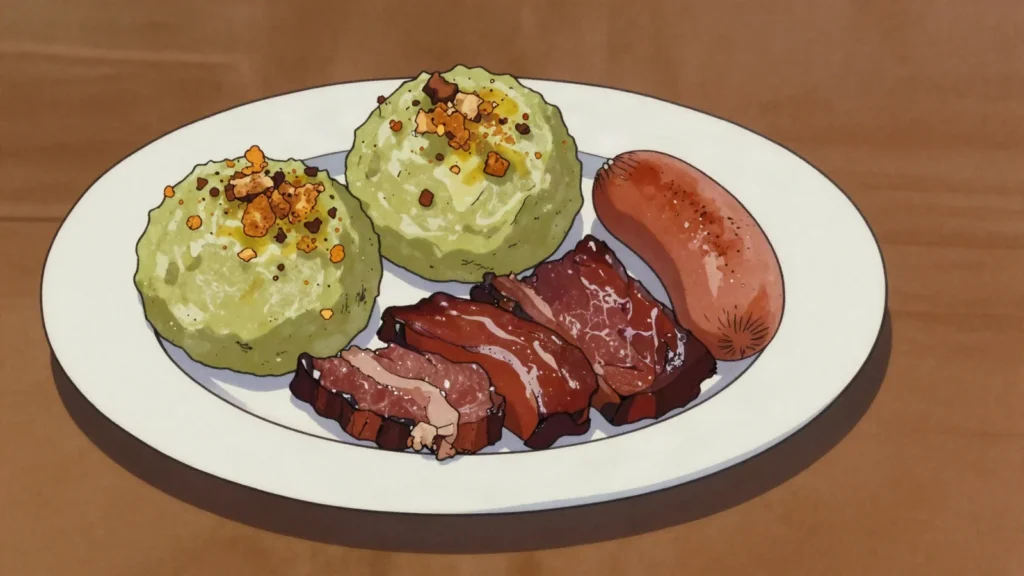
- Soak it briefly in water if it is extreme. Taste a small cooked piece first. Adjust the tacacho salt accordingly. Grill chorizo regional alongside the cecina. Put the tacacho balls on the plate with the cecina. Lay the sliced cecina beside them. Serve it hot straight from the grill. Add sliced onion and tomato to the plate. Serve an ají sauce alongside the plate.
Technique
- Mash the plantain while it is still genuinely hot — cold plantain is hard and will not mash, and cold mash crumbles rather than shaping into balls. Work quickly once it comes off the grill, and reheat it briefly if it goes cold before shaping.
- Green plantain skin is tough and clings hard: cut off both ends, score the skin lengthways in three or four places and prise it off in strips with a knife tip. It releases a sticky sap that stains and blackens hands and is hard to wash off, so oil your hands or wear gloves.
- Cecina here means salted pork smoked over wood, which is a different product from Spanish cecina (air-dried beef) or Mexican cecina (thin salted beef or pork) — they share only the name, so do not substitute blindly. Cured does not always mean ready to eat: check what you have bought, and cooking it through removes any doubt.
Substitutions
- Thick smoked bacon or smoked pork loin stands in for cecina. Chicharrón, chopped finely, replaces plain lard and is the more traditional choice, giving crunch as well as fat — large pieces make the balls fall apart.
- A griddle pan, a very hot oven or frying all replace charcoal grilling and are used in San Martín, though grilling gives the smokier flavour. Chorizo regional, the local Amazonian sausage, is often grilled alongside for a fuller plate.
Variations
- The plantain must be genuinely green and firm with dark hard skin and pale very firm flesh — any yellow means ripening has started, and ripe plantain gives a sweet mush that changes the dish completely.
- Grill rather than boil the plantain: grilling gives a smoky flavour and drier flesh where boiling makes it waterlogged and bland. Give it about twenty minutes over medium coals, turning, until a skewer goes through without resistance and the outside is blackened in patches.
- Mash it coarse rather than smooth, since small lumps of plantain are genuinely wanted, and work the fat through while everything is hot so it melts in and binds. Cecina is genuinely very salty — taste a cooked piece and adjust the tacacho’s salt accordingly, and soak the meat briefly if it is extreme.
History
Mashed, fried green plantain mixed with pork fat, formed into a ball and served alongside cecina, a specific type of smoked, dried pork, developed in Peru’s Amazon region, reflecting that area’s distinct tropical culinary identity built around plantain and Amazonian pork preparation techniques quite different from the potato-and-Andean-ingredient-based cooking more associated with Peru’s highland regions. Its combination of a starchy plantain mash with smoky, salty cured pork gives tacacho con cecina a hearty, filling character well suited to the physical demands of rural Amazonian life. It remains one of the most recognized specifically Peruvian Amazonian dishes, distinct within the country’s broader and highly regionally varied culinary landscape.
Frequently asked questions
What is Tacacho con cecina?
Tacacho con cecina is a main from Peru: balls of mashed grilled plantain served with salted smoked pork. Mashed, fried green plantain mixed with pork fat, formed into a ball and served alongside cecina, a specific type of smoked, dried pork, developed in Peru’s Amazon region, reflecting that area’s distinct tropical culinary identity built around plantain and Amazonian pork preparation techniques quite different from the potato-and-Andean-ingredient-based cooking more associated with Peru’s highland regions. Its combination of a starchy plantain mash with smoky, salty cured pork gives tacacho con cecina a hearty, filling character well suited to the physical demands of rural Amazonian life. It remains one of the most recognized specifically Peruvian Amazonian dishes, distinct within the country’s broader and highly regionally varied culinary landscape.
How long does Tacacho con cecina take to make?
Tacacho con cecina takes 25 minutes of preparation and 40 minutes of cooking. The recipe makes serves 4. It is rated medium to make.
What can I substitute in Tacacho con cecina?
Yes, within limits. Thick smoked bacon or smoked pork loin stands in for cecina. Chicharrón, chopped finely, replaces plain lard and is the more traditional choice, giving crunch as well as fat — large pieces make the balls fall apart. A griddle pan, a very hot oven or frying all replace charcoal grilling and are used in San Martín, though grilling gives the smokier flavour. Chorizo regional, the local Amazonian sausage, is often grilled alongside for a fuller plate.
What is the most important thing to get right in Tacacho con cecina?
Work quickly once it comes off the grill. Use a wooden mortar or a sturdy masher. It should be a coarse mash rather than smooth. Work the lard or chicharrón through the mash. Add it while the plantain is still hot. Work the fat through it thoroughly. Chop the chicharrón finely before adding it.